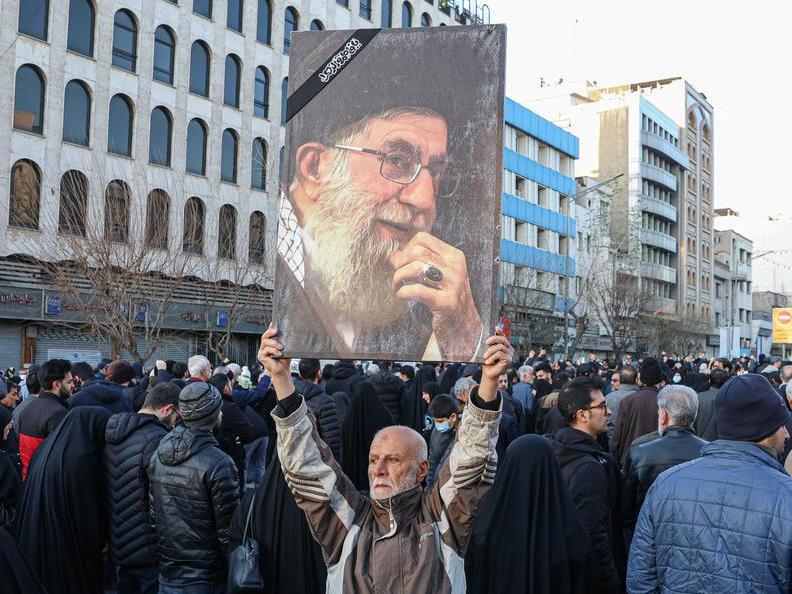
The death of Iran’s Supreme Leader, Ayatollah Ali Khamenei, in a joint U.S.-Israeli strike on February 28th, 2026, has sent shockwaves through the Middle East and beyond, raising profound questions about the future of the region and the principles governing international diplomacy. While Washington claims the move was a necessary escalation given stalled nuclear negotiations, the timing – coinciding with ongoing talks – has sparked widespread condemnation and accusations of undermining the established global order. The incident, confirmed by Iranian state media, marks the end of nearly four decades of Khamenei’s leadership and introduces a period of significant uncertainty, not only for Iran but for global stability. This abrupt shift in power, achieved through military action during a diplomatic process, sets a dangerous precedent, potentially eroding trust in international negotiations and prioritizing coercion over consensus.
The immediate aftermath has seen the appointment of a three-member interim leadership council in Iran, comprised of hardline figure Alireza Arafi, reformist President Masoud Pezeshkian, and hardliner judiciary chief Gholamhossein Mohseni Ejei. This council is tasked with fulfilling the Supreme Leader’s duties until the Assembly of Experts – Iran’s 88-member panel of Islamic jurists – can elect a permanent successor. The speed with which the U.S. Administration, under President Donald Trump, declared that the new Iranian leadership had agreed to talks, coupled with the dismissive remark that they “should have offered this sooner,” has been widely interpreted as a demonstration of force and a demand for capitulation. This approach, reminiscent of the “maximum pressure” campaign previously employed by the U.S., suggests a willingness to prioritize unilateral demands over genuine diplomatic engagement. The situation is further complicated by China’s significant economic ties with Iran, as China is Iran’s top oil buyer and trade partner, and Beijing’s potential reaction to this dramatic shift in the regional landscape.
A Dangerous Precedent: Violence During Negotiations
The decision to launch military strikes while negotiations were still underway represents a significant departure from established diplomatic norms. Historically, even in times of intense geopolitical tension, a degree of respect for the sanctity of the negotiating table has been maintained. This latest action, however, signals a willingness to abandon that principle, effectively communicating that military force can be used to compel concessions during ongoing discussions. As noted by analysts, this approach transforms negotiations from a genuine attempt to bridge differences into an ultimatum backed by the threat of further violence. The implications are far-reaching, potentially discouraging other nations from engaging in good-faith negotiations with the United States, fearing that their willingness to talk could be interpreted as weakness and exploited through military pressure. This erosion of trust could have a cascading effect, destabilizing international relations and increasing the risk of conflict.
The concept of “maximum pressure,” frequently invoked by the Trump administration, has long been criticized for its reliance on coercion rather than collaboration. As the South China Morning Post reports, this strategy prioritizes the exertion of overwhelming force to compel adversaries to accept U.S. Demands. While proponents argue that it is a necessary tool for dealing with rogue states, critics contend that it often backfires, leading to increased resentment, escalation, and a greater risk of conflict. The current situation in Iran appears to be a stark illustration of these concerns, with the use of military force potentially hardening Iranian resolve and making a peaceful resolution even more tough to achieve.
China’s Position and Regional Implications
China’s response to Khamenei’s death and the subsequent U.S.-Israeli action is crucial, given its close economic relationship with Iran. Beijing has strongly condemned the killing, urging for an immediate ceasefire and expressing concern over the escalating tensions in the Middle East. According to the South China Morning Post, analysts believe that China’s economic interests in Iran – particularly its reliance on Iranian oil – will likely endure despite the political upheaval. However, the potential for a shift in Iran’s foreign policy orientation, potentially towards the West, poses a challenge to China’s strategic ambitions in the region. Beijing will likely adopt a pragmatic approach, seeking to maintain its economic ties with Iran while cautiously monitoring the evolving political landscape. The situation also raises questions about the future of the Belt and Road Initiative in Iran, a key component of China’s global infrastructure development strategy.
The broader regional implications are equally significant. The assassination of Khamenei could embolden other actors in the region to pursue more aggressive policies, potentially leading to a further escalation of conflicts. The stability of Iraq, Syria, and Yemen – all of which are already grappling with internal conflicts and external interference – could be further threatened. The incident could exacerbate sectarian tensions, fueling proxy wars and increasing the risk of terrorist attacks. The international community faces a daunting challenge in navigating this complex and volatile situation, requiring a concerted effort to de-escalate tensions, promote dialogue, and prevent a wider regional conflict.
Trump’s China Trip and Geopolitical Tensions
The timing of Khamenei’s death also casts a shadow over President Trump’s planned trip to China, scheduled to begin on March 31st, 2026. As reported by CNBC, concerns are growing that the escalating tensions in the Middle East could complicate the already delicate trade negotiations between the U.S. And China. Chinese officials have condemned the U.S. Strikes on Iran, and it is unclear whether President Xi Jinping will be willing to host Trump in a “happy mood” given the circumstances. Prediction markets have indicated an increased likelihood of a delayed trip, reflecting the uncertainty surrounding the situation. The incident underscores the interconnectedness of global geopolitics and the potential for events in one region to disrupt diplomatic efforts elsewhere. The success of the China trip, which aims to build on a fragile trade truce reached in late October, now hangs in the balance.
The U.S. Actions also raise questions about the broader implications for the international rules-based order. The use of force against a sovereign nation while negotiations were ongoing undermines the principles of diplomacy and respect for international law. If such actions become normalized, it could embolden other nations to disregard international norms and pursue their interests through unilateral military action. This could lead to a more chaotic and dangerous world, where conflicts are more frequent and the prospects for peaceful resolution are diminished. The international community must reaffirm its commitment to diplomacy and the rule of law, and hold accountable those who violate these principles.
The Future of Iran and the Nuclear Agreement
The future of Iran’s nuclear program remains a central concern. While the U.S. Administration claims that the new Iranian leadership has agreed to resume negotiations, the circumstances surrounding this agreement are highly suspect. The use of military force to compel concessions raises serious doubts about the legitimacy of any subsequent agreement. The death of Khamenei, a key architect of Iran’s nuclear policy, creates uncertainty about the direction of the program. The new leadership will adopt a more conciliatory approach, but it is equally possible that they will respond to the U.S. Aggression by accelerating the program and seeking to develop nuclear weapons. The international community must operate to ensure that Iran’s nuclear program remains peaceful and that the risk of proliferation is minimized.
The Joint Comprehensive Plan of Action (JCPOA), the 2015 nuclear agreement between Iran and world powers, has been in a state of limbo since the U.S. Withdrew from the agreement in 2018. The current crisis presents an opportunity to revive the JCPOA, but it also carries the risk of completely unraveling it. A renewed agreement would require a commitment from all parties to abide by its terms and a willingness to engage in good-faith negotiations. The U.S. Administration must demonstrate a genuine commitment to diplomacy and avoid resorting to threats or coercion. The future of the JCPOA, and indeed the stability of the Middle East, depends on it.
Key Takeaways:
- The U.S.-Israeli strike on Ayatollah Ali Khamenei represents a significant escalation of tensions in the Middle East and a departure from established diplomatic norms.
- China’s economic ties with Iran are likely to endure, but the potential for a shift in Iran’s foreign policy poses a challenge to Beijing’s strategic interests.
- President Trump’s planned trip to China is now uncertain, as the escalating tensions in the Middle East could complicate trade negotiations.
- The incident raises serious questions about the future of Iran’s nuclear program and the prospects for reviving the JCPOA.
- The use of military force during negotiations undermines the international rules-based order and could embolden other nations to disregard international law.
The Assembly of Experts’ selection of a new Supreme Leader will be a pivotal moment for Iran, shaping the country’s domestic and foreign policies for years to come. The next steps will be closely watched by the international community, as the region braces for a period of heightened uncertainty. The situation remains fluid, and further developments are expected in the coming days and weeks. We will continue to provide updates as they become available.
What are your thoughts on the implications of this event? Share your perspectives in the comments below, and please share this article with your network to foster informed discussion.
Keep reading