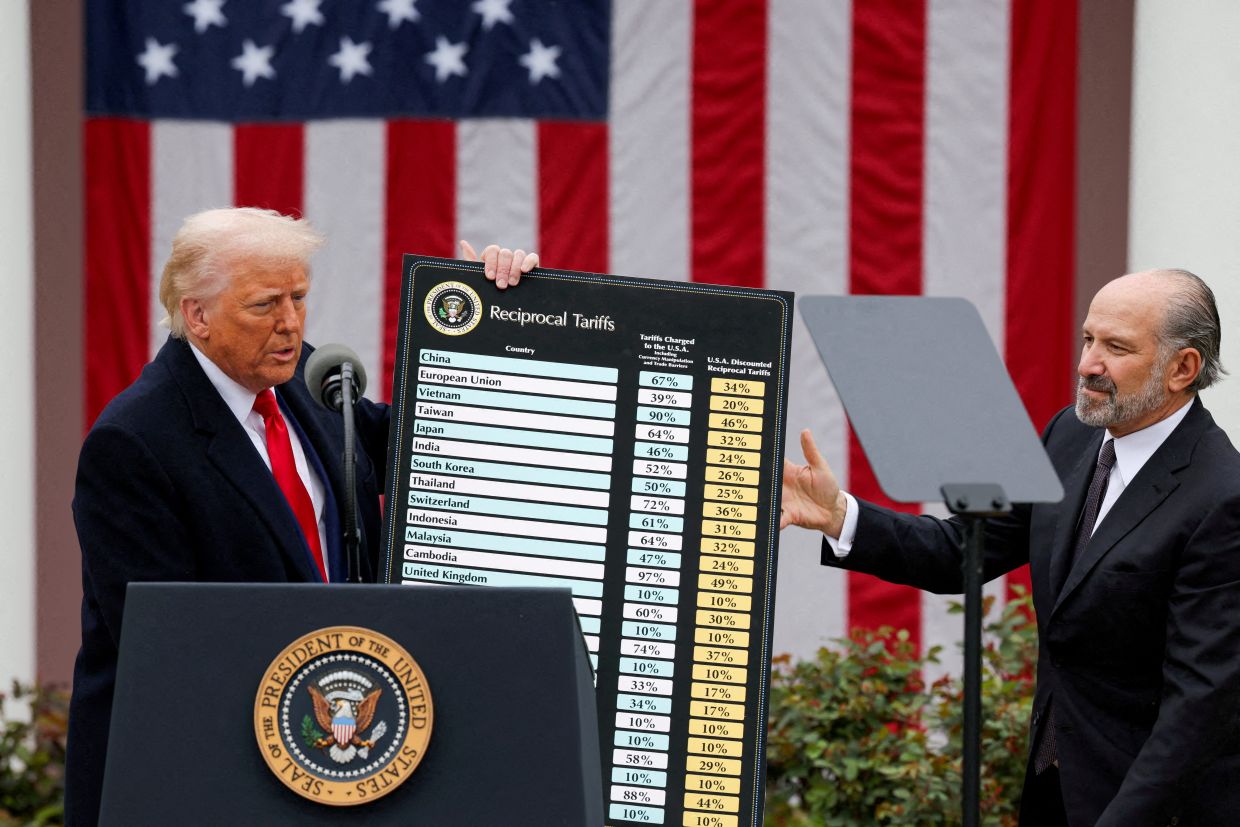
Malaysia Assesses Impact of US Supreme Court Ruling on Trump-Era Tariffs
Kuala Lumpur – Malaysian officials are carefully monitoring the fallout from a recent United States Supreme Court decision that struck down tariffs unilaterally imposed by former President Donald Trump. The Investment, Trade and Industry Ministry (MITI) is currently undertaking a comprehensive review to determine the implications for Malaysian trade and the broader economy. Prime Minister Datuk Seri Anwar Ibrahim affirmed that MITI is coordinating closely with both Washington D.C. And fellow member states of the Association of Southeast Asian Nations (ASEAN) to formulate an appropriate response.
The Supreme Court’s ruling, delivered on February 20, 2026, effectively invalidated tariffs Trump had enacted using the International Emergency Economic Powers Act (IEEPA) of 1977. The six-to-three decision, authored by Chief Justice John Roberts, found that the president had exceeded his constitutional authority by setting and altering tariffs without congressional approval. This power, the court asserted, rests solely with the US Congress. Al Jazeera reports that the ruling has prompted a swift reaction from Trump, who has vowed to reimpose tariffs at a new rate of 15% across the board.
The Ruling and Trump’s Response
The core of the legal challenge centered on the IEEPA, a law originally intended to address national emergencies. Trump’s administration had utilized this act to justify imposing tariffs on a wide range of goods from numerous countries, including China, the European Union, and several ASEAN nations. Critics argued that this overreach undermined the constitutional principle of separation of powers. The Supreme Court agreed, effectively curtailing the president’s ability to unilaterally impose trade barriers.
Despite the setback, Trump has signaled his intention to circumvent the ruling by invoking a different legal authority to impose a uniform 10% tariff on all imports, later raised to 15%. According to Al Jazeera, Trump announced this increase “effective immediately” via his Truth Social platform, framing it as a response to what he characterized as a “ridiculous” and “anti-American” Supreme Court decision. This move has raised concerns about potential trade tensions and the possibility of retaliatory measures from affected countries.
Impact on Malaysia-US Trade Relations
Malaysia and the United States maintain a significant trade relationship. In October 2025, during the ASEAN Summit in Kuala Lumpur, the two countries signed a reciprocal trade agreement. While details of the agreement are not fully public, it reportedly maintained a tariff rate of 19% on many goods, with provisions for zero tariffs on specific products under agreed-upon partner trade lists. The recent Supreme Court ruling and Trump’s subsequent actions introduce a new layer of uncertainty into this dynamic.
Economists in Malaysia anticipate that the Supreme Court’s initial decision to curb Trump’s tariff authority could provide a boost to the country’s economy. Malay Mail reports that economists predict improvements in market sentiment, increased exports, and a strengthening of the Malaysian ringgit. Bank Muamalat Malaysia Bhd chief economist Dr Mohd Afzanizam Abdul Rashid stated that the ruling reinforces the effectiveness of the separation of powers in the US, potentially limiting the implementation of harmful protectionist policies. Malaysia’s export figures for January 2026 reportedly grew by 19.6%, suggesting a positive economic trajectory.
MITI’s Review and ASEAN Coordination
The Malaysian government is taking a measured approach to the evolving situation. Prime Minister Anwar Ibrahim stated that MITI is currently reviewing the Supreme Court’s decision and coordinating with both Washington and ASEAN partners to determine the most appropriate course of action. He indicated that a detailed briefing would be provided to the Cabinet during their meeting on Friday, February 28, 2026, before an official response is issued. Datuk Seri Johari Ghani, a key figure in the government’s economic planning, has already provided an initial assessment of the situation.
The coordination with ASEAN is particularly significant. A unified regional response could amplify the collective bargaining power of Southeast Asian nations in negotiations with the US. ASEAN member states are likely to share concerns about the potential impact of increased tariffs on their export-oriented economies. The bloc’s collective approach could aim to secure exemptions or favorable trade terms for regional products.
Potential Implications for Global Trade
The US Supreme Court’s ruling and Trump’s subsequent actions have broader implications for the global trading system. The initial decision to strike down the tariffs signaled a potential return to a more rules-based international trade order. However, Trump’s swift move to reimpose tariffs under a different legal framework raises questions about the long-term stability of that order. The move also underscores the ongoing political risks associated with US trade policy.
The reimposition of tariffs, even under a different legal justification, could trigger retaliatory measures from other countries, leading to a potential escalation of trade tensions. This could disrupt global supply chains, increase costs for consumers, and dampen economic growth. The World Trade Organization (WTO) may become a key forum for resolving disputes arising from the new tariffs, although the organization’s dispute resolution mechanism has faced challenges in recent years.
Looking Ahead
The situation remains fluid. The Malaysian government is expected to announce its official response following the Cabinet meeting on Friday. The focus will likely be on mitigating the potential negative impacts of the new tariffs on Malaysian exports and seeking assurances from the US regarding fair trade practices. Continued coordination with ASEAN partners will be crucial in navigating this complex landscape.
The coming weeks will be critical in determining the future of US trade policy and its impact on the global economy. The Biden administration’s response to Trump’s actions will also be closely watched. The outcome could shape the trajectory of international trade for years to come.
Key Takeaways:
- The US Supreme Court struck down tariffs imposed by Donald Trump, ruling he exceeded his authority.
- Trump has responded by announcing a 15% tariff on all imports under a separate legal authority.
- Malaysia is reviewing the implications for its trade relationship with the US and coordinating with ASEAN.
- Economists predict a potential boost to Malaysia’s economy from the initial Supreme Court ruling.
- The situation remains fluid, with the potential for further trade tensions.
Stay informed on this developing story. We will continue to provide updates as they become available. Share your thoughts and perspectives in the comments below.
Related reading