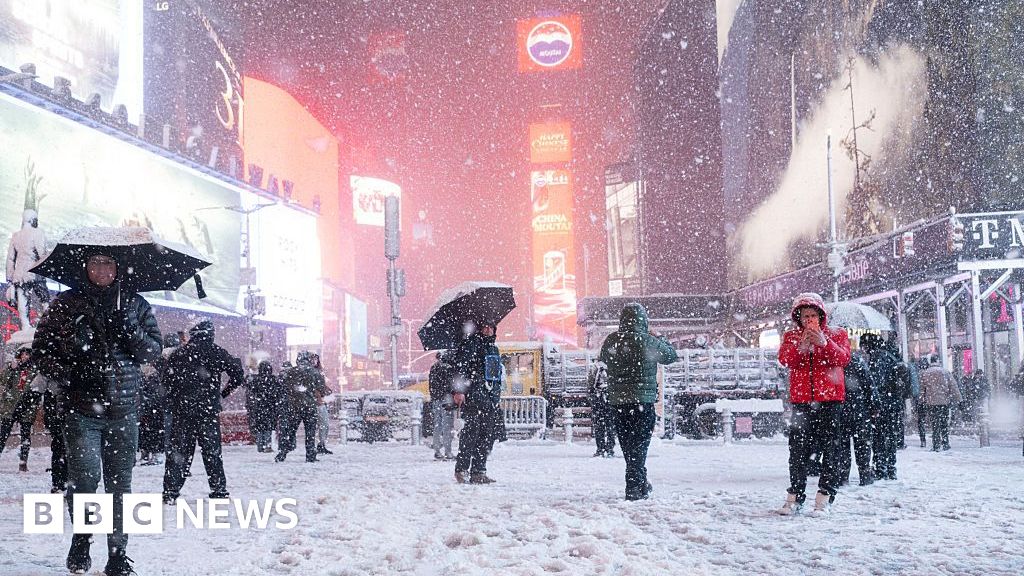
Historic Blizzard Grips Northeast United States, Bringing Travel to a Halt
A powerful winter storm is unleashing blizzard conditions across a vast swathe of the northeastern United States, impacting tens of millions of people from Maryland to Maine. The storm, forecast to deliver up to two feet of snow in some areas, has prompted widespread travel bans, school closures and states of emergency as communities brace for what officials are calling one of the most significant nor’easters in nearly a decade. The intensity of the storm is causing significant disruption to daily life, with New York City experiencing a complete shutdown of its transportation network.
Blizzard warnings are currently in effect for major metropolitan areas including New York City, New Jersey, and parts of New England, stretching as far north as Maine. Approximately 40 million people are under these warnings as of Monday, February 23, 2026, according to the National Weather Service. The storm’s impact extends beyond heavy snowfall, with fierce winds and the risk of coastal flooding adding to the dangers. This is the first time in nine years that a blizzard warning has been issued for New York City, underscoring the severity of the current weather event.
Travel Restrictions and Emergency Declarations
New York City implemented a full travel ban beginning at 9:00 PM local time on Sunday, February 22, 2026, lasting until 12:00 PM local time on Monday, February 23, 2026. Mayor Zohran Mamdani has ordered the closure of all schools, streets, highways, and bridges, with exceptions made only for emergency vehicles. Similar travel restrictions have been enacted in New Jersey and surrounding areas, aiming to keep residents off the roads and minimize the risk of accidents and stranded motorists. Governors in eight states have declared states of emergency, mobilizing resources and personnel to respond to the unfolding crisis.
The decision to halt travel across major urban centers reflects the anticipated intensity of the storm. Meteorologists at the National Weather Service’s Weather Prediction Center have described the storm as a rare event, noting that it’s been several years since a nor’easter of this magnitude has impacted such a densely populated region of the country. Cody Snell, a meteorologist at the Weather Prediction Center, told the Associated Press that the storm’s scale and potential impact are particularly noteworthy.
Snowfall Totals and Blizzard Conditions
The National Weather Service forecasts snowfall totals of 1 to 2 feet across many areas of the Northeast. While snowfall amounts may be lower in the Mid-Atlantic region, the combination of heavy snow and strong winds is creating blizzard conditions. A storm is officially classified as a blizzard when visibility is reduced to ¼ mile or less for three hours or longer, accompanied by sustained winds of 35 mph or greater, or frequent gusts reaching 35 mph or greater. As of 7:00 AM Eastern Time on Monday, February 23, 2026, parts of the New York City metropolitan area had already received between 15 and 18 inches of snow, with continued accumulation expected throughout the day.
Beyond the immediate dangers of heavy snow and reduced visibility, officials are also warning of the potential for coastal flooding in parts of New York, New Jersey, and Massachusetts. The combination of high winds and heavy precipitation can lead to storm surges and inundation of low-lying areas. Residents in coastal communities are urged to heed evacuation orders and accept necessary precautions to protect their property.
The Tri-State Area and Regional Impact
The storm is having a particularly significant impact on the New York tri-state area, encompassing parts of New York, New Jersey, and Connecticut. The term “tri-state area” is commonly used to describe this interconnected region, which shares a common economy and culture. Pennsylvania is sometimes included in this definition, as the New York metropolitan statistical area extends into the Commonwealth. The interconnected nature of the region means that disruptions in one state can quickly ripple across borders, exacerbating the overall impact of the storm.
The storm’s effects are not limited to the tri-state area. Blizzard warnings extend throughout the Northeast, impacting communities from Maryland to Maine. The widespread nature of the storm is straining resources and requiring a coordinated response from state and local authorities. The potential for power outages is also a concern, as strong winds can down trees and power lines. Utility companies are preparing for widespread outages and have mobilized crews to restore power as quickly as possible once the storm subsides.
Preparing for and Responding to the Storm
Emergency management officials are urging residents to stay indoors and avoid all unnecessary travel. Those who must venture outside are advised to dress warmly in layers, cover exposed skin, and be aware of the signs of hypothermia. We see also key to have a supply of food, water, and essential medications on hand, as well as a battery-powered radio to receive updates on the storm. Residents are encouraged to check on elderly neighbors and those with disabilities to ensure their safety and well-being.
The storm is a stark reminder of the power of nature and the importance of preparedness. As climate change continues to alter weather patterns, the frequency and intensity of extreme weather events are expected to increase. Investing in infrastructure improvements, strengthening emergency response capabilities, and promoting public awareness are crucial steps in mitigating the risks associated with these events.
Key Takeaways:
- A historic blizzard is impacting the northeastern United States, with blizzard warnings in effect from Maryland to Maine.
- Travel has been severely disrupted, with full travel bans in place in New York City and surrounding areas.
- Snowfall totals of 1 to 2 feet are forecast in many areas, accompanied by strong winds and the risk of coastal flooding.
- Residents are urged to stay indoors, avoid unnecessary travel, and prepare for potential power outages.
Officials will continue to monitor the storm’s progress and provide updates as conditions evolve. The next scheduled update from the National Weather Service is expected at 4:00 PM Eastern Time today. We encourage readers to share their experiences and perspectives in the comments below.