
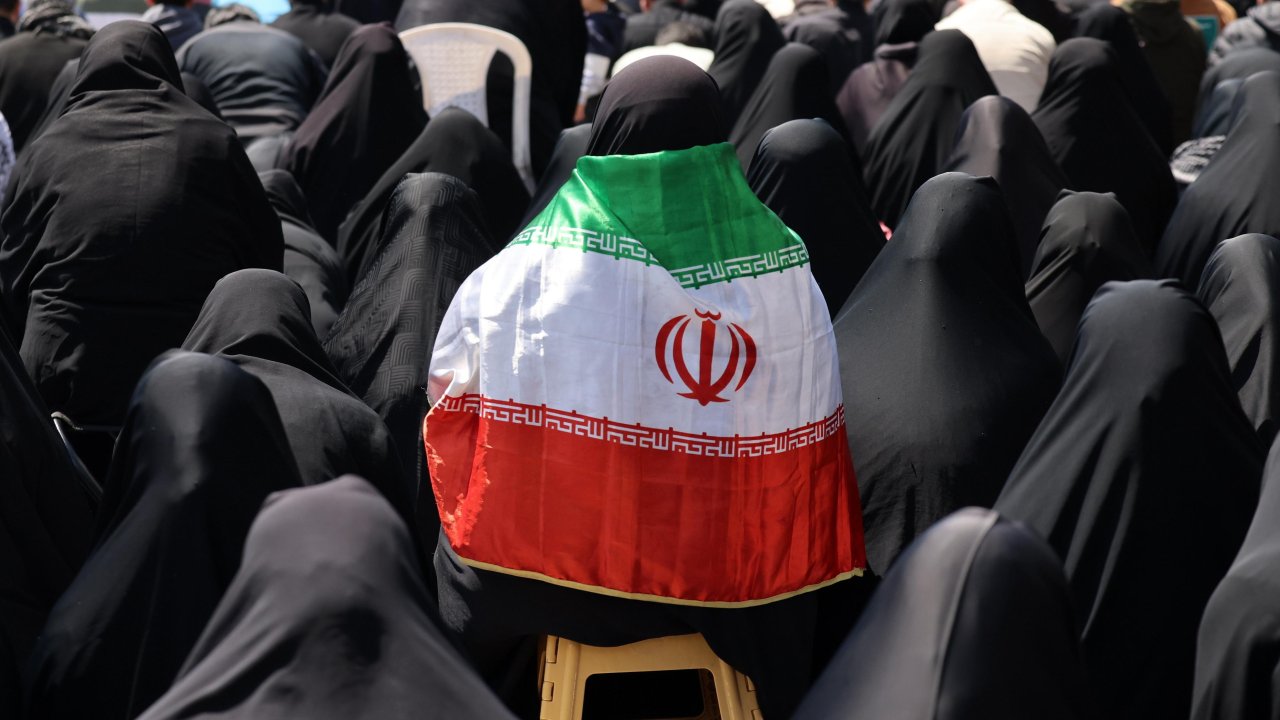
The geopolitical struggle between the United States and the Islamic Republic of Iran has reached a critical juncture, characterized by a persistent diplomatic stalemate and a recurring cycle of escalation. For decades, Washington has sought to constrain Tehran’s nuclear ambitions and regional influence through a combination of economic sanctions, diplomatic isolation, and military deterrence. However, the prevailing reality suggests that the United States has struggled to unilaterally impose its strategic will on a regime that views such pressure as an existential threat and a catalyst for defiance.
This deadlock is not merely a product of current administrations but the result of deep-seated ideological divides and a fundamental disagreement over the security architecture of the Middle East. While the U.S. Emphasizes a rules-based order and the containment of nuclear proliferation, Iran leverages its “strategic depth”—a network of allied militias and political influence across Iraq, Syria, Lebanon, and Yemen—to ensure that any direct conflict with the U.S. Would be prohibitively costly.
The current tension is further complicated by the legacy of previous diplomatic efforts and the subsequent collapse of trust. The shift from the engagement strategy of the mid-2010s to the “maximum pressure” campaigns of later years has left both nations in a position where domestic political constraints make compromise difficult. For Tehran, the perceived betrayal of international agreements has reinforced the belief that Western guarantees are unreliable, while for Washington, Iran’s continued support for non-state actors remains a primary obstacle to normalization.
The JCPOA Legacy: From Engagement to Escalation
Central to the modern friction is the Joint Comprehensive Plan of Action (JCPOA), often referred to as the “Obama deal.” Signed in 2015, the agreement was designed to limit Iran’s nuclear capabilities in exchange for the lifting of crippling economic sanctions. At its inception, the deal was hailed as a landmark achievement in non-proliferation, providing the International Atomic Energy Agency (IAEA) with unprecedented access to Iranian facilities to ensure the program remained peaceful.
However, the agreement became a flashpoint of international contention. Critics argued that the deal failed to address Iran’s ballistic missile program or its regional activities, while others claimed the “sunset clauses”—provisions that would see restrictions expire over time—were insufficient. The U.S. Withdrawal from the JCPOA in 2018 marked a pivotal shift in strategy, returning the U.S. To a policy of aggressive economic warfare. According to the U.S. Department of the Treasury, these sanctions were intended to starve the Iranian government of the resources necessary to fund its nuclear program and regional proxies.
Rather than forcing a surrender, the return of sanctions largely pushed Iran toward a policy of “strategic patience” followed by gradual nuclear escalation. Tehran began breaching the limits on uranium enrichment, arguing that the U.S. Failure to provide the promised economic relief invalidated the agreement. This cycle has created a dangerous precedent: the more the U.S. Attempts to force a new, “better” deal through pressure, the more Iran leverages its nuclear program as a bargaining chip, effectively neutralizing the efficacy of the “maximum pressure” doctrine.
Strategic Depth and the Limits of U.S. Influence
The assertion that the United States cannot simply impose its will on Iran is rooted in the concept of strategic depth. Iran has spent decades building a regional infrastructure that allows it to project power far beyond its own borders. By supporting groups such as Hezbollah in Lebanon and various militias in Iraq, Tehran has created a buffer zone that complicates any potential U.S. Military intervention. This network ensures that any direct strike on Iranian soil could trigger a multi-front conflict across the region.

This regional strategy creates a paradox for U.S. Policymakers. While the U.S. Possesses overwhelming conventional military superiority, the asymmetrical nature of Iran’s influence means that a total victory—defined as the complete submission of the Iranian government to U.S. Demands—is practically unattainable without a full-scale invasion, an option that lacks domestic and international support. Washington is often forced into a reactive posture, managing crises rather than resolving the underlying conflict.
Iran has cultivated economic ties with non-Western powers, particularly China and Russia. These partnerships provide Tehran with vital lifelines, allowing it to bypass some U.S. Sanctions through “grey market” oil exports and military cooperation. As the global landscape shifts toward multipolarity, the ability of the U.S. To isolate Iran completely has diminished, further eroding the leverage Washington once held over the Iranian economy.
The Internal Dynamics of Defiance
Within Iran, the narrative of resistance against “foreign arrogance” (a term frequently used by Iranian leadership to describe the U.S.) serves as a powerful tool for internal legitimacy. The Iranian leadership often frames U.S. Pressure not as a diplomatic tool, but as an attempt at regime change. This perception makes any concession appear as a sign of weakness that could invite further aggression.
The rhetoric emanating from Tehran frequently emphasizes a sense of inevitable victory, often tied to the belief that the U.S. Is in a state of internal decline. By framing the conflict as a struggle between a fading empire and a rising regional power, the Iranian government maintains a level of domestic mobilization and ideological cohesion that resists external pressure. This psychological warfare is a key component of why traditional diplomatic carrots and sticks have failed to produce a lasting resolution.
What Happens Next: The Path to De-escalation?
The path forward remains obscured by mutual distrust. For a sustainable resolution, several critical conditions would need to be met: a verifiable return to nuclear limits by Iran, a credible commitment from the U.S. To maintain agreements regardless of administration changes, and a broader regional security framework that addresses the concerns of both Iran and its neighbors, including Saudi Arabia.

Short-term stability currently depends on “deconfliction” measures—informal channels used to prevent accidental military clashes in the Persian Gulf or Syria. However, these are temporary fixes rather than strategic solutions. The international community continues to watch the reports from the International Atomic Energy Agency (IAEA) as the primary indicator of whether Iran is moving closer to “breakout capacity,” the point at which it could produce enough weapons-grade uranium for a nuclear device.
As the U.S. Balances its commitments to allies in the region with the need to avoid a catastrophic war, the strategy is likely to remain one of contained competition. The goal has shifted from “imposing will” to “managing risk,” acknowledging that while the U.S. Can disrupt and damage the Iranian state, it cannot easily dismantle its ideological resolve or its regional footprint.
The next critical checkpoint for international observers will be the upcoming IAEA Board of Governors meeting, where the agency’s findings on Iranian nuclear compliance will be formally reviewed. These findings typically dictate the level of diplomatic pressure or sanctions relief applied in the following quarter.
We invite our readers to share their perspectives on the future of Middle East diplomacy in the comments below. Do you believe a new diplomatic framework is possible, or is the region destined for continued instability?