
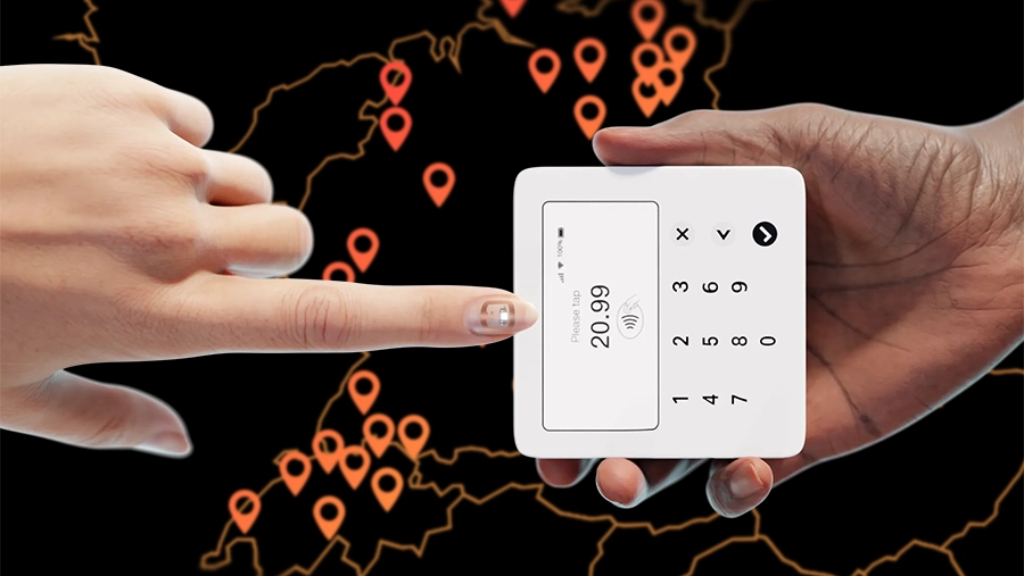
The evolution of the wallet has been a steady march toward invisibility. We moved from bulky leather folds to plastic cards, then to the digital wallets housed within our smartphones, and more recently to the subtle convenience of smartwatches. However, the next frontier of fintech is shrinking the hardware even further, moving beyond the wrist and directly onto the fingertips. The emergence of contactless payment fingernail stickers represents the latest shift in “ambient commerce,” where the act of paying becomes an almost imperceptible gesture.
For the modern consumer, the appeal is obvious: the total elimination of friction. By adhering a tiny, Near Field Communication (NFC) chip to a fingernail—either naturally or over a prosthetic—users can execute transactions with a simple tap of the finger. Whereas the concept may seem like a novelty, it sits at the intersection of wearable technology and the broader movement toward the “Internet of Bodies,” where digital interfaces are integrated directly into our physical forms to streamline daily interactions.
As Chief Editor of Business at World Today Journal, I have tracked the trajectory of payment systems from the early days of chip-and-pin to the current dominance of mobile wallets. The shift toward nail-based payments is not merely a fashion statement; it is a case study in how regional banking infrastructures dictate the adoption of latest technology. While the hardware—the NFC sticker—is universal, the financial plumbing required to make it work varies wildly between the Swiss, German, and Austrian markets.
This transition to micro-wearables raises critical questions about security, the role of payment intermediaries, and the future of financial privacy. As we move toward a world where our bodies are our credit cards, the distinction between our physical selves and our financial identities continues to blur.
The Mechanics of the Micro-Payment: How NFC Nail Stickers Work
At the heart of the fingernail payment system is Near Field Communication (NFC), a short-range wireless connectivity technology that allows two devices to communicate when they are brought within a few centimeters of each other. Specifically, these stickers utilize a passive NFC tag, which consists of a tiny integrated circuit (IC) and an antenna. Unlike a smartphone, the sticker does not require its own power source; instead, it is powered by the electromagnetic field generated by the point-of-sale (POS) terminal during a transaction.
The technical challenge in creating a “nail-sized” payment device is the antenna. NFC typically operates at a frequency of 13.56 MHz, and the efficiency of the energy transfer depends on the size and shape of the antenna coil. Shrinking this coil to fit on a fingernail requires precision engineering to ensure that the chip can still be read reliably by standard payment terminals without the user having to hold their finger in a precise, unnatural position.
Once the sticker is applied, it functions identically to a contactless credit card. When the nail touches the reader, the terminal sends a request for payment, and the chip transmits a secure, encrypted token. This tokenization process ensures that the actual card number is never shared with the merchant, reducing the risk of data theft during the transaction. However, the “intelligence” of the sticker depends entirely on what is linked to that chip—whether it is a direct bank account or a third-party proxy.
The Infrastructure Gap: Direct Banking vs. Proxy Services
The adoption of nail-based payments reveals a fascinating divergence in European banking philosophy. In Switzerland, the transition has been relatively seamless because several traditional financial institutions have embraced the “payment sticker” model. In the Swiss market, approximately 15 financial institutions have integrated these stickers into their direct offerings, allowing customers to link a sticker directly to their primary bank account via official banking channels. This direct integration means the sticker is essentially a “mini-card” issued by the bank itself.
In contrast, the banking landscapes in Germany and Austria have been slower to offer direct-to-sticker issuance. For users in these regions, the “invisible wallet” requires a middleman. This is where proxy payment services like Curve or Vim Pay grow essential. A proxy service acts as a financial aggregator; the user links their various existing bank cards to the proxy app, and the proxy service issues a single NFC credential (which can then be applied as a sticker) that represents all those accounts.
From an economic perspective, the proxy model is a clever solution to institutional inertia. Instead of waiting for every major German Sparkasse or Austrian Raiffeisen bank to develop and certify a nail-sticker product, companies like Curve create a universal layer of compatibility. The user pays with the Curve sticker, and Curve then routes the charge to the underlying bank card of the user’s choice. This “layering” of fintech allows for rapid innovation at the consumer level even when the legacy banking infrastructure remains rigid.
Comparison of Payment Implementations
| Feature | Direct Bank Sticker (e.g., Switzerland) | Proxy Sticker (e.g., Curve/Vim Pay) |
|---|---|---|
| Issuance | Issued directly by the primary bank | Issued by a third-party fintech aggregator |
| Account Link | Linked to one specific bank account | Linked to multiple cards/banks via one app |
| Setup Speed | Depends on bank approval/shipping | Rapid digital onboarding via app |
| Regional Availability | High in Switzerland; Lower in DE/AT | Broad availability across EU/UK |
| Control | Managed through bank’s core system | Managed through a third-party interface |
The Security Paradox: Convenience vs. Vulnerability
As a financial analyst, I find the security implications of on-body payments to be the most contentious aspect of this technology. On one hand, a nail sticker is arguably more secure than a physical wallet. You cannot “drop” your fingernail in the street, and it is far less likely to be pickpocketed than a smartphone or a leather purse.
However, the “always-on” nature of the sticker introduces new risks. Traditional cards are kept in a pocket or bag, providing a physical barrier between the card and a potential rogue reader. A nail sticker is permanently exposed. While the range of NFC is extremely short—usually requiring a distance of less than 4 centimeters—the theoretical risk of “electronic pickpocketing” (where a malicious actor uses a high-powered reader to trigger a payment) increases when the payment device is permanently attached to the body.
the issue of loss and replacement becomes more complex. If a credit card is stolen, you cancel the card. If a nail sticker is compromised or the adhesive fails, the process is simple. But for those who move toward more permanent solutions—such as NFC implants under the skin—the “cancellation” process involves a medical procedure. While the current trend focuses on stickers, the trajectory is clearly moving toward more permanent integration, which necessitates a rigorous rethink of biometric authentication.
To mitigate these risks, proxy services often implement “kill switches” within their apps. If a user suspects their sticker has been compromised, they can instantly disable the NFC credential via their smartphone, rendering the nail sticker useless without needing to cancel their primary bank account. This adds a critical layer of security that direct-issue stickers often lack.
The Broader Impact: Ambient Commerce and the Future of Retail
The rise of the nail sticker is a symptom of a larger trend I call “Ambient Commerce.” This is the shift toward a retail environment where the act of payment is decoupled from the act of “checking out.” In the near future, we may see a world where the payment is so seamless that the psychological “pain of paying”—the cognitive friction that occurs when we physically hand over money or a card—is almost entirely removed.
Economists have long noted that reducing this friction leads to increased consumer spending. When the barrier to purchase is reduced to a mere gesture, the impulse to buy increases. This has significant implications for retail design and consumer behavior. We are moving toward a “frictionless” economy where the boundary between desiring a product and owning it is narrowed to a fraction of a second.
this technology empowers a new demographic of “extreme convenience” users. For individuals with mobility issues who may struggle to reach into a wallet or operate a smartphone, a simple tap of the finger can provide a level of financial independence and ease of access that was previously unavailable. This is the hidden utility of wearable fintech: it is not just about novelty, but about accessibility.
Key Takeaways for the Global Consumer
- Technology: Nail payments rely on passive NFC tags that are powered by the payment terminal, requiring no internal battery.
- Market Divide: Switzerland leads in direct bank-issued stickers, while Germany and Austria rely more heavily on proxy services like Curve.
- Proxy Utility: Proxy services allow users to consolidate multiple bank accounts into a single NFC point, bypassing the need for individual bank support.
- Risk Profile: While physical theft is unlikely, “always-on” exposure requires robust app-based security and the ability to instantly deactivate the chip.
- Economic Shift: The move toward ambient commerce reduces the “pain of paying,” potentially altering spending habits and retail interactions.
The Road Ahead: What Happens Next?
The nail sticker is likely a transitional technology. It serves as a bridge between the “external wearable” (the watch) and the “internal wearable” (the implant). As we refine the miniaturization of NFC antennas and improve the security of tokenization, we can expect these features to be integrated into other forms of wearable art, jewelry, and even temporary tattoos.
The next critical checkpoint for this technology will be the regulatory response from the European Banking Authority (EBA) regarding the security standards of “on-body” credentials. As more users move away from traditional cards, regulators will need to determine if biometric verification (such as a fingerprint scan on the phone) must accompany every “tap” to prevent unauthorized transactions.
For now, the nail sticker remains a fascinating glimpse into a future where our physical bodies are the ultimate interface for our financial lives. Whether this leads to a more liberated consumer experience or a security nightmare remains to be seen, but the momentum toward invisibility is irreversible.
Do you believe the convenience of on-body payments outweighs the security risks? We invite you to share your thoughts in the comments below or share this analysis with your professional network.