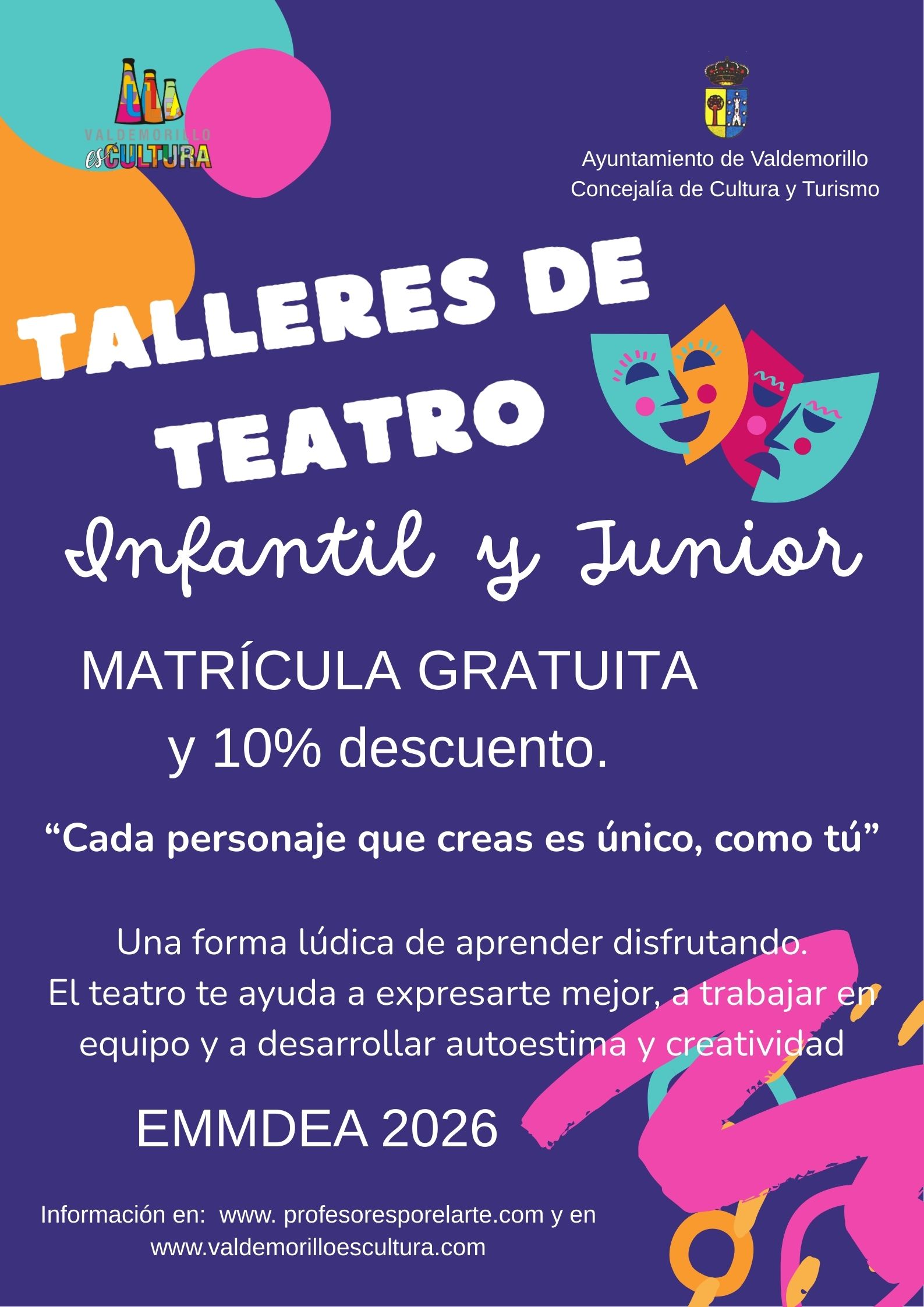
The power of play, particularly through theatrical expression, is gaining renewed focus as communities seek accessible and enriching activities for young people. In Valdemorillo, Spain, the municipal Escuela Municipal de Música, Danza y Enseñanzas Artísticas (EMMDEA) is making participation in its theater workshops more attainable than ever, offering free enrollment and a 10% discount on monthly fees. This initiative underscores a growing recognition of the vital role the arts play in fostering emotional development, self-confidence, and crucial life skills in children, and adolescents.
The move, supported by the Valdemorillo Council for Culture and Tourism, aims to position theater as not merely an extracurricular activity, but as a valuable learning tool. The EMMDEA believes that theater provides a “ludic and creative space” where young people can learn, express themselves, and have fun through the power of dramatic play. This commitment to accessible arts education reflects a broader trend of municipalities investing in programs that nurture creativity and well-being in their youth populations. The emphasis on early engagement with the arts is rooted in research demonstrating the positive correlation between artistic participation and improved academic performance, social-emotional learning, and overall quality of life.
The Benefits of Early Theatrical Engagement
The benefits of introducing children and teenagers to theater extend far beyond the stage. Experts in child development consistently highlight the positive impact of dramatic arts on a range of cognitive and social-emotional skills. According to a 2019 report by the Americans for the Arts, students involved in the arts are four times more likely to be recognized for academic achievement. Arts Education Navigator. Theater, in particular, encourages imaginative thinking, problem-solving, and the ability to collaborate effectively – skills that are increasingly valued in today’s rapidly changing world.
The EMMDEA’s program specifically focuses on cultivating these skills through a variety of engaging activities. Participants explore their imagination, bodies, and voices through games, group dynamics, improvisations, and little-scale performances. This approach allows children to express themselves freely in a safe, respectful, and stimulating environment. The emphasis on process over product—focusing on the journey of creation rather than solely on the final performance—is a hallmark of effective arts education programs. This fosters a growth mindset, encouraging students to embrace challenges and learn from their experiences.
Valdemorillo’s Commitment to Accessible Arts Education
The initiative in Valdemorillo is spearheaded by Victoria Gil, the council member responsible for Culture and Tourism. Her support demonstrates a commitment to making arts education accessible to all schoolchildren in the municipality. The 10% discount on monthly fees, coupled with free enrollment, significantly reduces the financial barriers to participation, ensuring that children from diverse socioeconomic backgrounds have the opportunity to benefit from the program. This represents particularly critical in light of ongoing concerns about equity and access in arts education, where funding cuts and socioeconomic disparities often limit opportunities for underserved communities.
The EMMDEA’s workshops are designed to enhance both verbal and nonverbal communication skills, foster creativity, promote teamwork, and cultivate empathy. Children learn to listen attentively, respect others’ turns, and value diverse perspectives – essential skills for navigating social interactions and building strong relationships. The program also recognizes the importance of emotional intelligence, helping children develop self-awareness, self-regulation, and the ability to understand and respond to the emotions of others. These skills are crucial for building resilience, managing stress, and fostering positive mental health.
Beyond Performance: The Holistic Benefits of Theater
The EMMDEA emphasizes that participation in theater is about more than just acting. It’s about self-discovery, building confidence, and forging connections with others. The workshops provide a supportive environment where children can explore their identities, overcome their fears, and develop a sense of belonging. This is particularly valuable for children who may struggle with social anxiety or low self-esteem. The collaborative nature of theater encourages students to rely on one another, fostering a sense of community and shared purpose.
The program’s inclusive approach welcomes participants of all experience levels. No prior experience is required – only a willingness to play, imagine, and participate. This open-door policy ensures that all children, regardless of their background or skill level, have the opportunity to experience the transformative power of theater. The EMMDEA’s commitment to inclusivity reflects a growing recognition of the importance of providing equitable access to arts education for all children, regardless of their abilities or circumstances.
Expanding the Reach of Arts Education
The EMMDEA’s initiative in Valdemorillo is part of a larger movement to expand access to arts education in Spain and beyond. Numerous organizations are working to advocate for increased funding for arts programs, promote the integration of the arts into the core curriculum, and provide professional development opportunities for arts educators. The benefits of arts education are well-documented, and there is a growing consensus that the arts are essential for preparing students for success in the 21st century.
In addition to the direct benefits for students, arts education also has a positive impact on communities. Arts organizations often serve as hubs for cultural activity, bringing people together and fostering a sense of civic pride. They also contribute to the local economy, creating jobs and attracting tourism. Investing in the arts is therefore not only an investment in the future of our children, but also an investment in the vitality of our communities.
The Casa de la Cultura in Ensenada, Baja California, Mexico, is also currently offering a range of artistic workshops, including music, theater, dance, and visual arts, for the 2025-2026 cycle. Ensenada Government Website Registration for these workshops concludes on August 29, 2025, with classes beginning September 1st at various locations, including Maneadero and the Centro de Desarrollo Comunitario. The inscription fee is 470.66 pesos, and the monthly fee is 705.99 pesos.
The EMMDEA’s workshops, like those in Ensenada, are becoming increasingly recognized as vital spaces for personal growth and community building. They provide a platform for individuals of all ages and backgrounds to express themselves, learn new skills, and connect with others who share their passion for the arts. As communities continue to prioritize the well-being of their citizens, investments in arts education will undoubtedly play an increasingly important role.
Key Takeaways:
- The EMMDEA in Valdemorillo is offering free enrollment and a 10% discount on monthly fees for its theater workshops.
- The initiative aims to make theater accessible to all schoolchildren, regardless of their socioeconomic background.
- Theater provides numerous benefits for children and adolescents, including improved communication skills, creativity, and emotional intelligence.
- The program welcomes participants of all experience levels and emphasizes the importance of play, imagination, and participation.
The EMMDEA’s commitment to fostering a love of theater in young people is a testament to the transformative power of the arts. As the program continues to grow and evolve, it will undoubtedly have a lasting impact on the lives of countless children and families in Valdemorillo and beyond. For those interested in learning more about the EMMDEA’s workshops or enrolling their children, further information can be found through the Valdemorillo municipal website. We encourage readers to share this story and advocate for increased access to arts education in their own communities.
Related reading