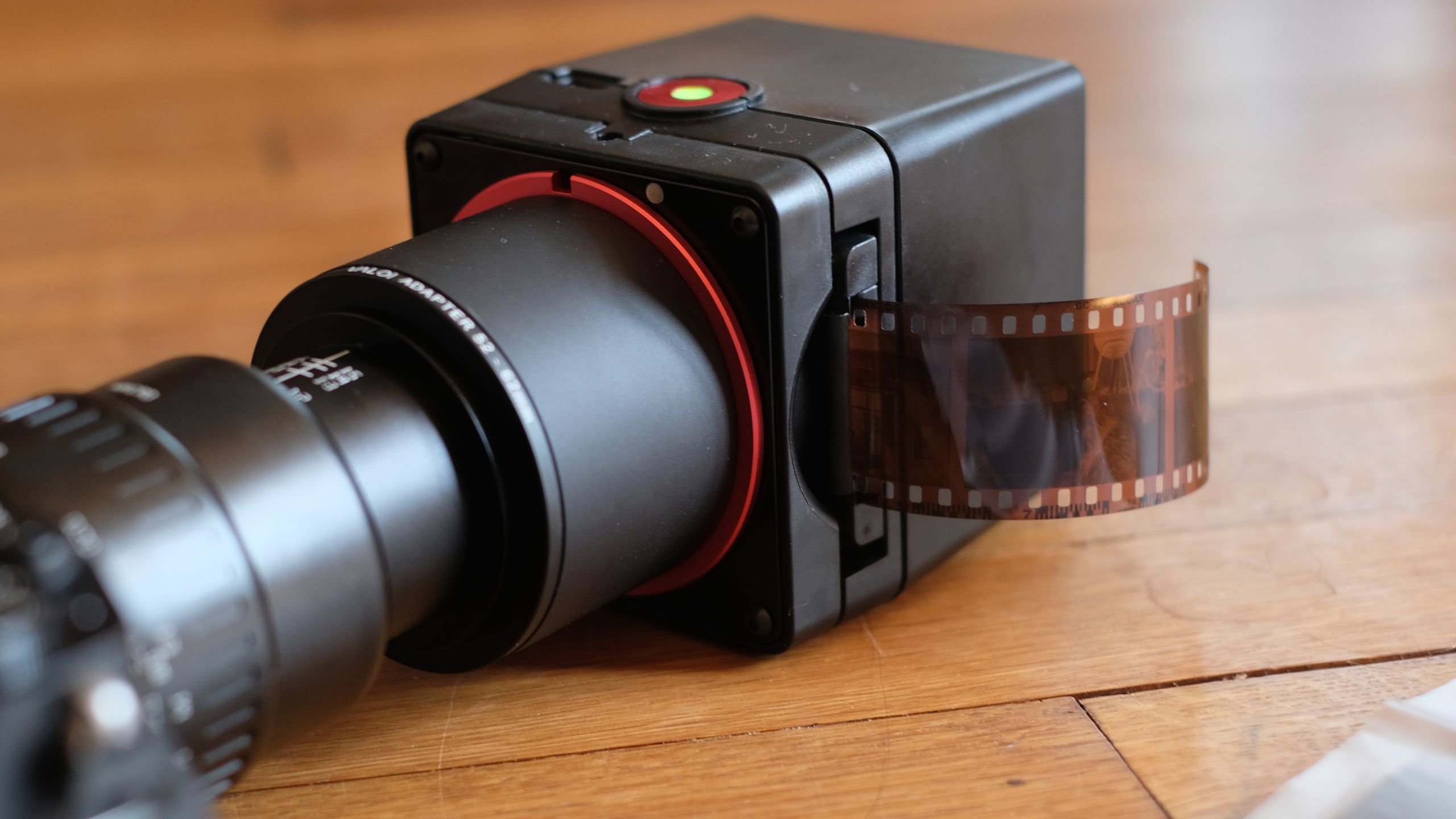
The Valoi easy35 V2 is a compact, modular scanning device designed to digitize 35mm film negatives by utilizing a user’s existing digital camera and macro lens. Priced at $272 USD (£199 / AU$337), the device functions as a portable, light-equipped film holder that requires a 1:1 macro lens and dedicated negative conversion software to produce final digital files. While it offers a space-saving alternative to traditional flatbed scanners, it is not a standalone unit and requires specific photographic equipment to operate.
The Mechanics of Home Film Scanning
For photographers looking to move away from expensive professional scanning services, the Valoi easy35 V2 provides a streamlined workflow for digitizing 35mm film. The system consists of a cube-shaped module housing a built-in light source, which is powered by a rechargeable battery via a USB-C connection. The kit includes metal extension tubes and step-up adapters, allowing users to attach various lenses to the 62mm-thread tubes.
The device operates by feeding film negatives through a side-mounted holder, positioning them directly in front of the camera lens. Success with the unit depends heavily on the user’s existing gear. According to the manufacturer’s technical guidelines, optimal performance for full-frame systems is achieved with lenses ranging between 55mm and 105mm. For those using APS-C sensors, a range of 40mm to 70mm is recommended, while Micro Four Thirds users should aim for 35mm to 60mm focal lengths. The distance between the negative and the front of the lens must remain under 230mm for the system to function correctly.
The physical setup can be unconventional. Users often find that the camera and the scanning module do not naturally sit level when connected, sometimes requiring the use of a spare film holder as a shim to stabilize the assembly. This manual calibration is part of the “rustic” nature of the device, which prioritizes performance over a fully integrated, automated experience.
Software and Digital Conversion
The hardware is only one half of the process; digitizing negatives requires a secondary software step to invert and color-correct the RAW files captured by the camera. While various options exist, the industry standard for this workflow is often identified as a combination of Adobe Lightroom Classic and the Negative Lab Pro plugin. Negative Lab Pro, which offers a 24-conversion free trial before requiring a one-time payment of $99, automates the conversion of RAW negative data into a viewable image.
Users are generally advised to shoot in RAW format to retain the maximum amount of image data. Once the conversion is automated, the software provides an editing panel where users can adjust color temperature, tint, and exposure. For those seeking faster results, the plugin includes pre-configured profiles, such as a “Kodak” setting, which can provide a baseline for color accuracy when processing specific film stocks.
Evaluating the Practicality for Film Enthusiasts
The Valoi easy35 V2 occupies a specific niche in the film photography market. It is distinct from entry-level, self-contained scanners like the Kodak Slide N Scan, which typically offer lower image quality but require no additional equipment. The Valoi system is instead aimed at photographers who already own high-resolution cameras and sharp macro lenses.
The primary barrier to entry is the requirement for compatible, high-quality optics. Standard macro lenses with incompatible filter thread sizes may require additional, sometimes complex, adapter stacks. Furthermore, the process is manual; users must load the film and ensure proper focus for every frame. While this can lead to high-speed scanning once the workflow is established, initial attempts often result in crooked frames that require cropping during post-processing.
For users with a significant archive of negatives, the ability to scan entire rolls in minutes represents a substantial long-term saving compared to recurring professional lab costs. However, the requirement for a specific, high-resolution camera setup means that the total cost of ownership is significantly higher than the price of the unit itself. It is a tool built for those who prioritize control and speed in their personal digital archiving process, rather than a “plug-and-play” solution for the general public.
As of the most recent product updates, Valoi continues to support the easy35 ecosystem through its official documentation and video tutorials, which address common setup challenges such as leveling and lens compatibility. Readers interested in the latest software updates or firmware considerations for digital camera integration can find resources on the manufacturer’s official support portal. Please share your experiences with home scanning setups in the comments below.
Keep reading