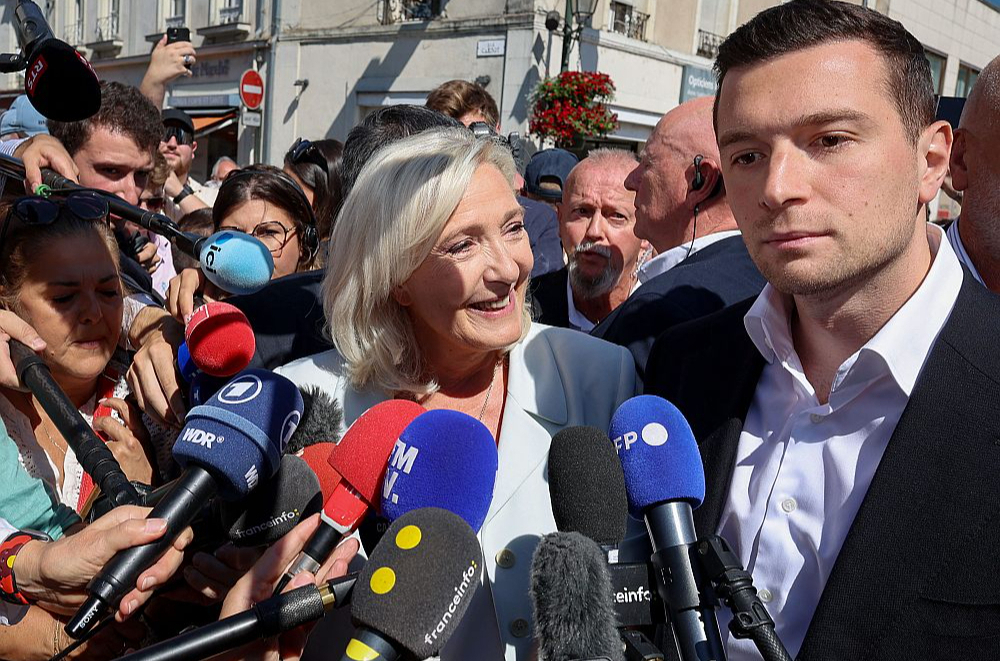
Marine Le Pen, the prominent French nationalist leader and figurehead of the National Rally (Rassemblement National), has confirmed her intention to run in the next French presidential election, following a period of legal uncertainty regarding her eligibility. The announcement comes as the French judicial system considers complex charges involving the alleged misuse of European Parliament funds, a case that has dominated headlines and shaped the political trajectory of the party.
The legal proceedings, which have unfolded in Paris, center on allegations that the National Rally used European Union funds to pay for parliamentary assistants who were, in fact, working for the party in France. According to reporting by Reuters, prosecutors have sought a five-year prison sentence and a five-year ban from public office against Le Pen. Such a ban, if upheld, would effectively bar her from the upcoming presidential contest, a scenario that has prompted intense debate regarding voter representation and the independence of the judiciary.
Legal Challenges and Political Consequences
The central question facing the French electorate is whether the judicial process will interfere with the “freedom of choice” for voters in the next cycle. Legal experts and political analysts have noted that the potential for a “provisional execution” of a sentence—which would prevent a candidate from running even while an appeal is ongoing—remains a critical point of contention. As reported by the Associated Press, the court is expected to deliver its verdict on these charges in the coming weeks, which will provide definitive clarity on whether Le Pen’s name will appear on the ballot.

Le Pen has consistently denied any wrongdoing, characterizing the prosecution as a politically motivated attempt to stifle her party’s influence. Her legal team has argued that the interpretation of parliamentary assistant roles is overly restrictive and ignores the realities of how political parties function within the European legislative framework. The trial, which concluded its primary hearings in late November, has been one of the most significant legal hurdles in Le Pen’s long political career, according to France 24.
The Le Pen and Bardella Partnership
Beyond the courtroom, the National Rally is actively restructuring its campaign strategy to maintain momentum. Marine Le Pen has signaled that she intends to work in close coordination with Jordan Bardella, the president of the National Rally, throughout the upcoming campaign cycle. Bardella, who has emerged as a key strategist and the public face of the party’s younger demographic, is widely seen as a vital component of the party’s efforts to broaden its appeal beyond its traditional base.
This “tandem” approach is intended to provide a seamless transition of messaging should legal circumstances force a change in leadership or campaign focus. By emphasizing a unified front, the party seeks to minimize the impact of the ongoing trial on its polling numbers and grassroots mobilization. Observers note that while Le Pen remains the party’s primary figurehead, Bardella’s influence within the party structure has grown substantially since he took the reins of the organization in 2022, as documented by The Guardian.
Voter Choice and Democratic Implications
The discourse surrounding the potential disqualification of a major presidential candidate has sparked a broader conversation about the limits of judicial intervention in democratic processes. For supporters of the National Rally, any move to prevent Le Pen from standing for office is viewed as a systemic effort to circumvent the democratic will of the French people. Conversely, proponents of the prosecution argue that no individual, regardless of their political standing, is above the law, and that accountability for the misuse of public funds is a fundamental tenet of the rule of law.

The outcome of the trial, expected to be finalized by the Paris Criminal Court, will serve as a definitive checkpoint for the 2027 presidential cycle. As the legal timeline progresses, both the government and the opposition are preparing for a variety of electoral scenarios, including one where the National Rally may have to pivot to a different candidate or face the election under the cloud of an active legal appeal. The court’s ruling will be the primary factor determining the immediate future of the French right-wing movement, according to official court communications cited by Le Monde.
For now, the political landscape remains in a state of anticipation as the nation awaits the court’s decision. Readers interested in following the official proceedings and updates on the case can monitor the official portal of the French Ministry of Justice or follow reporting from major international news agencies for verified developments as they happen. Please feel free to share your thoughts or join the discussion in the comments section below.