
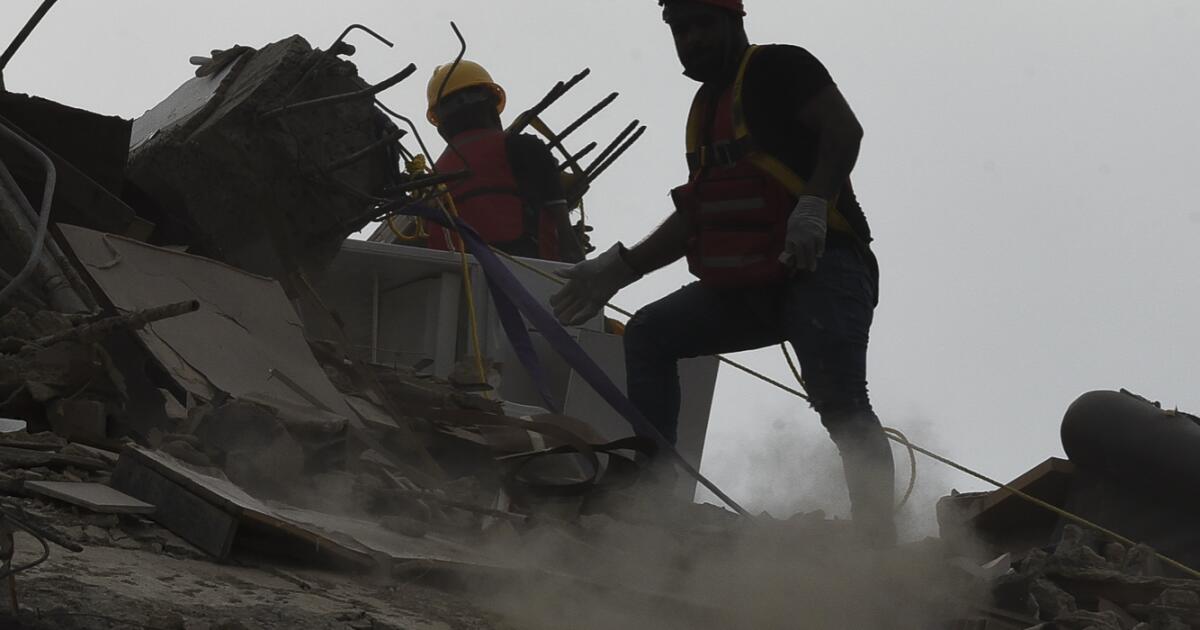
Rubén Darío Sillie used social media to coordinate rescue efforts for his family after twin earthquakes struck Venezuela, citing a delayed response from the national government. Sillie’s appeals for help highlighted a critical gap in official emergency services during the seismic events, forcing survivors to rely on digital networks to locate trapped relatives and organize community-led evacuations.
The crisis unfolded as a series of powerful tremors damaged infrastructure and residential buildings across affected regions. According to reports from survivors and local witnesses, the lack of immediate government deployment of search-and-rescue teams left many families in precarious positions, with Sillie serving as one of several individuals who turned to platforms like X (formerly Twitter) and WhatsApp to broadcast distress signals.
This reliance on crowdsourced rescue data reflects a broader trend in Venezuelan disaster management, where political instability and economic collapse have degraded the capacity of state institutions to respond to natural disasters. Sillie’s case underscores the transition of social media from a communication tool to a primary emergency infrastructure in regions where official channels are perceived as unresponsive or inefficient.
Why did survivors rely on social media during the Venezuela earthquakes?
Survivors turned to social media because official emergency response times were viewed as severely delayed. In the immediate aftermath of the tremors, Rubén Darío Sillie reported that government rescue teams were not arriving at the sites of collapsed structures in a timeframe necessary to save lives. By posting specific coordinates and descriptions of trapped family members, Sillie was able to alert other civilians and independent volunteers who could reach the locations faster than state agencies.
The use of digital platforms allowed for the rapid dissemination of “SOS” messages that bypassed traditional bureaucratic hurdles. According to reports on the ground, these digital appeals provided real-time mapping of the hardest-hit areas, which often preceded official government damage assessments. This organic coordination became the primary mechanism for identifying survivors in the rubble when official sirens and emergency hotlines remained silent or overloaded.
What was the impact of the government’s response?
The Venezuelan government faced widespread criticism for its perceived inertia during the crisis. Critics and survivors alleged that the state’s response was not only slow but lacked the necessary equipment and personnel to handle a large-scale seismic event. This delay created a window of vulnerability where the “golden hour” for rescue—the period where the likelihood of finding survivors is highest—was missed in several sectors.
The lack of transparency regarding casualty counts and the slow deployment of medical supplies further fueled public frustration. While state officials typically maintain a narrative of control, the digital evidence provided by citizens like Sillie—including photos of wreckage and videos of unanswered pleas for help—contradicted official claims of an organized and effective recovery operation.
How do these events reflect Venezuela’s broader infrastructure crisis?
The failure to provide a timely rescue operation is tied to the systemic collapse of Venezuelan public services. Years of economic hyperinflation and mismanagement have left the country’s civil defense and emergency management agencies underfunded and understaffed. The inability to mobilize heavy machinery for rubble clearance and the lack of functioning communication grids between regional hubs and the central government exacerbated the disaster’s impact.
This event mirrors previous crises in the region where the state’s inability to provide basic security and safety led to the rise of “community resilience” networks. When the state fails to provide a safety net, citizens create their own through mutual aid and technology. Sillie’s experience is a case study in how digital connectivity can partially mitigate the absence of a functioning state, though it cannot replace the heavy industrial capacity required for professional urban search and rescue (USAR).
Who is affected by the lack of official disaster protocols?
The primary victims are those in high-density residential areas with poor building code enforcement, where the risk of collapse is highest. Without a centralized, efficient rescue protocol, the elderly and disabled are disproportionately affected, as they cannot easily signal for help via social media or move themselves from debris.

Beyond the immediate victims, the lack of a reliable state response creates a psychological toll of abandonment among the population. The necessity for a citizen to “beg” for help on a public forum to save their family indicates a breakdown of the social contract between the Venezuelan state and its citizens. This environment encourages further migration as families seek stability in countries with more reliable emergency infrastructure.
For those remaining, the current strategy involves the creation of localized “emergency pods” and the maintenance of offline maps and communication tools, acknowledging that official help may not arrive in time during future seismic events.
Official updates regarding the long-term reconstruction of affected areas and the status of government aid packages are pending from the Venezuelan Ministry of Interior, Justice, and Peace. Further reports on the total number of displaced persons are expected as census efforts continue in the devastated zones.
World Today Journal encourages readers to share this report and leave comments regarding their experiences with community-led rescue efforts in disaster zones.