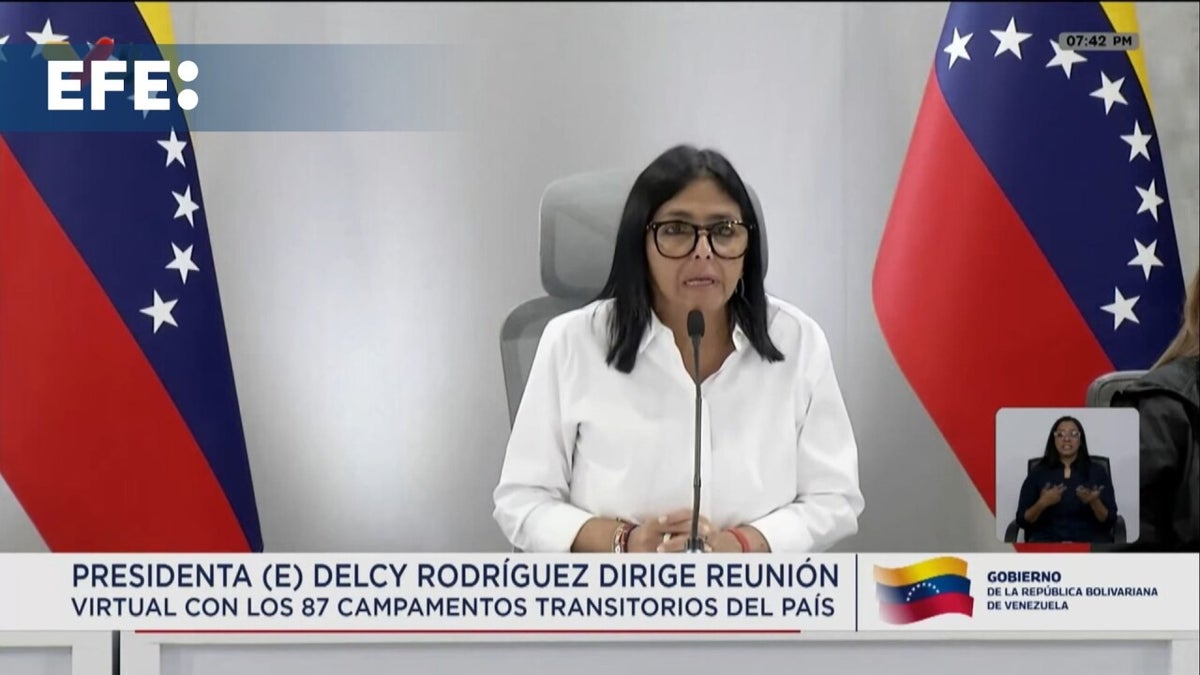
Venezuelan Vice President Delcy Rodríguez has formally requested that the United Kingdom release gold reserves currently held in the Bank of England, citing an urgent need to fund reconstruction efforts following a series of recent seismic events in the country. The request highlights an ongoing, long-standing legal and diplomatic dispute between the Venezuelan government and international financial institutions regarding the status of billions of dollars in state assets frozen under various international sanctions regimes.
The Venezuelan administration, led by President Nicolás Maduro, asserts that approximately $9 billion in total assets—including the gold held in London—remain inaccessible, hindering the state’s capacity to address the humanitarian and structural consequences of the recent earthquakes. According to statements from the Venezuelan government, these funds are earmarked for emergency housing, infrastructure repair, and the procurement of essential supplies for affected populations.
The Legal Context of Frozen Venezuelan Assets
The dispute over the Venezuelan gold reserves held at the Bank of England is not new; it stems from the 2019 political crisis during which several nations, including the United Kingdom, withdrew recognition of the Maduro administration. The Bank of England has historically maintained that it cannot release the bullion without clear legal instructions, as it must adhere to the domestic and international legal framework governing foreign assets. The UK Supreme Court has previously issued rulings on the matter, noting that the recognition of a government is a matter for the British executive branch, which has officially recognized the opposition leadership as the legitimate representative of the Venezuelan state in legal proceedings concerning these assets, as documented in the UK Supreme Court judgment on the Venezuela gold case.

For the Maduro government, the request to release these funds is framed as a humanitarian necessity. Venezuelan officials have argued that the continued freezing of these assets violates international norms, particularly when the resources are required to mitigate the impact of natural disasters. However, international observers and the UK government have consistently linked the release of such funds to requirements for democratic reforms and transparent management of state finances, as outlined in reports from the UK Foreign, Commonwealth & Development Office.
Economic Impact and Reconstruction Efforts
The recent earthquakes have compounded the economic challenges already facing Venezuela, which has been grappling with hyperinflation and a prolonged contraction of its oil-dependent economy for nearly a decade. In response to the disaster, the Venezuelan government has announced plans to invite international private companies to participate in an “aggressive” housing construction program to replace homes destroyed by the tremors. This initiative is part of a broader, state-led strategy to stabilize the regions affected by the seismic activity.
The government’s call for the lifting of international sanctions is central to this strategy. According to official communications from the Venezuelan Ministry of Foreign Affairs, the sanctions regime prevents the country from accessing the credit markets and capital necessary for large-scale reconstruction. While the government seeks to engage foreign construction firms, the absence of international financing remains a significant hurdle. Independent economic analyses, such as those published by the International Monetary Fund (IMF), have frequently noted that Venezuela’s lack of access to financial markets is a primary constraint on its ability to recover from domestic crises.
Diplomatic Standoff and Future Implications
The request directed toward the British monarchy underscores the high-level diplomatic stakes involved in the dispute. As the situation remains deadlocked, the Venezuelan government continues to utilize international forums to advocate for the liberation of its assets. The international community, meanwhile, remains divided on the issue, with some nations supporting the humanitarian release of funds while others maintain that the assets must remain frozen until specific political conditions are met.

For the residents of the affected regions, the delay in funding translates into a slower pace of reconstruction. As of the latest updates from humanitarian groups operating in the region, the need for safe housing and medical infrastructure remains critical. The situation is expected to be a primary topic of discussion in upcoming diplomatic exchanges between Venezuela and its international creditors.
The next major checkpoint in this matter will likely involve further legal filings in the ongoing litigation regarding the control of the Central Bank of Venezuela’s assets in London. Readers interested in tracking the official status of these assets may consult the Bank of England’s official announcements or the public records of the UK Judiciary for updates on court-mandated proceedings. Please share your thoughts in the comments section below as this situation continues to develop.