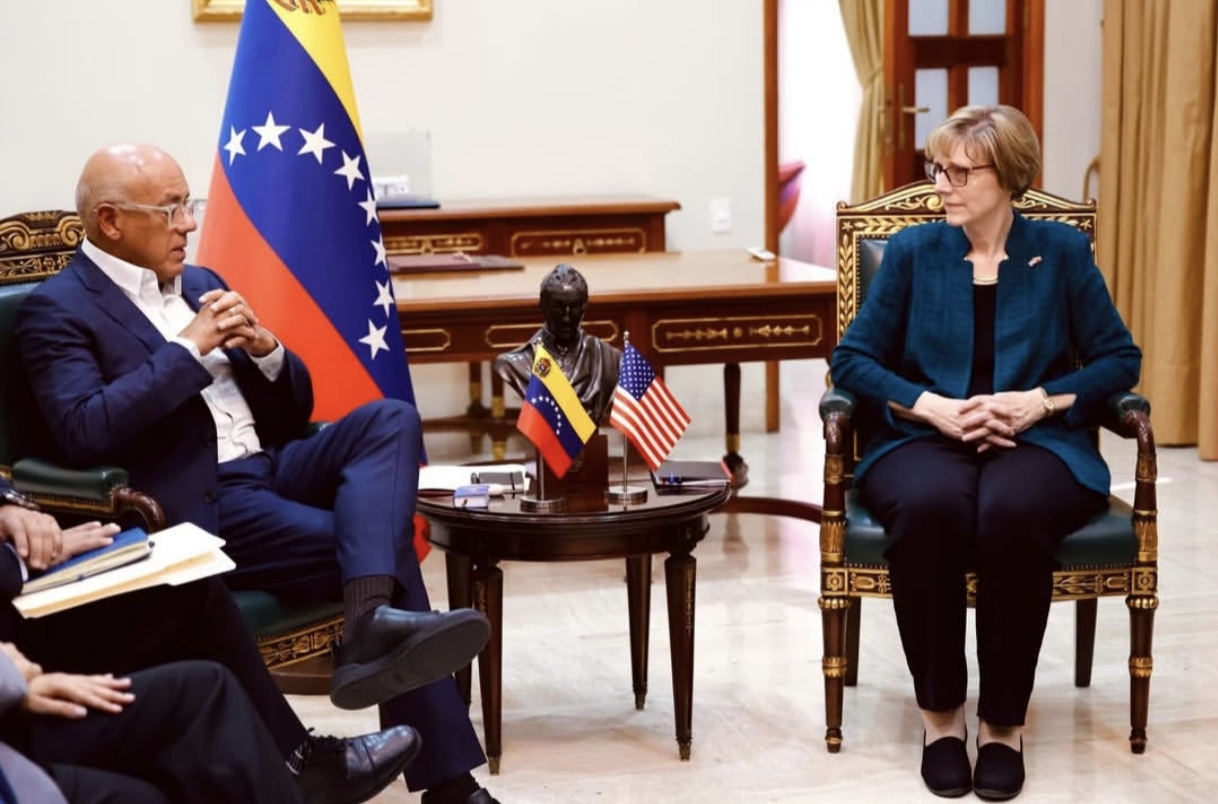
Caracas, Venezuela – A delegation from the United States Senate, alongside U.S. Chargé d’Affaires Laura Dogu, met with members of the Venezuelan National Assembly this week, signaling a continued, albeit cautious, thaw in relations between the two nations. The meetings, held in Caracas on Wednesday, focused on a range of issues, including the ongoing political process in Venezuela and the potential for further dialogue, but specific details remain scarce. This engagement comes amidst a period of significant political transition in Venezuela following the capture of Nicolás Maduro in January and the subsequent assumption of power by Delcy Rodríguez.
The meeting between National Assembly President Jorge Rodríguez and the U.S. Delegation underscores a shift in diplomatic engagement. Rodríguez described the discussions as taking place in an atmosphere of “mutual respect and cooperation between nations,” according to reports. While the Venezuelan government has been keen to portray the meetings as a sign of progress, the U.S. Side has offered limited public comment on the specifics of the conversations. The visit represents a notable development in the complex relationship between Washington and Caracas, which has been marked by years of tension and sanctions.
The U.S. Delegation included five high-level Senate officials, according to sources within the Venezuelan parliament. They engaged in discussions with both the leadership of the National Assembly and a special commission overseeing the implementation of a recently passed amnesty law. This law, intended to facilitate political reconciliation and the release of political prisoners, has been a key point of discussion in recent dialogues between the Venezuelan government and opposition groups. The involvement of the U.S. Senate delegation suggests a growing interest in the progress and potential impact of this legislation.
U.S. Delegation Meets with Venezuelan Lawmakers Amidst Political Transition
The meetings took place against a backdrop of evolving political dynamics in Venezuela. Delcy Rodríguez’s administration has initiated a series of changes, including the removal of Vladimir Padrino López from his position as Minister of Defense and the appointment of General Gustavo González López as his successor. These shifts signal a potential restructuring of power within the Venezuelan government and a willingness to engage with international actors, including the United States. The timing of the U.S. Delegation’s visit suggests a desire to assess the direction of these changes and explore opportunities for collaboration.
Opposition lawmaker Nora Bracho, vice president of the special commission monitoring the amnesty law, described the meeting with the U.S. Representatives as “historic.” She indicated that the commission discussed the law’s progress and future steps, but did not disclose the identities of the U.S. Officials involved. The amnesty law is a critical component of ongoing efforts to address the country’s deep political divisions and promote national reconciliation. Its successful implementation could pave the way for a more stable and democratic future for Venezuela.
The discussions surrounding the amnesty law are particularly significant given the history of political polarization and human rights concerns in Venezuela. The law aims to address the cases of individuals detained for political reasons, offering a pathway to their release and reintegration into society. However, its implementation faces challenges, including concerns about ensuring due process and accountability for past abuses. The involvement of international observers, such as the U.S. Senate delegation, could support to ensure transparency and fairness in the process.
According to a report by EFE, the U.S. Delegation consisted of five “high-level” Senate officials. They met with both the leadership of the National Assembly and the commission led by Deputy Jorge Arreaza that is overseeing the implementation of the amnesty law. This suggests a comprehensive approach by the U.S. Side, seeking to engage with a broad range of stakeholders in the Venezuelan political landscape.
Adding to the momentum toward legislative cooperation, Deputy Antonio Ecarri, also a member of the amnesty law monitoring commission, proposed the creation of a “friendship group” between the Venezuelan Parliament and the U.S. Congress. This initiative aims to strengthen legislative ties and deepen dialogue between the two nations. Such a group could provide a platform for ongoing communication and collaboration on issues of mutual interest, fostering a more constructive relationship between Venezuela and the United States.
A Shift in U.S.-Venezuela Relations
The recent diplomatic overtures between the U.S. And Venezuela represent a significant departure from the strained relationship that characterized much of the past decade. For years, Washington imposed sanctions on Venezuelan officials and entities, citing concerns about human rights abuses, corruption, and undemocratic practices. These sanctions contributed to a severe economic crisis in Venezuela, exacerbating humanitarian challenges and fueling political instability. The U.S. State Department provides detailed information on the history of U.S. Policy toward Venezuela.
However, since the capture of Nicolás Maduro in January, there has been a noticeable shift in tone and approach. The U.S. Government has signaled a willingness to engage with the new Venezuelan leadership, exploring potential areas of cooperation. This shift is driven, in part, by a desire to address regional security concerns, including drug trafficking and migration, and to promote stability in the region. The visit by the Senate delegation is a tangible sign of this evolving dynamic.
The ongoing dialogue between the U.S. And Venezuela is not without its challenges. Deep-seated mistrust and lingering concerns about human rights and democratic governance remain. The success of this engagement will depend on the willingness of both sides to address these issues constructively and to demonstrate a genuine commitment to a more positive and productive relationship. The implementation of the amnesty law will be a key test of this commitment.
The broader geopolitical context also plays a role. The U.S. Is increasingly focused on countering the influence of other global powers, such as Russia and China, in Latin America. Engaging with Venezuela, a country with significant oil reserves and strategic importance, could be seen as part of this broader strategy. However, any attempt to exert undue influence or to impose conditions on Venezuela could undermine the fragile progress that has been made.
The recent meetings in Caracas represent a crucial step in a complex and evolving process. While the path forward remains uncertain, the willingness of both the U.S. And Venezuelan governments to engage in dialogue offers a glimmer of hope for a more stable and prosperous future for the country and the region. The next key development to watch will be the progress of the amnesty law and the extent to which it can contribute to national reconciliation and political healing.
As of March 19, 2026, no further details regarding the specific outcomes of the meetings have been released by either the U.S. Senate or the Venezuelan National Assembly. However, observers anticipate further diplomatic engagements in the coming weeks as both sides seek to build on this initial momentum. Readers are encouraged to follow updates from official sources and reputable news organizations for the latest developments.
Jonathan Reed, Editor, News, World Today Journal, London.
Worth a look