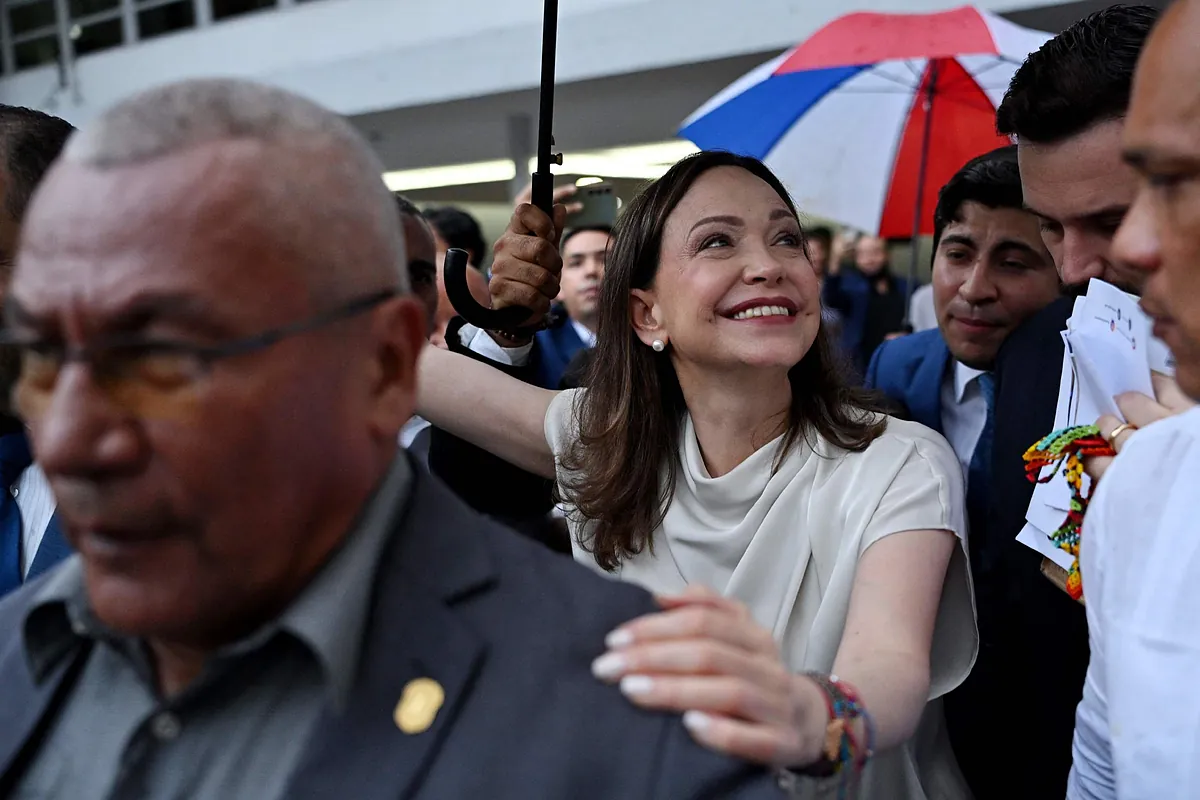
María Corina Machado, Venezuela’s opposition leader and 2024 presidential candidate, has publicly thanked former U.S. President Donald Trump for his administration’s actions against armed groups operating in Venezuela, calling them “criminal networks” that have caused “inconmensurable” damage to the country’s human, social, economic, and environmental fabric. The remarks come as Venezuela’s political and security landscape remains volatile, with armed groups—many linked to the Maduro government—continuing to operate with impunity, according to human rights organizations and U.S. officials.
Machado’s statement reflects growing tensions between Venezuela’s opposition and the ruling regime, as well as the role of international actors in shaping the country’s future. While the Trump administration’s policies on Venezuela have been widely debated, Machado’s acknowledgment underscores the perceived impact of U.S. actions on Venezuela’s internal conflicts. Meanwhile, the Maduro government has repeatedly denied allegations of ties to armed groups, framing them instead as “self-defense” militias.
This development comes as Venezuela prepares for a highly contested presidential election later this year, with Machado barred from running by the country’s electoral council—a decision she and her supporters have called “illegitimate.” The situation has drawn sharp criticism from the U.S., the European Union, and regional allies, who argue that the election process lacks transparency and fairness.
Machado’s tweet, posted on December 15, 2023, marked the first time she publicly credited Trump’s administration for targeting these groups.
Who Are Venezuela’s Armed Groups, and What Role Do They Play?
Venezuela’s armed groups, often referred to as “colectivos,” have been a persistent feature of the country’s political landscape since the late 1990s, when they emerged as paramilitary forces supporting then-President Hugo Chávez’s government. According to a 2022 Human Rights Watch report, these groups have evolved into “criminal networks” that engage in extortion, drug trafficking, and political repression—activities that have exacerbated Venezuela’s economic and humanitarian crises.
The groups operate with varying degrees of autonomy but are widely believed to maintain ties to the Maduro administration. A United Nations report from 2021 noted that some colectivos receive funding and logistical support from state security forces, enabling them to act with impunity. Their presence has been particularly pronounced in Caracas and other major cities, where they control key neighborhoods and often serve as enforcers for the government.
While the Maduro government has framed these groups as “peoples’ militias” tasked with defending revolutionary ideals, international observers and Venezuelan civil society organizations describe them as instruments of state repression. The Venezuela Program at Amnesty International has documented cases where colectivos have been used to intimidate opposition figures, suppress protests, and carry out extrajudicial killings.
What Actions Has the Trump Administration Taken Against These Groups?
During his presidency, Donald Trump’s administration imposed sweeping sanctions on Venezuela, targeting not only high-ranking officials but also entities linked to the country’s oil and mining sectors—sectors that, according to U.S. officials, have been exploited by armed groups for funding. The U.S. Treasury Department’s Office of Foreign Assets Control (OFAC) has designated multiple colectivos and their leaders under sanctions, freezing their assets and prohibiting transactions with them.
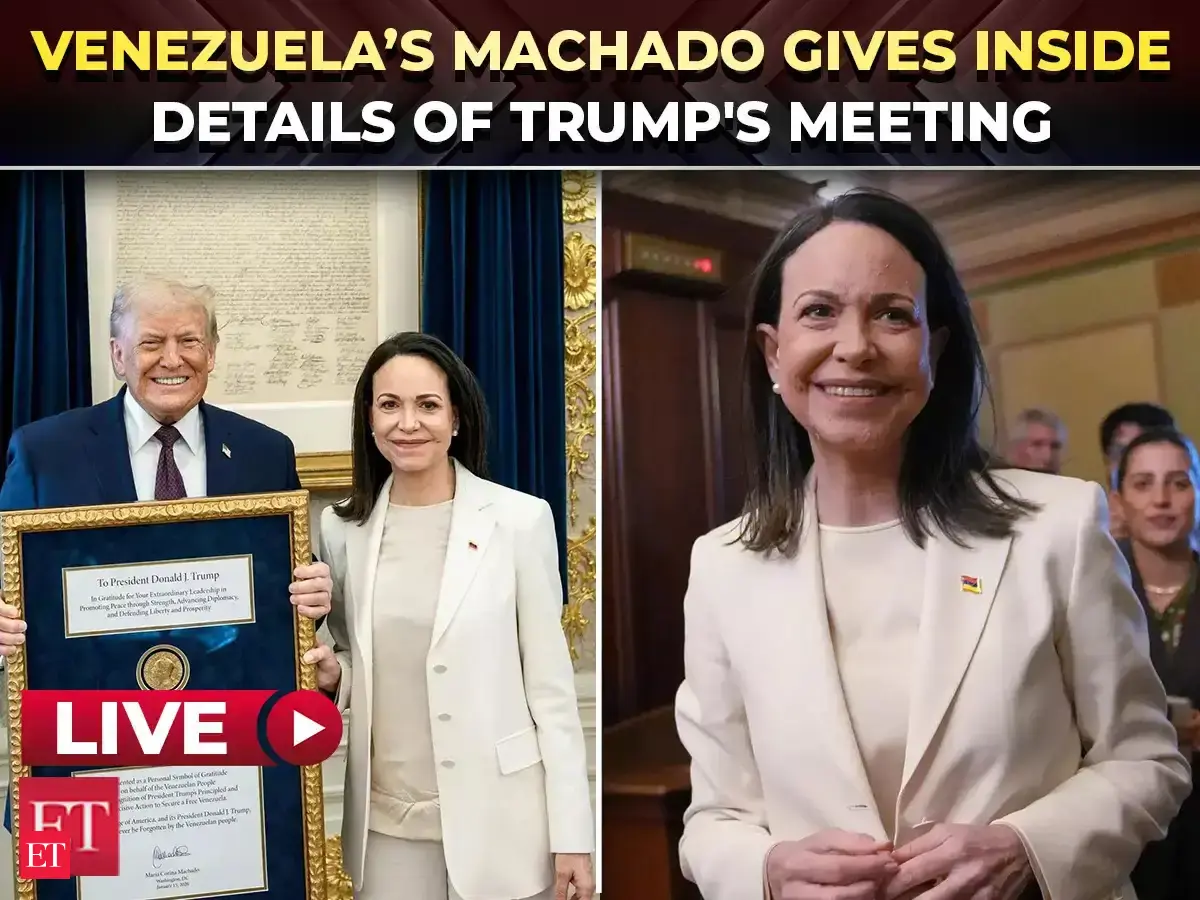
One of the most high-profile actions was the designation of two former Venezuelan officials in 2019 for their alleged involvement in human rights abuses, including ties to armed groups. The Trump administration also worked with regional allies to isolate Venezuela diplomatically, pushing for the recognition of Juan Guaidó—then-president of Venezuela’s National Assembly—as the country’s legitimate leader.
Machado’s acknowledgment of these actions is significant, as it aligns with the opposition’s broader narrative that U.S. pressure has weakened the Maduro regime’s ability to deploy armed groups with impunity. However, critics argue that sanctions have also deepened Venezuela’s economic crisis, disproportionately affecting ordinary citizens. The International Monetary Fund (IMF) estimates that Venezuela’s GDP has contracted by nearly 80% since 1998, with hyperinflation and mass emigration further destabilizing the country.
How Have Armed Groups Impacted Venezuela’s Humanitarian and Economic Crisis?
The damage attributed to armed groups extends far beyond political repression. According to the United Nations High Commissioner for Refugees (UNHCR), more than 7.7 million Venezuelans have fled the country since 2015—many citing violence, economic collapse, and lack of basic services as primary reasons for their departure. While armed groups are not the sole cause of this exodus, their activities have contributed to a climate of fear and instability.
Economically, the groups have been linked to the plunder of Venezuela’s natural resources. A 2021 study by the U.S. Institute of Peace (USIP) found that colectivos and state security forces collaborate in illegal gold mining operations, particularly in the Orinoco Mining Arc—a region rich in minerals but also plagued by environmental destruction and human rights abuses. The study estimates that illegal mining accounts for up to 10% of Venezuela’s GDP, with proceeds often funneled into the pockets of armed groups and corrupt officials.
Environmentally, the impact has been devastating. The same USIP report highlighted cases where illegal mining has led to the contamination of rivers and forests, displacing indigenous communities and threatening biodiversity. Human Rights Watch has also documented instances where colectivos have blocked humanitarian aid convoys, exacerbating food and medical shortages in vulnerable regions.
What Is the International Response to Venezuela’s Armed Groups?
The issue of armed groups in Venezuela has drawn condemnation from multiple international bodies. The Organization of American States (OAS) has repeatedly called for an end to state-sponsored violence, while the European Union has imposed its own sanctions on Venezuelan officials and entities linked to human rights abuses. In 2022, the EU extended its sanctions regime to include additional colectivo leaders, citing their involvement in repression and drug trafficking.
However, the Maduro government has dismissed these criticisms, accusing foreign powers—particularly the U.S.—of seeking to destabilize Venezuela. In a state television address in 2023, President Nicolás Maduro claimed that armed groups are “legitimate defenders of the revolution” and that foreign interference is the root cause of Venezuela’s problems. The government has also pointed to the Community of Latin American and Caribbean States (CELAC) as a counterbalance to U.S. influence, though the bloc has largely avoided direct condemnation of the colectivos.
Machado’s public acknowledgment of Trump’s role in targeting these groups may signal a shift in the opposition’s strategy, particularly as the 2024 election approaches. With Machado barred from running, her allies have intensified pressure on the Maduro government to allow a free and fair vote. The U.S. and its allies have signaled support for a negotiated solution, but the presence of armed groups—and their alleged ties to the regime—remains a major obstacle to any political transition.
What Happens Next? Key Developments to Watch
The coming months will be critical in determining whether international pressure—particularly from the U.S.—can lead to meaningful changes in Venezuela’s security landscape. Here are the key developments to watch:
- Venezuela’s 2024 Presidential Election: Scheduled for July 28, the election remains shrouded in uncertainty. The Maduro government has refused to allow Machado to run, citing a legal technicality, while opposition leaders argue the process lacks credibility. The Carter Center, a U.S.-based election monitoring organization, has already declined to observe the vote due to concerns over fairness.
- U.S. Policy Under Biden: While the Biden administration has maintained many of Trump’s Venezuela sanctions, its approach has been more cautious, focusing on diplomacy and humanitarian aid rather than direct confrontation. Whether the U.S. will escalate pressure on armed groups remains an open question, particularly as midterm elections in the U.S. could influence policy.
- Regional Diplomacy: Brazil’s new president, Luiz Inácio Lula da Silva, has signaled a willingness to mediate between Venezuela and its neighbors, including Colombia and Guyana. A potential diplomatic breakthrough could reduce tensions and create space for addressing the armed groups issue.
- Human Rights Reports: Upcoming reports from the UN and regional bodies, including the Inter-American Commission on Human Rights (IACHR), may provide further evidence of the colectivos’ activities, potentially strengthening international calls for action.
How Can Readers Stay Informed on Venezuela’s Crisis?
For those seeking reliable updates on Venezuela’s political and humanitarian situation, the following sources provide authoritative reporting:
- Human Rights Watch – Venezuela: Detailed reports on human rights abuses, including the role of armed groups.
- United Nations Venezuela Page: Official updates on humanitarian aid, refugee crises, and political developments.
- U.S. Institute of Peace – Venezuela: Analysis of security, governance, and conflict dynamics.
- Carter Center – Venezuela: Election monitoring and political analysis.
- Amnesty International – Venezuela: Investigative reporting on state repression and armed groups.
For real-time updates, follow verified journalists and organizations covering Venezuela, such as @ElNacionalWeb (El Nacional), @venezuelatuya (Venezuelatuya), and @ReutersLatam (Reuters Latin America).
As the situation in Venezuela continues to evolve, the interplay between armed groups, international sanctions, and domestic politics will shape the country’s trajectory. Machado’s remarks highlight the complex dynamics at play, where geopolitical maneuvering and internal conflicts collide with profound human consequences.
Next Checkpoint: The next major development will likely be the outcome of Venezuela’s presidential election on July 28, 2024, and the international community’s response to the process. The U.S. and EU have indicated they will assess the election’s legitimacy based on whether it meets democratic standards, including the participation of opposition candidates and free media access. Updates on the status of armed groups and their alleged ties to the Maduro regime will also be closely monitored in the coming months.
We welcome your insights and questions in the comments below. For further reading, explore our coverage of Latin America’s political transitions and the impact of sanctions on global conflicts.