The landscape of innovation in South Korea is shifting toward a more inclusive, nationwide model as the government intensifies its efforts to spark youth entrepreneurship beyond the traditional hubs of Seoul and Pangyo. In a strategic move to bridge the gap between academic research and commercial viability, the Ministry of SMEs and Startups (MSS) has launched a series of high-level engagements designed to empower young innovators across the country.
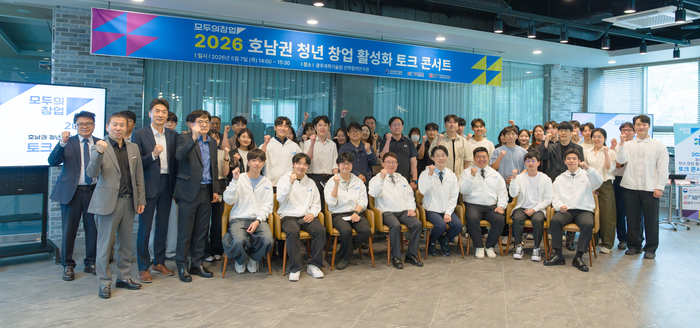
On May 7, 2026, First Vice Minister Noh Yongseok visited the Gwangju Institute of Science and Technology (GIST) to engage directly with students and aspiring entrepreneurs. The visit served as a cornerstone of the ‘Startup for Everyone’ project, an initiative aimed at democratizing the startup ecosystem and encouraging young people to translate cutting-edge research into scalable businesses.
The engagement at GIST was not merely a formality but a “talk concert” style communication session. Vice Minister Noh met with students to discuss the specific hurdles they face when transitioning from a lab setting to a marketplace. By focusing on the lived experiences of student founders, the Ministry aims to refine its policy framework to better support the unique needs of technology-driven startups, particularly in the fields of artificial intelligence and semiconductors.
Empowering the Next Generation of Tech Innovators
GIST occupies a critical role in South Korea’s technological ambitions. As a specialized science and engineering university, it is a primary engine for research in high-growth sectors. The Ministry’s focus on GIST underscores the government’s belief that the next wave of economic growth will be driven by “deep tech”—startups based on substantial scientific advances rather than simple service-based apps.
During the meeting, students shared their ideas for technology-based ventures and discussed the complexities of the commercialization process. For many young researchers, the path from a successful experiment to a registered company is fraught with regulatory hurdles and a lack of initial seed capital. Vice Minister Noh emphasized that the government’s role is to supplement the necessary support on-site to ensure that these academic achievements do not remain trapped in journals but instead become viable companies.
“Technology startups are a key driving force that will lead future new industries,” stated Noh Yongseok, First Vice Minister of the Ministry of SMEs and Startups. “We will continue to supplement the necessary support on site so that the excellent research achievements and ideas of young people can lead to startups.”
The focus on AI and semiconductors is particularly timely. As global competition for semiconductor supremacy intensifies, the South Korean government is prioritizing the creation of a pipeline of young talent capable of innovating within the hardware and software stacks that power modern computing. By fostering this “startup passion” at institutions like GIST, the MSS is attempting to build a more resilient and diversified tech economy.
A Nationwide Strategy for Inclusive Entrepreneurship
The visit to Gwangju is part of a broader, synchronized effort by the Ministry of SMEs and Startups to revitalize regional economies. While First Vice Minister Noh focused on the tech-heavy environment of GIST, Second Vice Minister Lee Byungkwon simultaneously visited Catholic Kwandong University to discuss strategies for regional startup revitalization.

This dual-track approach highlights a critical shift in South Korea’s economic strategy: the move toward inclusive entrepreneurship. For decades, the “Seoul-centric” nature of the startup scene has led to a brain drain from the provinces, where talented youth migrate to the capital in search of venture capital and networking opportunities. The ‘Startup for Everyone’ project seeks to reverse this trend by creating localized ecosystems where entrepreneurs can thrive without leaving their home regions.
According to the Ministry, local startups are viewed as more than just new businesses; they are seen as key drivers for reviving regional economies. By supporting startups in Gwangju and Gangwon Province, the government hopes to create high-quality jobs that attract and retain young talent in the provinces, thereby reducing regional inequality and stimulating local consumption and investment.
Bridging the Gap: From Research to Market
One of the primary challenges discussed during the GIST visit was the “valley of death”—the precarious phase between initial research and achieving a sustainable business model. The Ministry of SMEs and Startups is looking to address this by improving the mechanisms for the commercialization of research achievements.

The discussion at the talk concert focused on several key areas of policy improvement:
- Regulatory Flexibility: Reducing the bureaucratic friction that prevents young researchers from testing prototypes in real-world environments.
- Targeted Funding: Moving beyond general grants toward funding that is specifically tailored to the longer development cycles of deep-tech startups.
- Mentorship Networks: Connecting student founders with experienced entrepreneurs who have successfully scaled technology companies.
By listening to the difficulties faced by GIST students, the MSS intends to create a more responsive support system. The goal is to transform the university from a place of pure learning into a launchpad for industrial innovation, where the transition from “student” to “CEO” is a supported and encouraged pathway.
Key Takeaways for Aspiring Entrepreneurs
| Objective | Strategic Focus | Expected Impact |
|---|---|---|
| Regional Revitalization | Support for universities like Catholic Kwandong and GIST | Reduction in brain drain to Seoul; local job creation |
| Deep Tech Growth | AI and Semiconductor commercialization | Global competitiveness in future core industries |
| Inclusive Access | ‘Startup for Everyone’ project | Lower barriers to entry for youth and non-traditional founders |
| Policy Refinement | Direct site communication (Talk Concerts) | Government support tailored to actual founder needs |
What In other words for the Global Startup Ecosystem
South Korea’s aggressive push into regional tech hubs is a signal to the global community that the country is diversifying its innovation strategy. By leveraging the specialized strengths of regional universities—such as GIST’s prowess in semiconductors—the government is creating a distributed network of excellence rather than relying on a single metropolitan center.
For international investors and partners, this shift suggests new opportunities for collaboration outside of Seoul. As the Ministry of SMEs and Startups continues to lower the barriers for youth entrepreneurship, a new wave of high-tech companies is likely to emerge from the provinces, offering fresh perspectives and specialized technical expertise.
The success of the ‘Startup for Everyone’ project will ultimately be measured by the number of research-based startups that successfully transition to the commercial market and the degree to which regional economies are revitalized. By prioritizing the voices of young entrepreneurs and removing the structural barriers to their success, South Korea is betting on its youth to lead the next industrial revolution.
The Ministry of SMEs and Startups is expected to continue its nationwide tour, with further site visits and policy feedback sessions scheduled to refine the ‘Startup for Everyone’ framework throughout the coming quarter.
Do you believe regional hubs can truly compete with major cities in the tech race? Share your thoughts in the comments below or share this article with your network.
Worth a look
- Is Your AI Nose Job Setting You Up For Disappointment?
- بالصورة.. لقاء عائلي عفوي يجمع غسان وريما الرحباني: “كاس اللي ما تركونا” – akhbaralyawm.com
- Youth Under Investigation for Alleged Arson in Singapore HDB Block (newsdirectory3.com)
- Malaysia Tourism Boom: Growth Trends, Food Destinations, and Market Impact (news-usa.today)