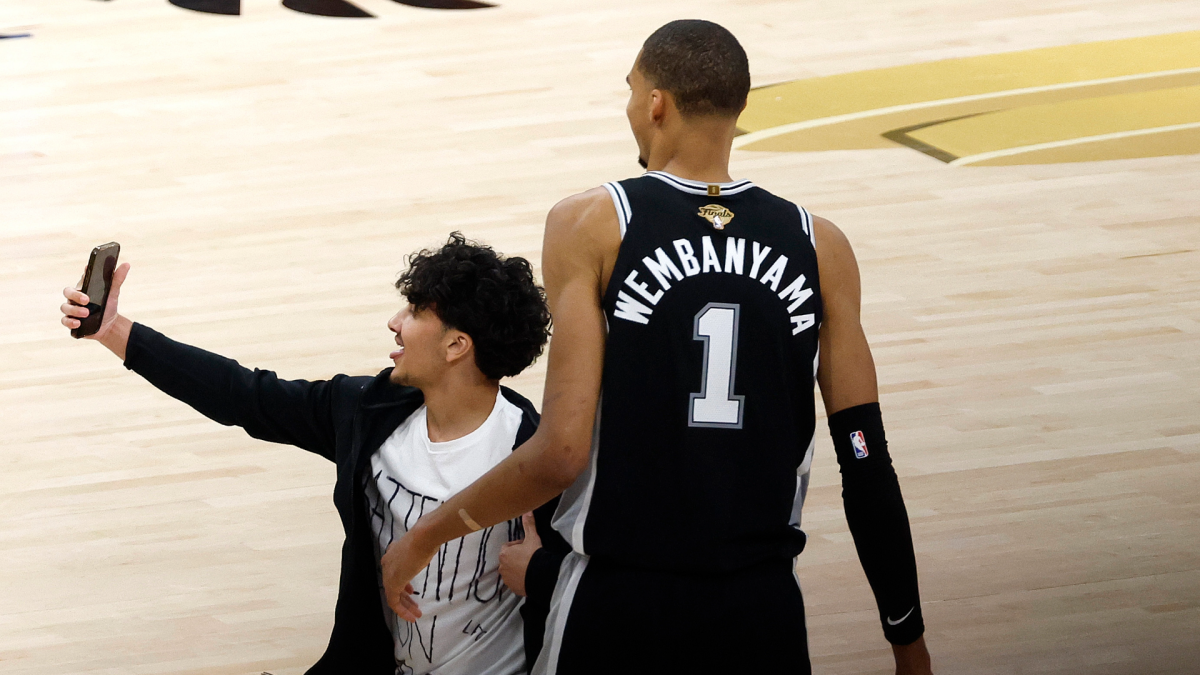
The intersection of superstar celebrity and arena security reached a breaking point this week, as the NBA moved to issue a definitive and permanent sanction following a chaotic breach of court protocol. In a move that underscores the league’s hardening stance on fan conduct, a spectator has been handed a lifetime ban from all NBA arenas after storming the court during a recent game to attempt a selfie with San Antonio Spurs sensation Victor Wembanyama.
The incident, which unfolded with startling speed, has sent shockwaves through the league’s operational departments. It wasn’t merely a singular act of disruption; reports indicate that a second fan was also issued a ban for their involvement in the breach, highlighting a coordinated or at least simultaneous lapse in arena security. The swiftness of the lifetime ban serves as a stark warning to a growing number of fans who increasingly view the boundary between the stands and the hardwood as a mere suggestion rather than a strict legal and safety mandate.
For the NBA, this is more than an isolated case of fan misconduct. It is a high-stakes challenge to the integrity of the game and the physical safety of the athletes who are the league’s most valuable assets. As the league continues to navigate the era of the “superstar influencer,” where the desire for digital proximity to icons like Wembanyama can override common sense, the repercussions are becoming increasingly severe.
The Mechanics of a Security Breach: What Happened on the Court
While the exact timeline of the intrusion is still being reviewed by league officials, the visual evidence of the event paints a clear picture of a breakdown in the barrier between the spectators and the players. The primary individual involved bypassed multiple layers of security, making a direct sprint toward the San Antonio Spurs’ star. The motive, according to those present, was not political or protest-oriented, but rather a pursuit of social media clout—specifically, an attempt to capture a selfie with the 7-foot-3 phenom.
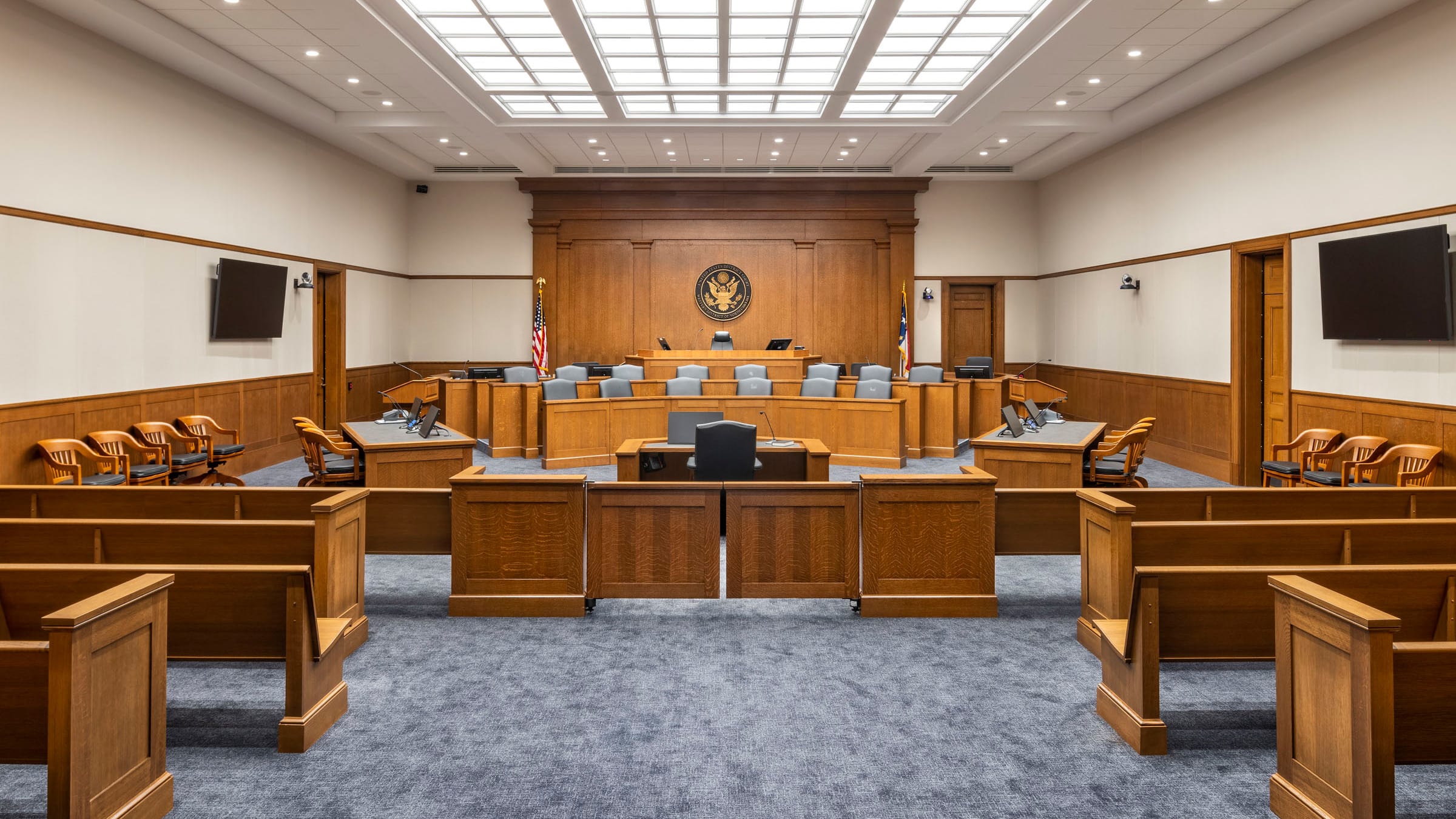
The disruption was not limited to a single actor. A second individual was also identified as playing a role in the incident, leading to a secondary ban. This secondary involvement suggests that the breach may have been facilitated by a lapse in the perimeter’s vigilance, allowing more than one person to exploit a moment of distraction or a gap in the security line.
The immediate response from arena staff was rapid, with security personnel intercepting the individuals before any physical contact could be made with Wembanyama. While the player appeared unbothered by the sudden intrusion, the potential for injury—both to the athlete and the fan—cannot be overstated. In a league where player availability is the primary driver of revenue and competitive balance, any threat to a marquee player’s safety is treated with the utmost gravity.
The “Wemby Effect”: Superstar Gravity and Fan Behavior
To understand why such an incident occurred, one must look at the unprecedented cultural footprint of Victor Wembanyama. Since entering the league, the French prodigy has not just been a basketball player; he has been a global phenomenon. His unique physical profile and generational talent have created a “gravity” that pulls fans closer than perhaps any player in recent history.
This “Wemby Effect” creates a unique psychological challenge for arena security. In the age of Instagram and TikTok, the value of a “moment” with a superstar is perceived by some fans as being worth the risk of a lifetime ban. The desire to bridge the gap between the digital world and physical reality often leads to impulsive, high-risk decisions. When a fan sees a once-in-a-lifetime opportunity to stand inches away from a global icon, the consequences of a lifetime ban can feel abstract and distant until the moment the handcuffs or the security escort arrives.
This trend is not unique to the NBA. From football pitches in Europe to cricket grounds in India, the “celebrity proximity” impulse is a global phenomenon. However, the NBA’s response to this specific incident suggests that the league is no longer willing to treat these “clout-chasing” incursions as mere nuisances. They are now being categorized as serious security breaches that demand the highest level of disciplinary action.
NBA Zero-Tolerance Policy: A Growing Disciplinary Trend
The decision to issue a lifetime ban is a significant escalation in the NBA’s disciplinary toolkit. Historically, court intrusions might have resulted in a season-long ban or a heavy fine. However, the league has clearly pivoted toward a zero-tolerance policy. This shift is driven by several key factors:
- Player Safety: The physical well-being of athletes is the top priority. A fan running onto a court during a high-speed game is a massive liability.
- Game Integrity: Sudden interruptions can affect the rhythm of the game, the officiating, and the overall experience for the paying audience.
- Deterrence: The league needs to send a message that the cost of a “viral moment” is the permanent loss of access to the sport.
- Insurance and Liability: Arena operators and the league itself face massive legal risks if security protocols are seen as inadequate or if fan behavior is not strictly policed.
By implementing lifetime bans for even non-violent, “clout-driven” incursions, the NBA is attempting to build a formidable deterrent. The message is unmistakable: the court is a sacred space for the competition, and any attempt to treat it as a photo op will result in permanent exile from the league’s venues.
Comparing NBA Security to Global Sports Standards
The NBA’s move puts it in line with other major sporting bodies that have faced similar challenges. In the world of football (soccer), FIFA and various domestic leagues have implemented much stricter controls following numerous pitch invasions. The difference in the NBA is the nature of the intrusion; while soccer invasions are often political or celebratory, NBA incursions are increasingly personal and driven by individual fan engagement with superstars.
| Sporting Organization | Typical Primary Offense | Standard Disciplinary Action |
|---|---|---|
| NBA | Court storming / Selfie attempts | Lifetime ban from all arenas |
| FIFA / UEFA | Political protest / Pitch invasion | Stadium bans, fines, and potential criminal charges |
| NFL | Field intrusion | Ejection, lifetime ban, and legal prosecution |
| Premier League | Pitch encroachment | Multi-match bans and long-term stadium bans |
The NBA’s approach is notably aggressive in its “all-or-nothing” stance. While other leagues may scale punishment based on intent, the NBA appears to be scaling based on the act itself. If you cross the line, you are out.
The Evolution of Arena Security Protocols
In the wake of this incident, it is expected that the San Antonio Spurs and the NBA will conduct a thorough review of security protocols. This breach raises questions about how a fan was able to navigate the transition from the seating area to the court floor without being intercepted earlier. We are likely to see a shift in how arenas manage the “front row” and “baseline” areas.
Future security measures may include:
- Enhanced Perimeter Staffing: Increasing the number of security personnel specifically tasked with monitoring the gap between the stands and the court.
- Physical Barriers: The use of more discreet but effective physical deterrents that do not impede the view of the fans but prevent easy access to the floor.
- Biometric and AI Monitoring: Utilizing advanced surveillance technology to identify suspicious movement patterns in real-time, allowing security to intercept individuals before they reach the court.
- Stricter Ticketing and Access Controls: More rigorous vetting of fans in premium or floor-level seating to mitigate the risk of coordinated disruptions.
The goal for arena management is to find the delicate balance between maintaining the “fan experience”—which relies on feeling close to the action—and ensuring the absolute safety and sanctity of the playing area.
Key Takeaways for Fans and Stakeholders
- Zero Tolerance: The NBA is officially moving toward a lifetime ban model for any unauthorized court entry, regardless of intent.
- The Motive Doesn’t Matter: Attempting to secure a selfie or social media content is being treated with the same severity as more disruptive protests.
- Secondary Liability: Fans assisting or participating in a breach, even if they do not reach the court themselves, are also subject to permanent bans.
- Security is Increasing: Expect more visible and technologically advanced security measures in all NBA arenas moving forward.
As we await official statements from the San Antonio Spurs organization and the NBA league office regarding the specific details of the disciplinary proceedings, one thing is certain: the era of the “casual” court intrusion is over. The league has drawn a line in the hardwood, and they are prepared to enforce it with permanent consequences.
What do you think about the NBA’s decision to issue a lifetime ban for a selfie attempt? Is this a necessary step for player safety, or is the punishment too severe? Let us know in the comments below and share this story with your fellow basketball fans.
Worth a look