Exile Russians Mark Four Years of Ukraine War, Voice Solidarity and Concerns Over Repression
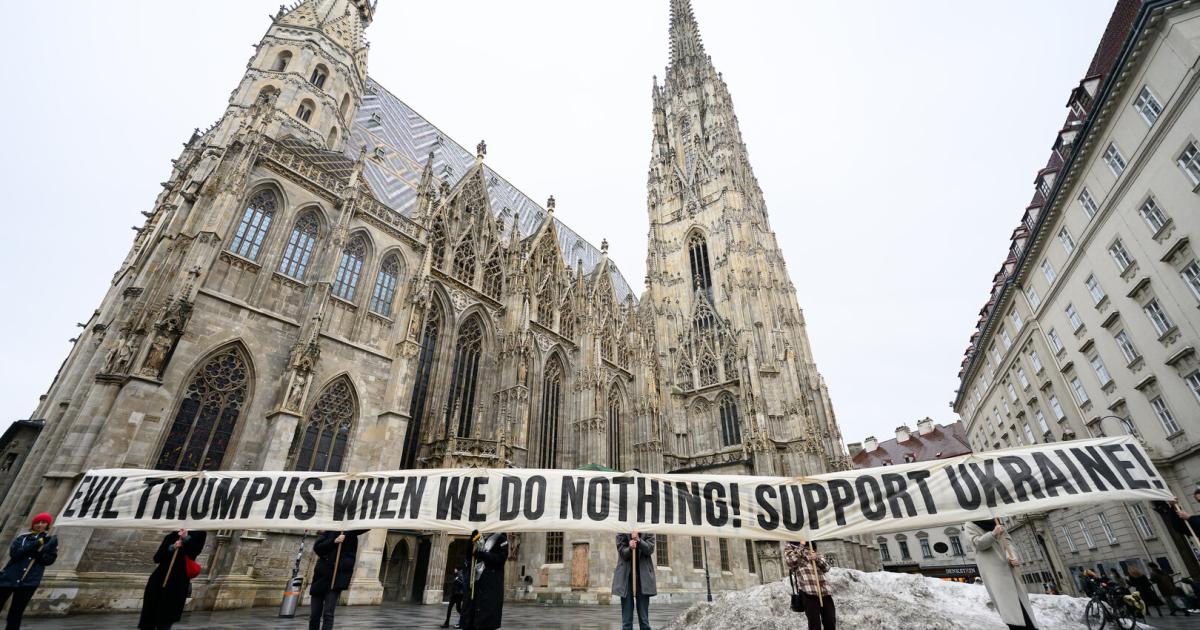
Vienna, Austria – As the war in Ukraine enters its fourth year, a demonstration in Vienna’s Stephansplatz on Sunday brought together approximately 50 Russian expatriates and supporters to express solidarity with Ukraine and to highlight the growing repression faced by those opposing the conflict within Russia. Organized by the group “Russians Against War Vienna,” the gathering served as a poignant reminder of the ongoing human cost of the war and the risks taken by individuals speaking out against it. The demonstration, while smaller than in previous years, underscored the continued commitment of the Russian diaspora to supporting Ukraine and advocating for peace, even as concerns grow about the escalating crackdown on dissent within Russia.
The demonstration coincided with a sobering milestone in the conflict, marked by increasing reports of intensified Russian military action in Ukraine. The event wasn’t solely focused on Ukraine, however, but also served as a platform to draw attention to the plight of political prisoners in Russia. Activists emphasized the severe consequences faced by Russian citizens who publicly criticize the war, with over 1,300 individuals reportedly facing criminal charges for expressing anti-war sentiments since February 24, 2022, and more than 5,000 facing political persecution, according to activists at the event. This crackdown has driven many Russians to seek refuge abroad, forming communities like the one in Vienna dedicated to supporting both Ukraine and those left behind in Russia.
Letters to Political Prisoners: A Lifeline of Support
A central activity of the Russian exile opposition in Vienna is a letter-writing campaign aimed at providing support to political prisoners in Russia. For 36 evenings, volunteers have penned over 1,000 letters to individuals incarcerated for their opposition to the war. “This represents a way to show these people that they are not alone,” explained Lidija, an activist involved in the initiative. During the demonstration, excerpts from replies received from prisoners were read aloud, offering a direct connection to those suffering within the Russian penal system. This effort highlights the dedication of the exile community to maintaining a lifeline of communication and solidarity with those facing persecution within Russia. The act of writing and receiving letters provides a crucial psychological boost for those imprisoned, demonstrating that their plight has not been forgotten.
Symbolism and Song: Expressing Resistance
The demonstration itself was a quiet but powerful display of solidarity. Participants carried a large banner bearing messages of support for Ukraine in both English and Russian, warning of the consequences of inaction. Some attendees carried white-blue-white flags, which have become a symbol of opposition to the Putin regime and a call for a different future for Russia since 2022. The flags represent a rejection of the current political landscape and a desire for a more democratic and peaceful Russia.
The atmosphere was further enhanced by musical performances. A singer performed anti-war songs, including “Sag mir, wo die Blumen sind” (Tell Me Where the Flowers Are), popularized by Marlene Dietrich, and Udo Jürgens’ “Ich glaube” (I Believe). The Russian punk band “Pornofilme’s” song “Das geht vorüber” (This Will Pass), widely considered an anthem of resistance against President Vladimir Putin’s regime, was also played. These musical selections served as a powerful expression of hope and defiance in the face of adversity. Informational posters detailing the escalating violence in Ukraine, particularly the increase in Russian airstrikes in recent months, were also displayed, providing attendees with a stark reminder of the ongoing conflict.
Diminishing Turnout Reflects War Fatigue
Organizers acknowledged a decline in participation compared to previous demonstrations. Dmitri, a co-organizer, attributed this to a growing sense of “war fatigue” among Russian expatriates in Austria and beyond. “It is now more important than ever to remind people that this war is still going on,” he stated, emphasizing the demand to maintain awareness and support for Ukraine despite the passage of time. This decline in turnout reflects a broader challenge faced by activist movements – sustaining momentum and engagement over prolonged periods of conflict and political turmoil. The emotional and psychological toll of witnessing the ongoing war can lead to exhaustion and a sense of helplessness, making it difficult for individuals to maintain consistent involvement in protest activities.
The war in Ukraine, initiated by Russia on February 24, 2022, has resulted in a devastating humanitarian crisis and geopolitical upheaval. The United Nations has documented widespread human rights violations and continues to call for a peaceful resolution to the conflict. The International Criminal Court (ICC) has issued arrest warrants for Russian officials accused of war crimes. The conflict has also led to significant economic consequences, including disruptions to global supply chains and rising energy prices. The ongoing repression within Russia, targeting those who oppose the war, further complicates the situation and raises concerns about the future of human rights and political freedoms in the country.
The Broader Context of Russian Dissent
The actions of groups like “Russians Against War Vienna” are part of a larger movement of Russian citizens who have opposed the war from the outset. Since the invasion of Ukraine, thousands of Russians have participated in protests, signed open letters, and fled the country to avoid persecution. These individuals represent a diverse range of political views, but they are united in their opposition to the war and their desire for a more peaceful and democratic future for Russia. The Russian government has responded to this dissent with increasing severity, enacting laws that criminalize criticism of the military and suppressing independent media. Human Rights Watch has documented numerous cases of arbitrary arrests, politically motivated prosecutions, and torture of individuals who have spoken out against the war.
The demonstration in Vienna serves as a powerful reminder that opposition to the war exists within Russia itself, even in the face of significant risks. The efforts of groups like “Russians Against War Vienna” to support Ukraine and advocate for the release of political prisoners demonstrate the resilience and determination of those who believe in a different future for both countries. As the war continues, their voices will remain crucial in challenging the narrative of the Russian government and promoting a peaceful resolution to the conflict.
The next significant development to watch will be the upcoming session of the UN Human Rights Council in March 2026, where the situation in Ukraine and Russia is expected to be a key topic of discussion. Continued monitoring of the human rights situation within Russia and the progress of the conflict in Ukraine will be essential in the months ahead.
What are your thoughts on the ongoing conflict in Ukraine and the challenges faced by Russian dissidents? Share your comments below and help spread awareness by sharing this article.
Keep reading
- Trump Halts Iran Strikes Amid Regional Talks on Strait of Hormuz
- Why Publishers Must Compete on Trust, Not AI Volume: Christian Bredlow Insights
- Windows 10 and 11 Built-in Support Tools Help Resolve System Issues (archyworldys.com)
- Andy Burnham sees modest polling bounce but inherits record-low support (time.news)