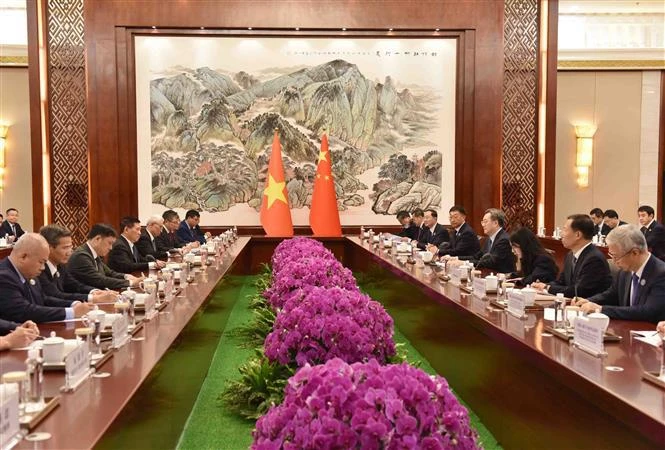
Vietnamese Prime Minister Pham Minh Chinh and Chinese Premier Li Qiang held a telephone conversation on May 15, 2024, where they agreed to strengthen bilateral relations through strategic energy cooperation, supply chain integration, and regional stability initiatives. The call, confirmed by Vietnam’s government, marks a significant step in deepening economic and diplomatic ties between the two communist neighbors amid shifting global power dynamics.
The conversation between the two leaders comes as Vietnam seeks to balance its economic dependencies while maintaining strategic autonomy in an era of heightened US-China competition. According to a statement from Vietnam’s Ministry of Foreign Affairs, the two sides reaffirmed their commitment to the Comprehensive Strategic Partnership established in 2018, with particular emphasis on energy security, digital infrastructure, and climate change mitigation.
This development follows a period of increased trade tensions between Vietnam and China, particularly in the semiconductor and electronics sectors, where Vietnam has emerged as a key manufacturing hub for global tech firms. The telephone call appears designed to stabilize economic relations while addressing long-standing maritime disputes in the South China Sea, where both nations maintain competing territorial claims.
Why This Call Matters: Vietnam’s Delicate Balancing Act
The telephone conversation between Pham Minh Chinh and Li Qiang represents more than a routine diplomatic exchange—it reflects Vietnam’s strategic positioning in an increasingly multipolar world. With the US and China locked in economic decoupling efforts, Vietnam has become a critical node in global supply chains, particularly for semiconductors and renewable energy technologies. The two leaders’ discussion focused on three priority areas, according to Vietnamese officials:
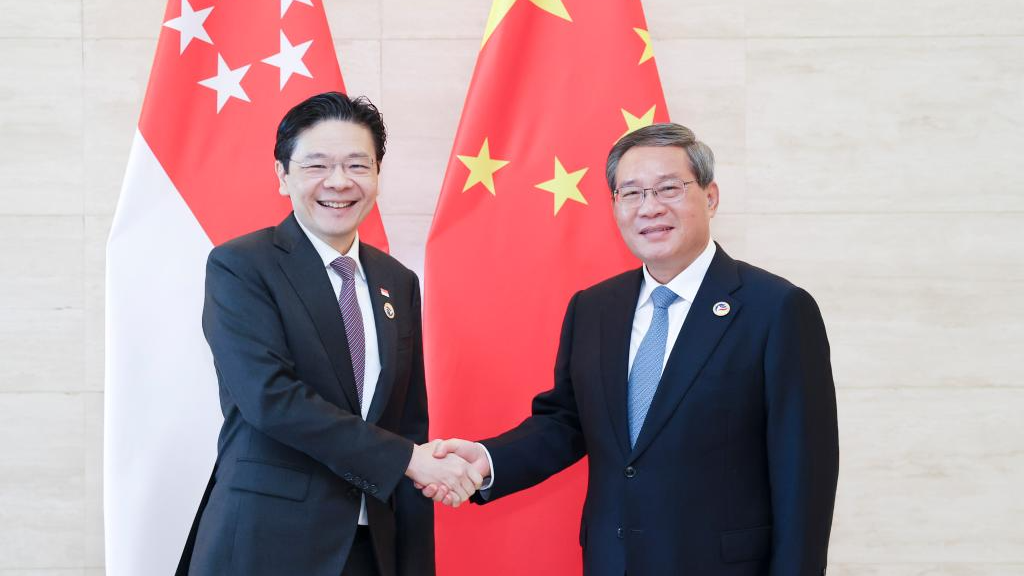
- Energy cooperation: Accelerating projects like the Vietnam-China Power Grid Interconnection, which aims to double cross-border electricity transmission by 2027.
- Supply chain resilience: Joint initiatives to reduce dependency on single-source manufacturing hubs, particularly in rare earth minerals and battery components.
- Regional stability: A mutual commitment to peaceful resolution of maritime disputes, though no specific concessions were announced.
Analysts note that Vietnam’s approach differs from that of its ASEAN neighbors. While countries like the Philippines and Malaysia have taken more confrontational stances against China’s South China Sea claims, Vietnam has pursued a “pragmatic engagement” strategy, prioritizing economic benefits over territorial disputes. “Vietnam’s leadership understands that its economic growth is directly tied to maintaining stable relations with China,” said Dr. Carlyle Thayer, a Southeast Asia expert at the University of New South Wales. “This call is about sending a clear signal to Beijing that Vietnam remains an open partner, even as it diversifies its diplomatic and economic relationships.”
Historical Context: How Vietnam-China Relations Have Evolved
The modern relationship between Vietnam and China has been marked by cycles of cooperation and tension. After decades of Cold War-era hostility, including China’s 1979 invasion of Vietnam, the two nations established diplomatic relations in 1991 and have since built a $150 billion annual trade relationship (Vietnam General Statistics Office, 2023). However, tensions have flared periodically, particularly over:
| Year | Event | Impact |
|---|---|---|
| 1979 | China-Vietnam War | Decades of hostility; diplomatic normalization only in 1991 |
| 2014 | South China Sea standoff | Temporary trade restrictions; later resolved through dialogue |
| 2018 | Comprehensive Strategic Partnership established | Framework for current economic cooperation |
| 2020-2023 | COVID-19 supply chain disruptions | Vietnam emerges as key manufacturing alternative to China |
| 2024 | May 15 telephone call | Focus on energy and supply chain resilience |
The 2024 call stands out because it comes at a time when Vietnam is actively courting other major powers. Just days before the conversation with Li Qiang, Pham Minh Chinh met with US Secretary of State Antony Blinken in Washington, where they discussed semiconductor supply chain diversification and Indo-Pacific security. “Vietnam is walking a tightrope,” explained Prof. Huong Le Thu, a political scientist at the Diplomatic Academy of Vietnam. “The message to both Beijing and Washington is clear: Vietnam wants to maintain good relations with everyone, but its primary focus remains economic stability.”
What Happens Next: Key Projects and Potential Challenges
The May 15 call has set in motion several concrete projects that could reshape the economic landscape of both nations. Vietnamese officials have identified three near-term priorities:
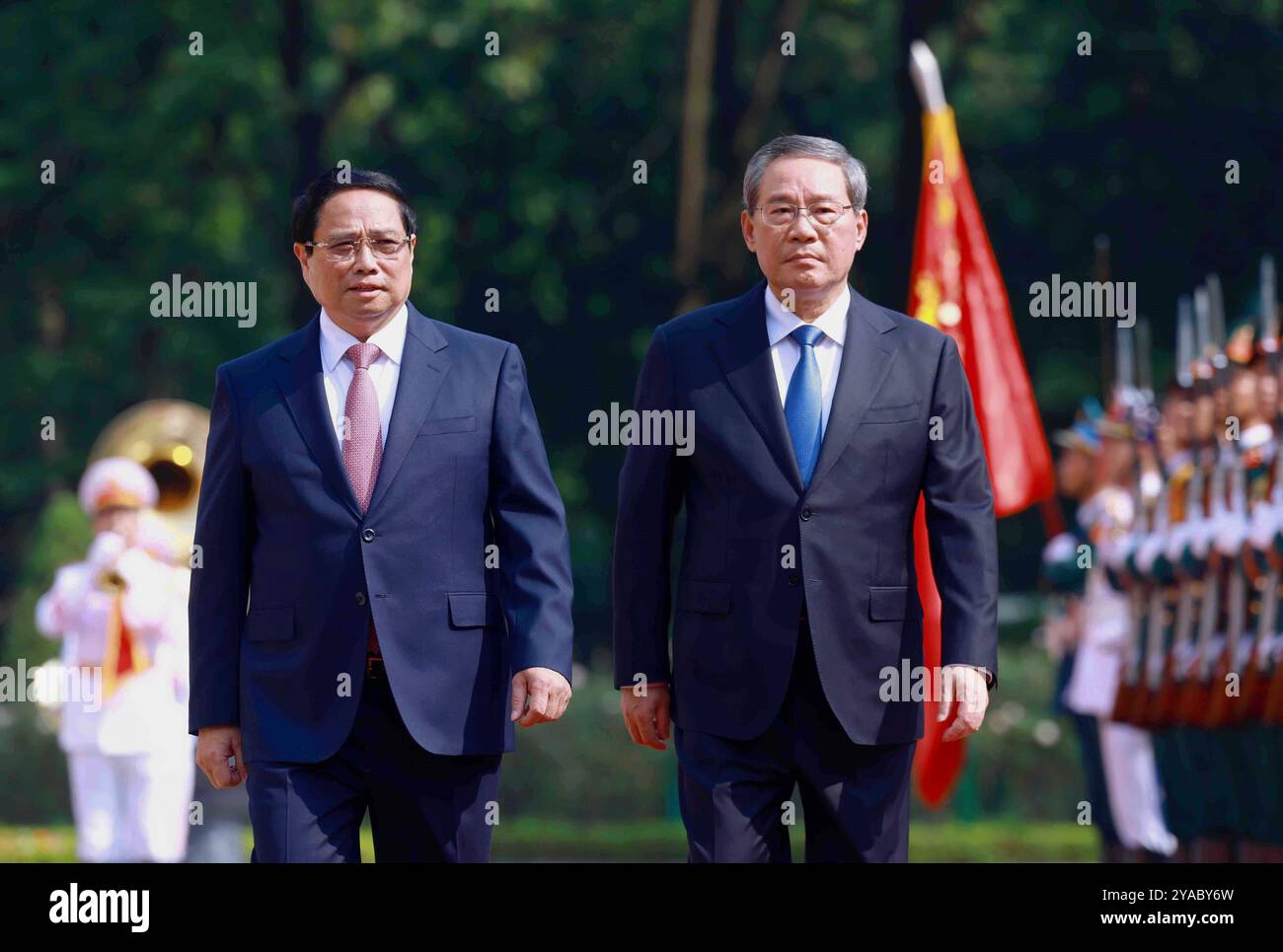
- Energy Grid Expansion: The two sides agreed to accelerate the Vietnam-China Power Grid Interconnection Project, which aims to transmit 2,000 MW of electricity annually from China’s hydroelectric plants to Vietnam’s industrial zones. A feasibility study is expected to be completed by November 2024, with construction potentially beginning in 2025.
- Supply Chain Resilience Initiative: Vietnam and China will establish a joint task force to identify critical supply chain vulnerabilities, particularly in rare earth minerals and solar panel components. The first meeting is scheduled for July 2024 in Hanoi.
- Digital Infrastructure Cooperation: The two governments will explore 5G network interoperability and cross-border data centers, with a focus on supporting Vietnam’s smart manufacturing sector.
However, challenges remain. The most significant obstacle is the South China Sea dispute, where Vietnam continues to assert its sovereignty over the Spratly Islands while maintaining a “no militarization” stance. Chinese coast guard vessels have increasingly patrolled waters near Vietnam’s Vanguard Bank in recent months, raising concerns among Vietnamese fishermen and energy companies exploring offshore oil fields.
Another potential hurdle is the US-China tech war, which has already affected Vietnam’s electronics exports. In 2023, Vietnam became the third-largest exporter of iPhones to the US, but Chinese restrictions on semiconductor exports have created bottlenecks in the supply chain. “Vietnam cannot afford to be caught in the middle,” warned Dr. Tran Du Lich, a trade expert at the University of Economics Ho Chi Minh City. “The May 15 call is a reminder that Vietnam’s economic model is increasingly interdependent with China’s, even as it seeks to reduce that dependency.”
Regional Implications: How This Affects ASEAN and Global Trade
The deepening Vietnam-China relationship carries broader implications for Southeast Asia and the global economy. As the two largest economies in the region, their cooperation—or lack thereof—can ripple through ASEAN supply chains. Key considerations include:
- ASEAN Centrality: Vietnam’s approach contrasts with the Philippines’ more hawkish stance against China. This could lead to divergent ASEAN responses to regional security challenges, potentially weakening the bloc’s unified position in negotiations with China.
- Supply Chain Diversification: If the Vietnam-China cooperation succeeds, it could accelerate the shift of manufacturing away from China to Vietnam and other ASEAN nations, further reducing Beijing’s dominance in global production.
- Energy Security: The power grid interconnection project could serve as a model for other ASEAN-China energy partnerships, potentially stabilizing regional electricity markets.
Internationally, the call may also influence US-China trade negotiations. The US has been pushing for supply chain diversification as part of its Indo-Pacific Economic Framework (IPEF), and Vietnam’s role as a bridge between China and Western markets could become even more critical. “This is a classic example of economic statecraft,” said Dr. Evan Medeiros, former White House Asia director and now at the Stanford University. “Vietnam is using its economic leverage to maintain autonomy while benefiting from both Chinese investment and Western markets.”
What to Watch: Upcoming Milestones and Potential Flashpoints
The next critical developments in Vietnam-China relations will likely revolve around three key areas:
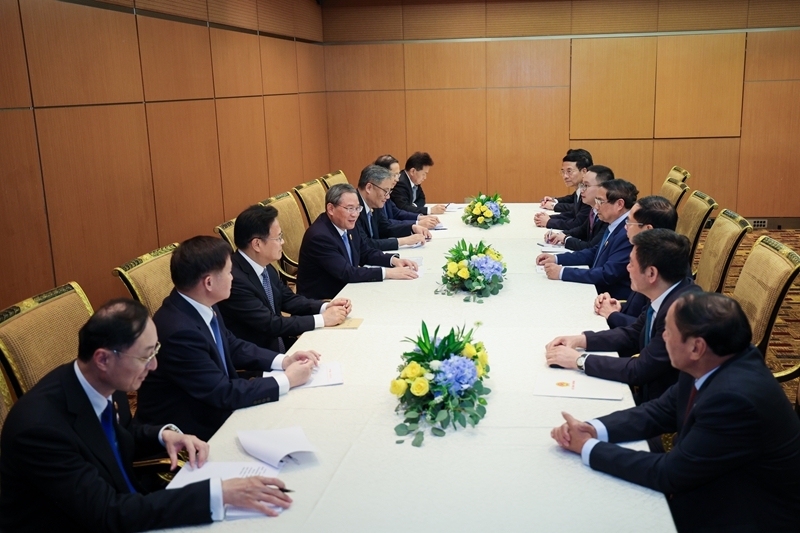
- November 2024: Completion of the feasibility study for the Vietnam-China Power Grid Interconnection. Delays could signal deeper disagreements over energy policy.
- July 2024: First meeting of the Joint Supply Chain Task Force in Hanoi. The agenda will include rare earth mineral security and semiconductor export regulations.
- 2025: Potential expansion of the Comprehensive Strategic Partnership to include defense cooperation, though Vietnam has historically maintained a “no military alliance” policy.
Meanwhile, observers should monitor:
- South China Sea patrols: Any escalation in Chinese coast guard activity near Vietnam’s Vanguard Bank could strain relations.
- US-China tech war fallout: If China tightens semiconductor export controls, Vietnam’s electronics sector—already facing labor shortages—could face further disruptions.
- ASEAN unity: Vietnam’s balancing act may test ASEAN’s ability to present a unified front in regional forums like the ASEAN Summit.
Key Takeaways: What Readers Should Know
- The May 15 telephone call between Vietnamese PM Pham Minh Chinh and Chinese Premier Li Qiang focused on energy cooperation, supply chain resilience, and regional stability.
- Vietnam is pursuing a “pragmatic engagement” strategy, balancing economic ties with China while diversifying diplomatic and trade relations with the US and EU.
- The two nations agreed to accelerate the Vietnam-China Power Grid Interconnection, which could double cross-border electricity transmission by 2027.
- Challenges remain, including South China Sea disputes and the global semiconductor shortage, which could impact Vietnam’s manufacturing sector.
- The next critical milestones include the November 2024 feasibility study for the power grid project and the July 2024 Supply Chain Task Force meeting.
What do you think about Vietnam’s approach to balancing relations with China and the US? Share your insights in the comments below, and follow World Today Journal for updates on this developing story.
For official statements, visit the Vietnam Ministry of Foreign Affairs or the Xinhua News Agency.
Keep reading