
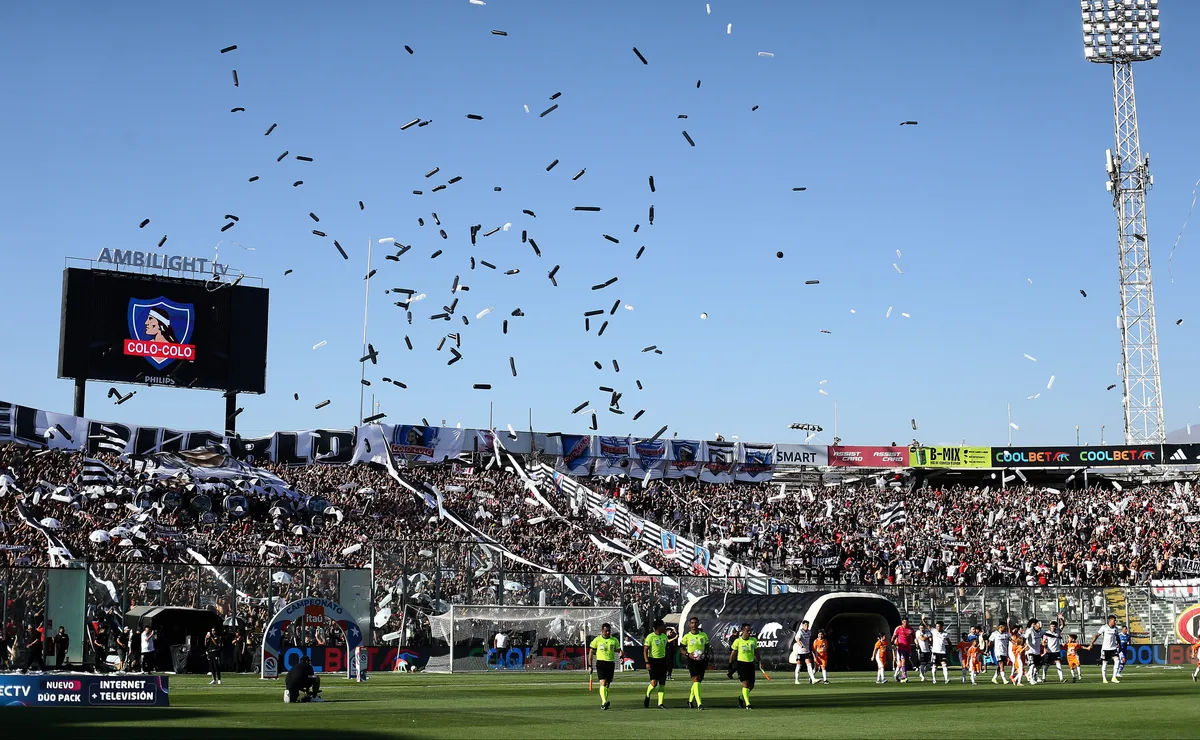
Colo Colo received a significant pre-match visit from Chilean government officials ahead of their Liga Primera fixture against Palestino on Sunday, April 19, 2026. The inspection at the Estadio Monumental in Macul was led by Germán Codina, the presidential delegate for the Santiago Metropolitan Region, who arrived in the afternoon accompanied by Carabineros and club executives. The visit focused on evaluating security protocols, particularly the implementation of facial recognition technology, as part of broader efforts to ensure safe attendance for both local and visiting supporters.
The delegation’s tour came just days after Colo Colo announced plans to host Palestinian fans at the Monumental for the upcoming match, marking a notable step toward restoring visitor attendance in Chilean football. Codina emphasized during the inspection that his objective is to see “all matches” feature fans from both home and away teams, arguing that such presence enriches the spectacle and prevents football from losing its communal spirit. His comments reflect a growing push by regional authorities to reverse years of restrictions that have barred visiting supporters from high-risk fixtures, especially clásico matches.
According to Colo Colo’s official communications, the club welcomed the visit as an opportunity to showcase its recent operate in prevention, security and fan experience enhancement. President Aníbal Mosa and operations manager Gustavo Poblete guided Codina through the stadium, detailing how security measures have been refined over several months. The presidential delegate specifically highlighted the facial recognition system as a technology he would like to see adopted in other venues, including the Estadio Nacional, citing its potential to improve safety without compromising accessibility.
The initiative aligns with broader statements from Codina about revitalizing fan culture in Chilean football. In prior public remarks, he has acknowledged that violent incidents have long dictated attendance policies, particularly in derbies where visiting supporters have been largely absent. Though, he expressed optimism that coordinated efforts between clubs, law enforcement, and government could gradually restore normalcy, beginning with matches in the Metropolitan Region where most of the country’s clásico encounters take place.
Colo Colo too used the occasion to highlight its matchday preparations beyond security, noting plans for a celebratory atmosphere in honor of the club’s anniversary. The institution announced musical performances and surprise activities designed to engage the expected crowd of 40,000 spectators. These off-field elements are part of a strategy to position the Monumental not only as a competitive venue but also as a family-friendly destination for football entertainment.
The visit underscores a pivotal moment in Chilean football’s ongoing struggle to balance safety with inclusivity. While past seasons have seen visiting fans excluded from clásicos due to security concerns, recent developments suggest a shift toward controlled reintegration. Authorities stress that any return of away supporters will depend on rigorous risk assessments and cooperation from fan groups, with technology playing an increasingly central role in monitoring and managing stadium environments.
As Chilean football looks to rebuild trust and engagement among its supporters, the collaboration between Colo Colo and the Metropolitan Regional Delegation represents a tangible step toward aligning operational security with the sport’s social essence. Whether this approach will extend to other clubs and regions remains to be seen, but the Monumental inspection has grow a reference point for how preventive measures and fan engagement can coexist in modern sports management.
For ongoing updates on security policies and fan attendance guidelines in Chilean football, readers are encouraged to follow official announcements from the Asociación Nacional de Fútbol Profesional (ANFP) and the Delegación Presidencial de la Región Metropolitana.