The Mind’s Eye: How “Visual Anagrams” Are Revolutionizing Perception Research
For decades, understanding how your brain interprets what you see has been a complex puzzle. Researchers have long struggled to isolate specific visual properties – like size, shape, or texture – and determine which ones truly drive your perception. Now, a groundbreaking technique developed at Johns Hopkins University is changing the game: visual anagrams. These cleverly designed images appear as completely different objects depending on their orientation, all while utilizing the exact same pixels.
This isn’t just a neat visual trick. It’s a powerful new tool that’s unlocking deeper insights into the basic processes of visual perception, and promises to reshape research in psychology and neuroscience.
The Problem with Traditional Perception Studies
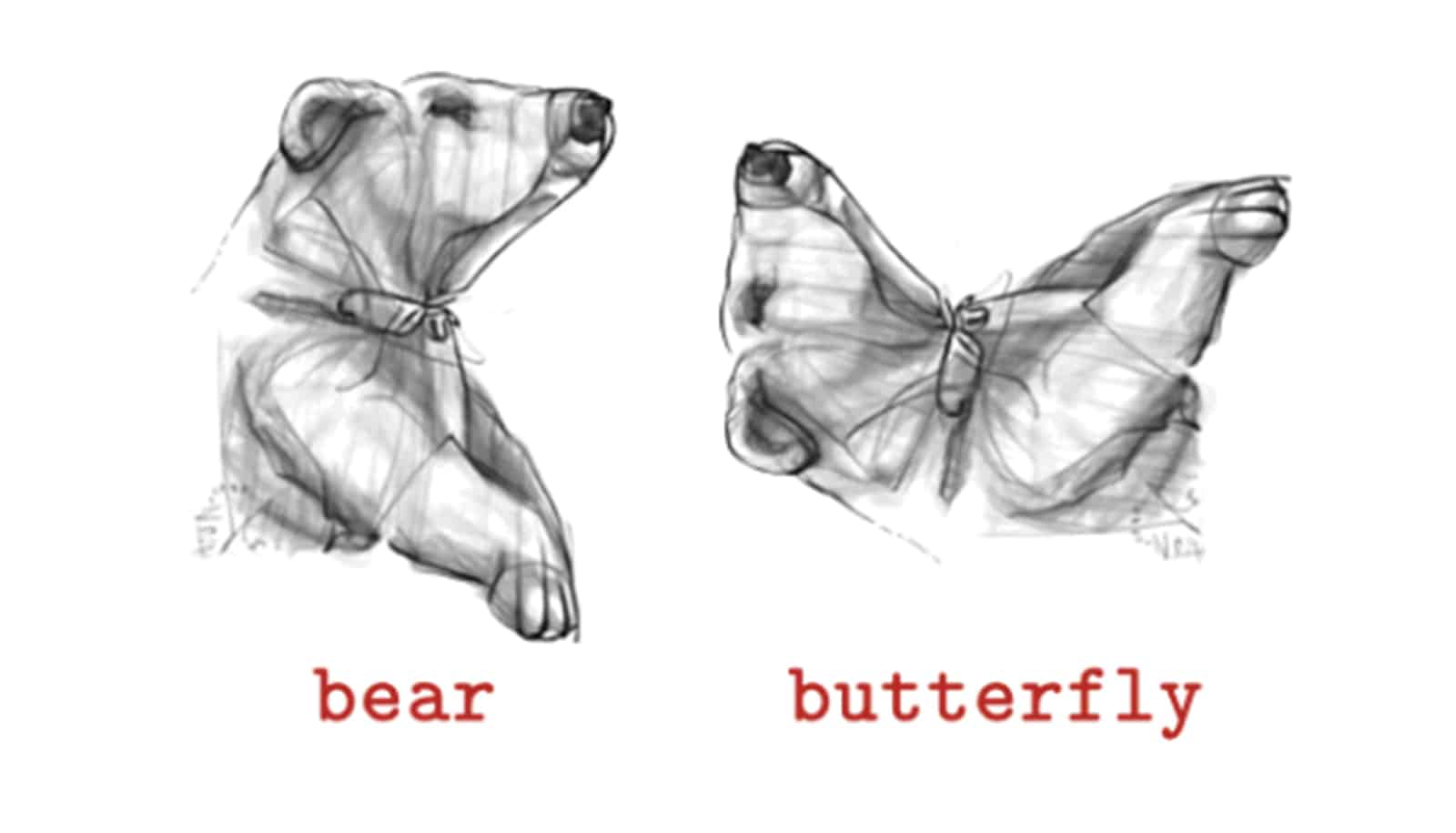
Traditionally, studying how your brain processes visual details has been fraught with challenges. Let’s say you want to understand how your brain responds to size. You might show people a butterfly and a bear. But these objects inherently differ in many ways beyond just size.
As Dr. Steven Firestone explains, “If we show people two objects that differ in how big they are-say, a butterfly and a bear-those objects are also going to differ in lots of other ways: their shape, their texture, how radiant or colorful they are, and so on.” This makes it incredibly challenging to pinpoint whether a brain response is due to size,shape,texture,or a combination of factors. The field has been searching for a way to isolate these variables.
Introducing Visual anagrams: A Breakthrough in Control
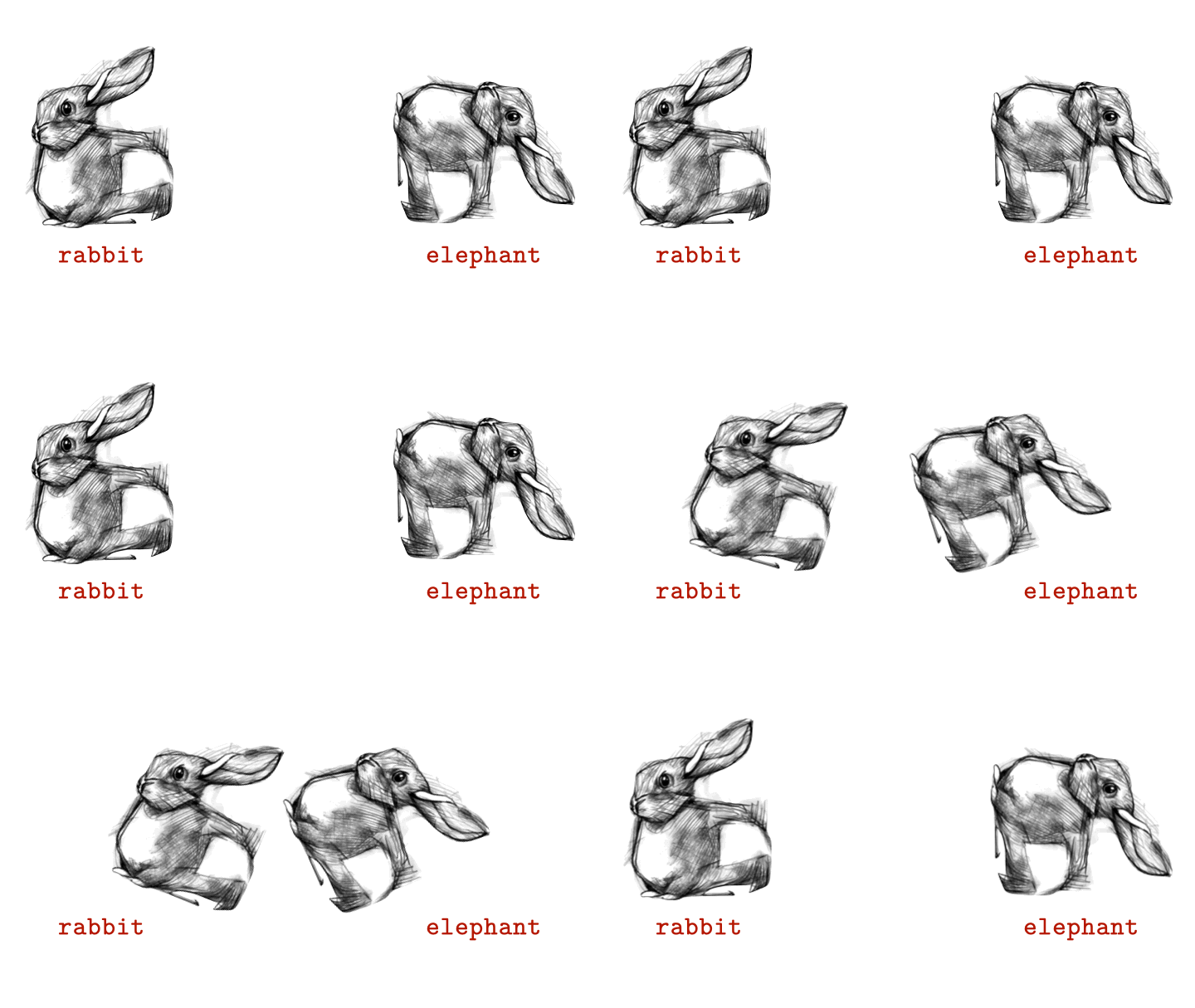
Visual anagrams solve this problem beautifully. These images are designed so that a simple rotation transforms one recognizable object into another.Think of an image that can be seen as either a rabbit or an elephant, or a duck or a horse – all using the same visual information.
Here’s an example of a visual anagram – a rabbit/elephant change
And another – a duck/horse transformation
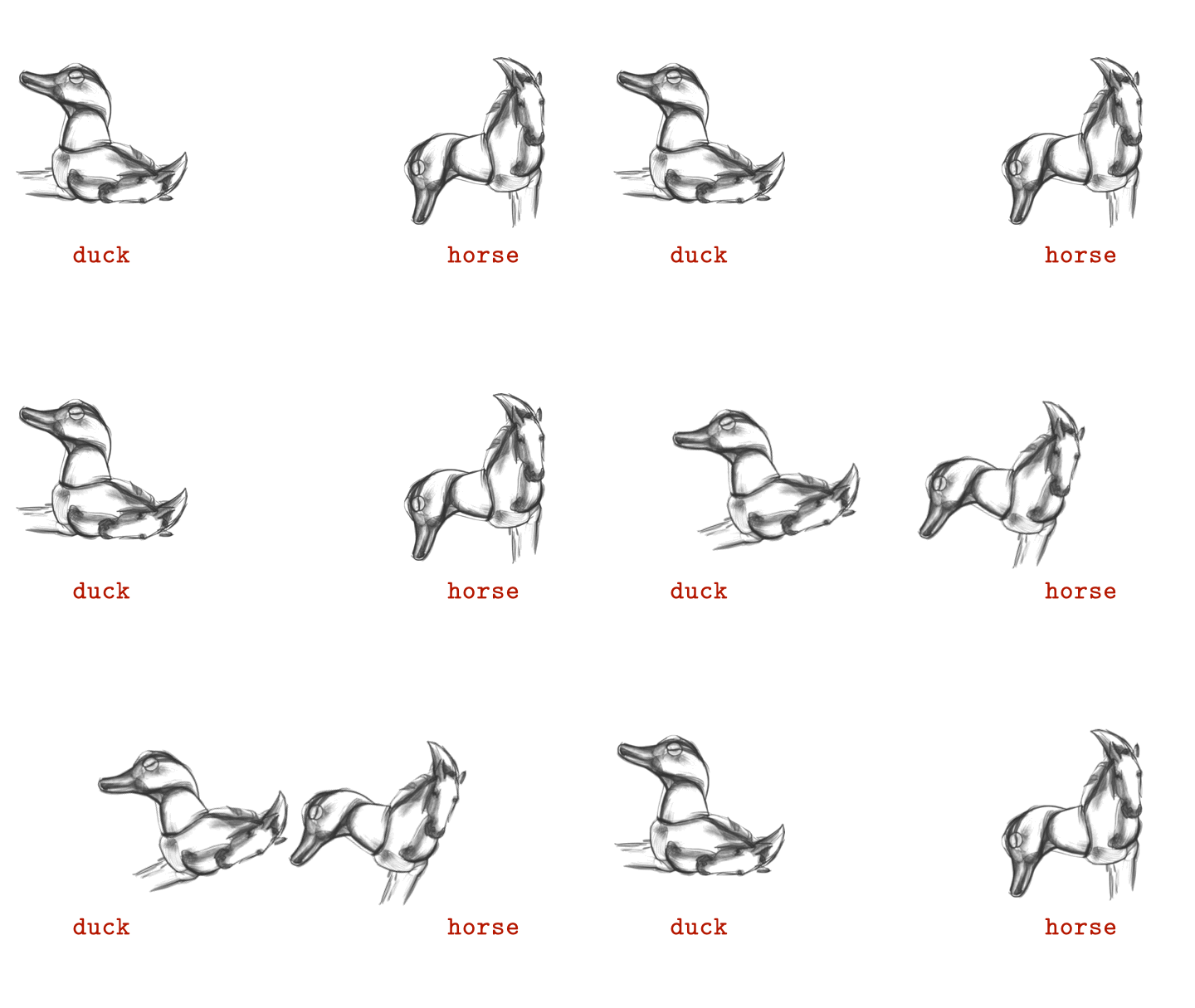
Because the underlying pixel data remains constant, researchers can finally control for confounding variables and study the impact of specific perceptual features in isolation. This level of control was previously unattainable.
What Have Researchers Discovered So Far?
The Johns hopkins team, led by Olivia Boger and Dr. Firestone, has already yielded captivating results. Their initial experiments focused on how we perceive real-world size. They found that even when presented with rotated versions of the same image, classic size effects still held true.
Here’s what they discovered:
* Aesthetic Preference & Size: We generally find images more appealing when they reflect real-world size. You likely prefer seeing bears depicted larger than butterflies. Remarkably,this preference extended to the visual anagrams. Participants consistently adjusted the “bear” orientation to be larger than the “butterfly” orientation, despite both being the same image.
* confirmation of Existing Theories: The findings support long-held beliefs about how the brain processes size, but now with significantly stronger evidence.
* Isolation of Variables: The anagrams allowed researchers to confidently attribute responses to size perception, rather than other visual cues.
The Future of Perception Research is Here
The potential applications of visual anagrams extend far beyond size perception. The team envisions using this technique to explore a wide range of cognitive processes.
Here are just a few possibilities:
* animate vs. Inanimate objects: Investigating how your brain differentiates between living creatures and non-living things. Imagine an anagram that shifts between a truck and a dog.
* Emotional Responses: Exploring how different orientations evoke varying emotional reactions.
* Neurological Studies: Identifying the specific brain regions involved in processing different visual interpretations.
* Understanding Visual Illusions: Gaining deeper insights into why we perceive illusions the way we do.
As Dr. Firestone emphasizes, “We used anagrams to study size, but you could use them for just about anything. The approach is quite general, and we can foresee researchers using it for many different purposes.”
Why This Matters to You
Related reading