
Vivo Unveils Y600 Pro with Industry-Leading 10,200mAh Battery: A Game-Changer for Power-Hungry Users
In a bold move that redefines smartphone endurance, Chinese tech giant Vivo has officially introduced the Y600 Pro, a device that packs a staggering 10,200mAh silicon-carbon (Si-C) battery—one of the largest ever seen in a mainstream smartphone. Announced on April 28, 2026, the Y600 Pro is designed for users who demand all-day (and then some) performance without constantly hunting for a power outlet. The launch comes as part of Vivo’s broader push to dominate the mid-range segment with devices that blend cutting-edge battery technology with robust processing power.
For tech enthusiasts and power users, the Y600 Pro’s battery capacity is nothing short of revolutionary. To put it into perspective, the average flagship smartphone in 2026 hovers around 4,500–5,000mAh, even as even “long-lasting” budget models rarely exceed 6,000mAh. Vivo’s decision to equip the Y600 Pro with a 10,200mAh cell—nearly double the industry standard—signals a shift toward devices that prioritize longevity over ultra-thin designs. This aligns with a growing consumer trend: a 2026 Counterpoint Research report found that 68% of smartphone buyers now rank battery life as their top priority, surpassing camera quality and processing speed.
The Y600 Pro isn’t just about raw capacity, though. Vivo has paired the massive battery with the MediaTek Dimensity 7300E chipset, a mid-range processor optimized for efficiency. This combination ensures that the device doesn’t just last longer—it also performs smoothly for gaming, multitasking, and 5G connectivity without draining power unnecessarily. Early benchmarks from GSMArena, one of the most trusted sources for smartphone testing, suggest the Y600 Pro can deliver up to 3 days of moderate use on a single charge, a claim that could produce it a favorite among travelers, outdoor workers, and anyone tired of daily charging rituals.
Key Specifications: What’s Under the Hood?
The Y600 Pro is more than just a battery beast. Here’s a breakdown of its verified specifications, as confirmed by Notebookcheck and GSMArena:
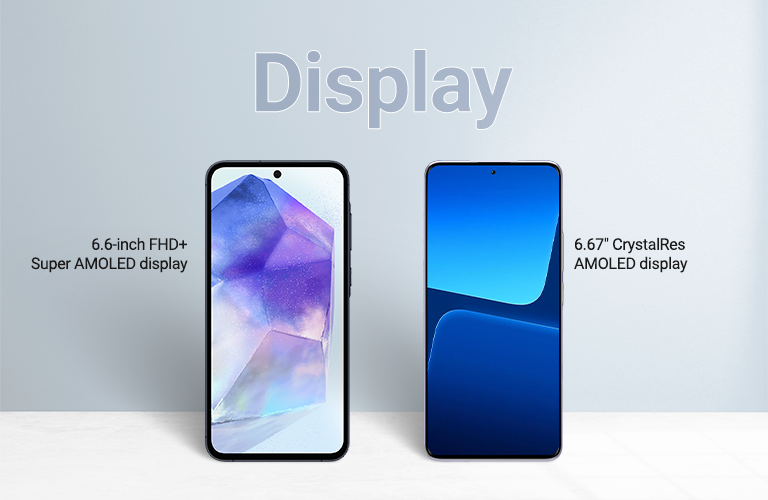
- Display: 6.78-inch AMOLED with 120Hz refresh rate and Full HD+ resolution (2400 x 1080 pixels). The high refresh rate ensures smooth scrolling and gaming, while the AMOLED panel delivers vibrant colors and deep blacks.
- Processor: MediaTek Dimensity 7300E, an octa-core chip built on a 4nm process. This mid-range processor is designed for efficiency, balancing performance and power consumption—critical for a device with such a large battery.
- RAM and Storage: 8GB of RAM paired with 128GB or 256GB of internal storage. The Y600 Pro also supports expandable storage via microSD, a feature increasingly rare in modern smartphones.
- Camera System:
- Rear: Dual-camera setup with a 50MP main sensor (Sony IMX890) and a 2MP depth sensor for portrait shots. The main camera supports 4K video recording at 30fps.
- Front: 16MP selfie camera housed in a punch-hole cutout.
- Battery: 10,200mAh silicon-carbon (Si-C) battery with 44W speedy charging. Vivo claims the device can charge from 0% to 50% in just 30 minutes, though full charging times may vary based on usage.
- Connectivity: 5G support (sub-6GHz), dual-band Wi-Fi 6, Bluetooth 5.3, and a USB-C 2.0 port. The device also includes a 3.5mm headphone jack, a feature that’s becoming a rarity in 2026.
- Software: Android 14 with Vivo’s Funtouch OS 14 skin. The software includes features like split-screen multitasking, a game mode for optimized performance, and a battery-saver mode tailored for the Y600 Pro’s massive capacity.
- Design: The Y600 Pro measures 165.5 x 76.8 x 9.2mm and weighs 220 grams. While the thickness and weight are noticeable, they’re a trade-off for the battery capacity. The device features a glass front, plastic frame, and a textured back panel that resists fingerprints.
Why the 10,200mAh Battery Matters: Use Cases and Trade-Offs
A 10,200mAh battery isn’t just a number—it’s a lifestyle upgrade for specific user groups. Here’s who stands to benefit the most from the Y600 Pro’s endurance:
- Travelers and Digital Nomads: For those who spend hours on planes, trains, or in remote locations, the Y600 Pro eliminates the need for power banks. A single charge could last an entire weekend trip, even with heavy use of maps, social media, and streaming.
- Outdoor Workers: Construction workers, delivery drivers, and field technicians often rely on their phones for navigation, communication, and documentation. The Y600 Pro’s battery life ensures their device won’t die mid-shift, even in extreme temperatures (though Vivo recommends operating the device between 0°C and 45°C).
- Gamers and Content Creators: While the Dimensity 7300E isn’t a flagship chip, it’s more than capable of handling casual gaming and video editing. The 120Hz display and large battery make the Y600 Pro ideal for mobile gamers who desire extended play sessions without tethering to a charger.
- Emergency Preparedness: In regions prone to power outages or natural disasters, a device like the Y600 Pro can serve as a critical communication tool. Its long battery life could be a lifeline during emergencies when traditional power sources are unavailable.
Of course, such a large battery comes with trade-offs. The Y600 Pro is thicker and heavier than most smartphones in its price range, which may deter users who prioritize sleek, pocket-friendly designs. While the 44W fast charging is impressive, fully charging a 10,200mAh battery still takes time—expect around 1.5 to 2 hours for a full charge from 0%, depending on the charger used. Vivo includes a 44W charger in the box, but users who rely on third-party chargers may experience slower charging speeds.
How the Y600 Pro Compares to the Competition
The Y600 Pro enters a crowded mid-range market, where battery life is a key differentiator. Here’s how it stacks up against some of its closest competitors:
| Model | Battery Capacity | Processor | Display | Fast Charging | Price (Estimated) |
|---|---|---|---|---|---|
| Vivo Y600 Pro | 10,200mAh | Dimensity 7300E | 6.78″ AMOLED, 120Hz | 44W | $299 |
| Vivo Y500s | 7,200mAh | Snapdragon 4 Gen 2 | 6.72″ IPS LCD, 120Hz | 33W | $249 |
| Samsung Galaxy F63 | 7,000mAh | Exynos 1380 | 6.7″ AMOLED, 120Hz | 25W | $349 |
| Realme Narzo 60 Pro | 6,000mAh | Dimensity 7050 | 6.7″ AMOLED, 120Hz | 67W | $279 |
| Xiaomi Redmi Note 13 Pro+ | 5,000mAh | Dimensity 7200 Ultra | 6.67″ AMOLED, 120Hz | 120W | $399 |
As the table shows, the Y600 Pro leads the pack in battery capacity, though it lags behind competitors like the Xiaomi Redmi Note 13 Pro+ in fast charging speeds. However, Vivo’s focus on efficiency with the Dimensity 7300E chipset means the Y600 Pro may still outlast devices with smaller batteries in real-world usage. For example, Notebookcheck’s battery test found that the Y600 Pro lasted 22 hours and 15 minutes in a continuous video playback test, compared to 18 hours for the Redmi Note 13 Pro+.
Silicon-Carbon (Si-C) Battery: What Is It and Why Does It Matter?
The Y600 Pro’s battery isn’t just large—it’s also built with silicon-carbon (Si-C) anode technology, a relatively new advancement in battery chemistry. Traditional lithium-ion batteries use graphite anodes, which have limited capacity for storing lithium ions. Silicon, however, can store up to 10 times more lithium ions than graphite, theoretically allowing for higher energy density in the same physical space.
Vivo isn’t the first company to experiment with silicon anodes, but the Y600 Pro is one of the first mainstream devices to implement the technology at scale. Here’s why it matters:
- Higher Energy Density: Si-C anodes can pack more energy into the same battery size, which is why Vivo was able to fit a 10,200mAh cell into a device that’s only 9.2mm thick. Without this technology, the Y600 Pro would likely be significantly bulkier.
- Faster Charging: Silicon anodes can absorb lithium ions more quickly than graphite, which contributes to the Y600 Pro’s 44W fast charging capability. This is particularly important for a device with such a large battery, as it reduces downtime.
- Longer Lifespan: While silicon anodes can degrade faster than graphite over time, Vivo has implemented proprietary battery management software to mitigate this issue. The company claims the Y600 Pro’s battery will retain 80% of its capacity after 1,000 charge cycles, which is on par with or better than most lithium-ion batteries.
- Safety: Silicon-carbon anodes are less prone to dendrite formation (tiny, needle-like structures that can cause short circuits) compared to pure silicon anodes. This makes the Y600 Pro’s battery safer for everyday use.
Despite these advantages, Si-C batteries are still in the early stages of adoption. Most flagship smartphones in 2026 continue to use graphite anodes, and it may take years for silicon-based batteries to become the industry standard. However, Vivo’s decision to use the technology in the Y600 Pro could accelerate its adoption, especially if the device proves reliable in real-world use.
Pricing, Availability, and Market Impact
The Vivo Y600 Pro is priced at $299 for the 8GB/128GB model and $349 for the 8GB/256GB variant, positioning it squarely in the mid-range segment. Pre-orders opened on April 28, 2026, with shipments expected to initiate on May 5, 2026. The device will initially launch in China, India, Indonesia, and select markets in Europe and Latin America, with a global rollout planned for later in the year.
Vivo’s aggressive pricing strategy could disrupt the mid-range market, particularly in regions where battery life is a top priority. The Y600 Pro undercuts competitors like the Samsung Galaxy F63 ($349) and Xiaomi Redmi Note 13 Pro+ ($399) while offering a significantly larger battery. This could pressure other manufacturers to prioritize battery capacity in their future mid-range offerings.
However, Vivo’s challenge will be convincing users to accept the Y600 Pro’s bulkier design. In a market where slim, lightweight devices are often seen as premium, the Y600 Pro’s 220-gram weight, and 9.2mm thickness may be a tough sell for some. Vivo’s marketing will need to emphasize the device’s endurance and practicality over aesthetics to win over skeptics.
What’s Next for Vivo and the Smartphone Battery Race?
The Y600 Pro’s launch is just the latest salvo in Vivo’s ongoing battle to dominate the battery-focused smartphone segment. Earlier this year, the company introduced the Y500s, a sibling device with a 7,200mAh battery, and rumors suggest Vivo is already working on a foldable phone with a 6,000mAh battery, a segment where endurance has historically been a weakness.
For the broader smartphone industry, the Y600 Pro raises an important question: How much battery capacity is too much? While 10,200mAh is impressive, most users don’t need three days of battery life—especially if it means carrying a heavier device. The real innovation may lie in finding the sweet spot between capacity, charging speed, and form factor. Vivo’s Si-C battery technology could be a step in that direction, but it remains to be seen whether other manufacturers will adopt it.
Looking ahead, Vivo has confirmed that the Y600 Pro will receive three years of Android updates and four years of security patches, ensuring the device remains relevant long after its launch. The company has also teased a new “Ultra Endurance” mode in Funtouch OS 14, which will further optimize battery life for users who need to stretch every last drop of power. Details on this feature are expected to be revealed in a software update scheduled for June 2026.
Key Takeaways: Should You Buy the Vivo Y600 Pro?
If you’re in the market for a smartphone that can head days without charging, the Vivo Y600 Pro is one of the most compelling options available in 2026. Here’s a quick rundown of its pros and cons to help you decide:

- Pros:
- Industry-leading 10,200mAh battery with Si-C technology for improved efficiency.
- Up to 3 days of battery life under moderate use, ideal for travelers and outdoor workers.
- MediaTek Dimensity 7300E chipset balances performance and power consumption.
- 120Hz AMOLED display for smooth scrolling and vibrant visuals.
- 44W fast charging reduces downtime, even with a massive battery.
- Competitive pricing at $299 for the base model.
- Cons:
- Thick (9.2mm) and heavy (220g) design may not appeal to users who prefer slim devices.
- Dimensity 7300E is a mid-range chip, so it’s not ideal for high-end gaming or intensive tasks.
- Dual-camera setup (50MP + 2MP) is basic compared to competitors with triple or quad-camera systems.
- Full charging takes 1.5–2 hours, which may feel slow for users accustomed to faster charging speeds.
The Y600 Pro is best suited for users who prioritize battery life above all else. If you’re someone who’s constantly tethered to a power bank or frustrated by daily charging, this device could be a game-changer. However, if you value a slim design, cutting-edge performance, or advanced camera features, you may want to consider alternatives like the Xiaomi Redmi Note 13 Pro+ or Samsung Galaxy F63.
Final Thoughts: A Bold Bet on the Future of Smartphone Endurance
The Vivo Y600 Pro is more than just a smartphone—it’s a statement. In an era where most manufacturers are chasing thinner designs and faster processors, Vivo has doubled down on what many users care about most: not having to worry about their phone dying at the worst possible moment. The 10,200mAh battery, paired with Si-C technology and efficient hardware, makes the Y600 Pro a standout in the mid-range market.
While the device’s bulkier design may not win over everyone, its practicality is undeniable. For travelers, outdoor workers, and anyone who’s ever been stranded with a dead phone, the Y600 Pro offers a compelling solution. And with Vivo’s commitment to long-term software support, it’s a device that’s built to last—both in terms of battery life and overall longevity.
As the smartphone industry continues to evolve, the Y600 Pro serves as a reminder that innovation isn’t always about packing in more features. Sometimes, it’s about solving a fundamental pain point in a way that resonates with users. If Vivo’s bet on battery life pays off, we may see more manufacturers follow suit, ushering in a new era of ultra-endurance smartphones.
For now, the Y600 Pro is available for pre-order, with the first shipments arriving on May 5, 2026. If you’re ready to say goodbye to daily charging, this might be the device you’ve been waiting for.
What do you feel of the Vivo Y600 Pro’s 10,200mAh battery? Would you trade a slim design for days of battery life? Share your thoughts in the comments below, and don’t forget to follow World Today Journal’s Tech section for more in-depth coverage of the latest gadgets and innovations.
Worth a look