
Germany’s ambitious transition toward climate-neutral heating has once again descended into political and professional turmoil. The shift from the heavily contested “Heizungsgesetz” (Heating Law) to the newly proposed “Gebäudemodernisierungsgesetz” (Building Modernization Act) was intended to soothe a frustrated public and streamline the path to decarbonization. However, the new framework is already facing scathing critiques from former high-ranking officials and regulatory watchdogs who argue that the legislation lacks the necessary substance to be effective.
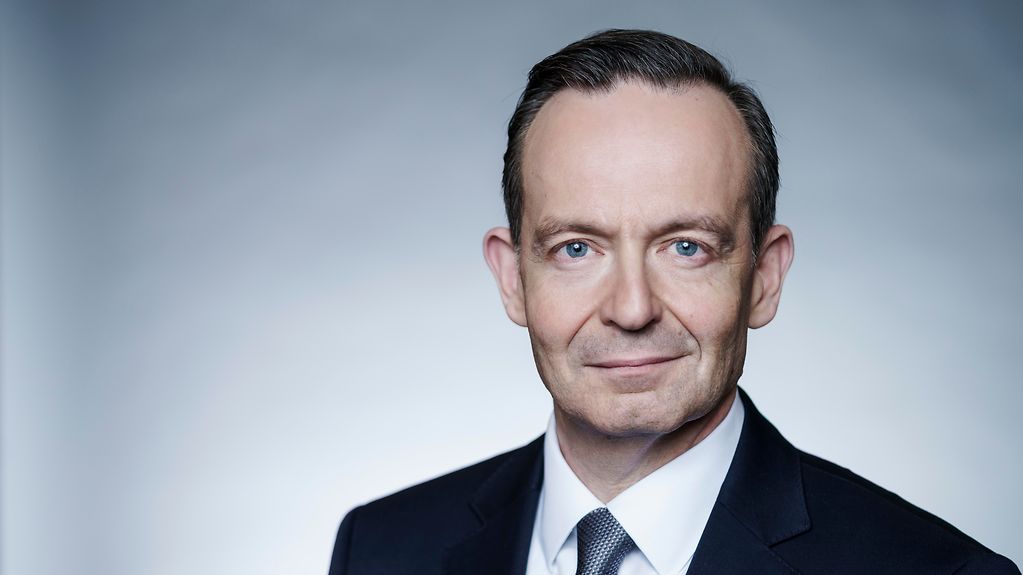
The debate reached a new peak recently when former Federal Minister of Transport Volker Wissing characterized the current legislative approach not as a solution, but as a “placeholder.” Speaking during a televised discussion on the program Sonntags-Stammtisch, Wissing suggested that the current legal framework fails to provide the long-term certainty required for homeowners and the construction industry to invest in sustainable infrastructure. His comments highlight a deepening divide between the government’s climate ambitions and the practical realities of implementing those goals across millions of private households.
This criticism is not isolated to political figures. The National Norms Control Council (Nationaler Normenkontrollrat), an independent body tasked with evaluating the bureaucratic burden of regulations, has issued a devastating assessment of the draft. The council described the proposal as one of the “technically weakest and most impractical” projects it has encountered in recent years. When paired with warnings from economic experts about “disorientation” in the market, it becomes clear that Germany’s strategy for heating modernization is struggling with a crisis of confidence.
For global observers and investors, this instability in the heart of Europe’s largest economy serves as a cautionary tale about the intersection of aggressive climate policy and social acceptance. The struggle to replace fossil-fuel boilers with heat pumps and other renewables is no longer just a technical challenge; it is a litmus test for the German government’s ability to manage a complex industrial transition without alienating its citizenry.
The “Placeholder” Problem: Why Substantiation Matters
The term “placeholder” (Platzhalter), as used by Volker Wissing, implies a law that exists to fill a legal gap or satisfy a political timeline without offering a comprehensive, workable strategy. In the context of the German Bundestag and the evolving energy mandates, a placeholder law creates a dangerous vacuum. For a homeowner deciding whether to invest thousands of euros in a new heating system, a law that is perceived as temporary or “poorly made” leads to investment paralysis.
Wissing, a former leading figure in the FDP (Free Democratic Party), has consistently advocated for a market-driven approach to the energy transition. During his appearance on Sonntags-Stammtisch, he emphasized that while the goal of reducing CO2 emissions is non-negotiable, the method of delivery must be socially acceptable. He argued that fossil energy sources represent a significant cost risk for society—a reality made painfully clear by the volatility of heating oil and gas prices in recent years. According to Wissing, renewable energies make sense not only for climate protection but also for the “wallet” of the average citizen.
However, the transition from the original Building Energy Act (GEG) to the new Building Modernization Act has been marked by “switching” directions. This lack of consistency is what business journalist Anja Kohl described as a source of profound disorientation. When regulations shift rapidly—moving from strict mandates to more flexible guidelines and back again—the industry cannot standardize processes, and consumers lose trust in the state’s guidance.
Institutional Backlash and the “Impractical” Draft
The critique from the National Norms Control Council adds a layer of institutional weight to the political complaints. The council’s role is to ensure that laws are not only well-intentioned but “handwerklich” (technically/craft-wise) sound. By labeling the draft as one of the weakest they have seen, the council is signaling that the law may be riddled with contradictions, loopholes, or administrative hurdles that make it impossible to implement in the real world.
The core of the issue lies in the complexity of Germany’s building stock. Millions of single-family homes were built in eras where efficiency was not a priority. Forcing these structures into a one-size-fits-all renewable mandate often leads to prohibitively high costs for the homeowner. The “impracticality” cited by the council likely refers to the gap between the legislative requirements and the actual availability of skilled labor and suitable technology for every type of building.
This friction is particularly acute because the current black-red coalition is attempting to overturn key points of the previous “Ampel” (traffic light) coalition’s regulations. While the intent is to make the law more palatable, the process of “kipping” (overturning) previous rules while introducing new ones often results in a fragmented legal landscape. This is precisely what leads to the “placeholder” accusation: the law is seen as a political compromise rather than a technical blueprint for success.
The Economic Logic of the Energy Transition
From an economic perspective, the debate over the heating law is a struggle over risk management. Germany’s reliance on fossil fuels for heating has historically been a strategic vulnerability. As a PhD in Economics, I view Wissing’s point about “cost risks” as the most critical element of this discussion. When a nation relies on imported fossil fuels, its domestic heating costs are tied to global geopolitical instability.
The transition to renewables—such as heat pumps, district heating, and biomass—is essentially an effort to “insulate” the German economy from external price shocks. However, the upfront capital expenditure (CAPEX) for these systems is significantly higher than for traditional gas boilers. Without a stable, long-term legal framework and generous, predictable subsidies, the “cost risk” simply shifts from the operational side (fuel prices) to the investment side (installation costs).
Wissing’s earlier reflections on the heating dispute, where he described the conflict as a “healing process” (heilsamer Prozess), suggest a belief that public pushback is necessary to calibrate the speed of the transition. He argued that climate protection “against the people” is destined to fail. This philosophy suggests that for the Building Modernization Act to move beyond being a “placeholder,” it must align with the financial capabilities of the middle class and the capacity of the installation industry.
Key Stakeholders and Their Impact
| Stakeholder | Primary Concern | Economic Impact |
|---|---|---|
| Homeowners | Investment uncertainty and high upfront costs. | Delayed renovations; potential loss of property value. |
| HVAC Installers | Fluctuating demand and changing technical requirements. | Difficulty in workforce planning and training. |
| Government | Meeting EU climate targets and maintaining social peace. | Political instability; risk of missing CO2 reduction goals. |
| Renewable Tech Firms | Market volatility and unpredictable subsidy regimes. | Unstable production cycles for heat pumps and solar thermal. |
What Happens Next?
The path forward for the Building Modernization Act requires more than just political tinkering; it requires a technical overhaul. To move past the “placeholder” status, the German government must address the specific grievances of the National Norms Control Council and provide a clear, decade-long roadmap that does not change with every cabinet shuffle.
The immediate focus will likely be on refining the “core points” that the current coalition seeks to overturn. This includes adjusting the timelines for when old boilers must be replaced and expanding the definitions of what constitutes a “renewable” alternative to accommodate different regional needs (such as district heating in cities versus heat pumps in rural areas).
The ultimate success of the legislation will be measured not by the date it is passed, but by the number of homeowners who feel confident enough to begin their modernization process. Until the “disorientation” mentioned by experts is replaced by clarity, the German heating transition will remain in a state of precarious limbo.
The next critical checkpoint will be the formal response from the government to the National Norms Control Council’s critique and the subsequent parliamentary debates on the refined draft of the Building Modernization Act. These proceedings will determine whether Germany can finally move from a “placeholder” strategy to a permanent solution.
Do you believe strict mandates are necessary for rapid climate action, or should the transition be entirely market-driven? Share your thoughts in the comments below or share this analysis with your network.
Related reading