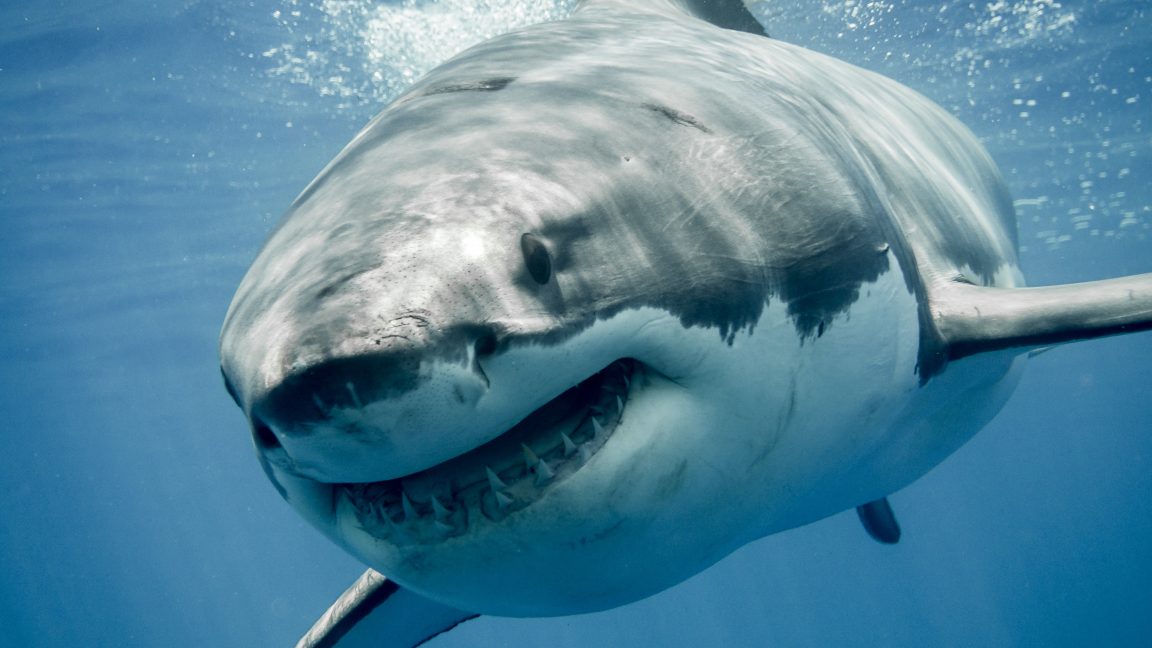
Great White Sharks Face Growing Risk of Overheating as Oceans Warm
Great white sharks, long celebrated as apex predators of the ocean, are now confronting a paradoxical threat: their evolutionary advantage of maintaining elevated body temperatures may be putting them at increasing risk of overheating as global ocean temperatures rise. This physiological trait, known as regional endothermy, allows great whites to swim faster, hunt more effectively, and inhabit colder waters than most fish. However, a growing body of research suggests that as sea surface temperatures climb due to climate change, this same adaptation could turn into a liability, forcing these sharks to expend more energy just to survive.
The concern stems from a 2024 study published in the journal Science, which examined how mesothermic species — animals that maintain body temperatures above the surrounding water but not as consistently as true endotherms like mammals — are responding to ocean warming. Great white sharks (Carcharodon carcharias) are classified as mesothermic, capable of keeping their core body temperature up to 10–15°C (18–27°F) above ambient seawater through specialized heat-exchange systems in their muscles and organs. Even as this provides clear predatory advantages, it also means their metabolic demands rise significantly in warmer environments.
According to the study’s lead author, Dr. Danielle Wiley of the Scripps Institution of Oceanography at UC San Diego, “As the ocean warms, these animals are caught in a double bind: they need more food to fuel their elevated metabolism, but prey availability is declining in many regions due to overfishing and ecosystem shifts.” This combination creates what researchers term an “energetic squeeze,” where the cost of survival increases while resources diminish.
Verified data from the National Oceanic and Atmospheric Administration (NOAA) shows that global ocean surface temperatures have risen by approximately 0.13°C per decade since 1901, with the past nine years being the warmest on record. In 2023, the average global sea surface temperature reached 17.98°C (64.36°F), exceeding the 20th-century average by 0.91°C — a level not seen in at least 125,000 years based on paleoclimatic evidence. These trends are documented in NOAA’s Annual Global Climate Report, which aggregates data from buoys, satellites, and coastal monitoring stations worldwide.
The implications extend beyond individual shark physiology. As waters warm in traditional habitats — such as the coastal regions off California, South Africa, and southern Australia — great whites may be compelled to shift their ranges poleward in search of cooler temperatures. Such movements could disrupt established feeding patterns, increase encounters with human activities like fishing and recreation, and alter predator-prey dynamics in both departure and arrival ecosystems. Tracking data from OCEARCH, a nonprofit organization that tags and monitors marine predators, has already shown some individual great whites venturing into higher latitudes than previously recorded, though researchers caution that more longitudinal data is needed to confirm a species-wide trend.
Understanding Mesothermy in Great White Sharks
Unlike most fish, which are ectothermic and rely entirely on external heat sources to regulate body temperature, great white sharks possess a network of arteries and veins called the rete mirabile (Latin for “wonderful net”). This structure allows them to retain metabolic heat generated by active muscle tissue, particularly in the swimming muscles and viscera. They can maintain stomach temperatures significantly higher than the surrounding water, which enhances digestion speed and neurological function — critical advantages when pursuing agile prey like seals and tuna.
This adaptation is shared by other lamnid sharks, including the shortfin mako and salmon shark, as well as certain tunas like the Atlantic bluefin. Scientists refer to this trait as regional endothermy because it applies to specific body regions rather than the entire organism. While energetically costly, it provides a competitive edge in temperate and subpolar waters where prey may be more abundant or slower-moving.
However, the trade-off becomes problematic in warming seas. A 2022 modeling study published in Nature Climate Change estimated that for every 1°C increase in water temperature, the metabolic rate of a mesothermic shark could rise by 10–15%, significantly increasing its caloric needs. If prey populations do not increase correspondingly — and in many regions, they are declining due to overfishing and habitat degradation — the shark must either migrate, reduce activity, or risk starvation.
Dr. Christopher Lowe, director of the Shark Lab at California State University, Long Beach, emphasized this point in a 2023 interview with BBC Earth: “We’re seeing juvenile great whites spending more time in nearshore Southern California waters, which historically were too cold for them to inhabit year-round. But now, as those waters warm, they’re staying longer — which means they’re burning more energy just to maintain their internal heat. If the food isn’t there to match that demand, we could see poorer body condition or increased foraging near human populations.”
Observed Behavioral Shifts and Range Changes
Recent tagging studies have begun to document shifts in great white shark distribution that align with warming trends. In the northeastern Pacific, researchers from Stanford University’s Hopkins Marine Station noted an increase in sightings of juvenile great whites in Monterey Bay and as far north as San Francisco Bay over the past decade — areas where they were historically rare or seasonal visitors. Acoustic telemetry data shows these sharks are arriving earlier in the spring and departing later in the fall, effectively extending their residency period by several weeks.
Similar patterns have emerged in the Atlantic. A 2023 analysis by the Massachusetts Division of Marine Fisheries, based on decades of spotter plane surveys and citizen science reports, found that the seasonal window for great white presence off Cape Cod has expanded by approximately 40% since the 1980s. While increased protection under federal law (such as the U.S. Shark Conservation Act of 2010) has contributed to population recovery, scientists agree that warming waters are enabling longer seasonal occupancy.
In South Africa, long-term monitoring by the KwaZulu-Natal Sharks Board has revealed a gradual eastward shift in shark activity along the coastline, correlating with rising sea surface temperatures in the traditionally cooler western Agulhas Bank. Although fishing pressure and bather safety programs complicate interpretation, the spatial trend aligns with climate-driven habitat modeling.
These observations are supported by projections from the Intergovernmental Panel on Climate Change (IPCC), which in its Sixth Assessment Report (AR6) warned that marine species are shifting poleward at an average rate of 72 kilometers per decade in response to ocean warming. For highly mobile predators like great white sharks, such shifts could lead to increased overlap with fisheries, changing ecosystem roles, and potential mismatches between breeding grounds and nursery habitats.
Conservation Implications and Future Outlook
The dual pressures of climate change and overfishing place great white sharks in a precarious position. Although listed as “Vulnerable” on the IUCN Red List of Threatened Species, their populations remain difficult to assess due to their wide-ranging, migratory nature and low reproductive rates. Females do not reach sexual maturity until around age 30 and deliver birth to few offspring after a gestation period estimated at 12 months or more.
Experts stress that effective conservation must address both local threats and global drivers. Marine protected areas (MPAs) that safeguard key aggregation sites — such as the Farallon Islands off California or Guadalupe Island near Mexico — can assist reduce mortality from fishing and disturbance. However, if the sharks’ prey base continues to decline or shift due to warming, static protections may become less effective.
“We need dynamic management strategies that account for changing ocean conditions,” said Dr. Sara Andreotti, a marine biologist at Stellenbosch University in South Africa who has studied great white populations for over a decade. “Static boundaries won’t operate if the animals are moving. We need real-time monitoring, adaptive fishing regulations, and international cooperation — especially since these sharks cross jurisdictional lines routinely.”
Organizations like the Global Shark Tracking Project, which aggregates data from satellite and acoustic tags across multiple research groups, are working to build a more comprehensive picture of shark movements in near real-time. Such efforts could inform future conservation planning by identifying emerging hotspots and migration corridors.
For the public, staying informed through credible sources — such as NOAA’s Climate.gov, the IUCN Shark Specialist Group, or peer-reviewed journals like Science and Nature — remains essential. While individual actions to reduce carbon emissions contribute to broader climate mitigation, supporting science-based fisheries management and protecting critical marine habitats are direct steps that can help buffer shark populations against compounding stressors.
As research continues, the next major assessment of great white shark population trends is expected from the IUCN Shark Specialist Group in 2025, which will incorporate the latest data from tagging studies, fisheries monitoring, and genetic analyses. Until then, scientists agree on one point: the very trait that made the great white shark a dominant ocean predator for millions of years may now require urgent attention to ensure its survival in a rapidly changing sea.
What are your thoughts on how climate change is affecting marine predators like the great white shark? Share your perspective in the comments below, and help spread awareness by sharing this article with others who care about ocean health.
Worth a look