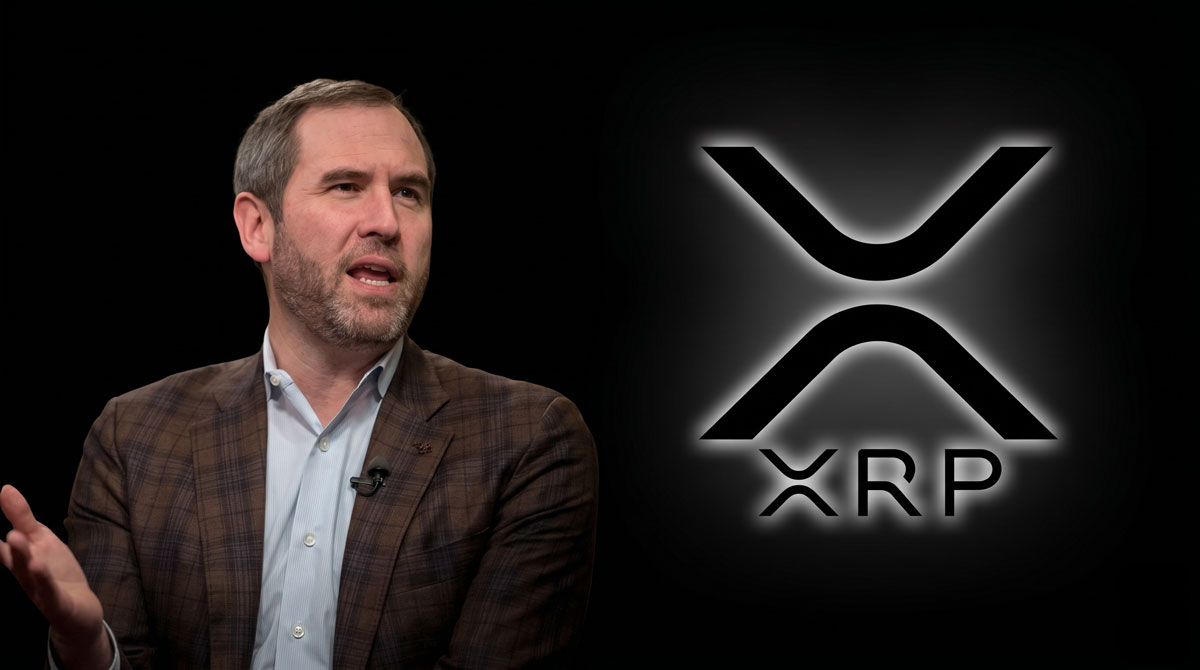
Ripple’s XRP token has once again drawn attention from global crypto investors as price speculation swirls around the $10 threshold, a level not seen since the 2021 bull run. While such projections remain speculative, the discussion has reignited debate over how large holders — often referred to as “whales” — might respond if XRP were to reach that milestone. According to on-chain analytics platforms, significant concentrations of XRP remain in wallets associated with early adopters and institutional-grade holders, raising questions about potential profit-taking behavior at key psychological price points.
The conversation gained traction after a South Korean media outlet highlighted the possibility that retail and semi-institutional holders could offload 30% to 50% of their positions should XRP breach $10, citing historical patterns from previous rallies. However, such behavior is not guaranteed and depends on a range of factors, including macroeconomic conditions, regulatory clarity, and Ripple’s ongoing efforts to position XRP as a bridge asset for cross-border payments. To assess the validity of these claims, We see essential to examine both the token’s current market structure and the company’s evolving infrastructure strategy.
As of April 2024, XRP trades significantly below its all-time high of $3.84, reached in January 2018 during the peak of the last major crypto cycle. Despite periodic surges tied to market sentiment or legal developments, the token has struggled to sustain upward momentum amid broader regulatory scrutiny. In December 2020, the U.S. Securities and Exchange Commission (SEC) filed a lawsuit against Ripple Labs, alleging that the company conducted an unregistered securities offering through the sale of XRP. The case has since become a defining moment for crypto regulation in the United States, with Ripple maintaining that XRP is a currency, not a security.
A pivotal development occurred in July 2023 when Judge Analisa Torres of the U.S. District Court for the Southern District of New York ruled that XRP sales on public exchanges did not constitute securities transactions, a partial victory for Ripple. However, the court found that institutional sales of XRP by Ripple executives did violate securities laws. The decision was widely cited in legal and financial circles as a nuanced but meaningful clarification of how digital assets may be treated under existing federal law. The case remains ongoing, with both parties appealing aspects of the ruling, and no final resolution has been reached as of early 2024.
These legal proceedings have had a tangible impact on XRP’s accessibility. Following the SEC lawsuit, several major U.S.-based cryptocurrency exchanges, including Coinbase and Kraken, delisted or suspended XRP trading to mitigate regulatory risk. While some platforms have since relisted the token after the July 2023 ruling, trading volumes on U.S. Exchanges remain a fraction of their pre-lawsuit levels. In contrast, XRP maintains strong liquidity in Asian and European markets, particularly in South Korea, Japan, and Switzerland, where regulatory frameworks have been more accommodating to digital asset innovation.
Ripple has consistently emphasized that its primary focus is not speculative trading but rather building utility for XRP within its RippleNet ecosystem. The company promotes XRP as a tool for enabling fast, low-cost cross-border transactions, particularly in corridors where traditional banking infrastructure is slow or expensive. Through its On-Demand Liquidity (ODL) service, Ripple claims to use XRP as a bridge currency to eliminate the need for pre-funded nostro accounts in destination currencies, potentially reducing settlement times from days to seconds.
Adoption of ODL has grown incrementally since its launch in 2019. Ripple reports partnerships with financial institutions such as Santander, SBI Remit, and Tranglo, though the company does not disclose real-time transaction volumes publicly. Independent analysts note that while ODL usage has expanded in regions like Southeast Asia and Latin America, it remains a small fraction of global remittance flows, which exceeded $650 billion in 2022 according to the World Bank. Critics argue that without broader bank adoption or regulatory safe harbors, XRP’s utility use case may remain limited compared to speculative demand.
Nonetheless, Ripple continues to invest heavily in infrastructure development. In 2023, the company announced the launch of the XRP Ledger (XRPL) Foundation’s $250 million fund to support developers building on the ledger, aiming to expand use cases beyond payments into areas such as tokenization, decentralized finance (DeFi), and central bank digital currency (CBDC) interoperability. The XRPL itself is an open-source, permissionless blockchain designed for high throughput and low energy consumption, capable of processing up to 1,500 transactions per second with settlement times of 3–5 seconds.
Environmental sustainability has also become a talking point in favor of XRP. Unlike proof-of-work blockchains such as Bitcoin, the XRP Ledger uses a consensus protocol that does not rely on energy-intensive mining. Ripple has stated that the ledger is carbon-neutral, a claim supported by third-party assessments from organizations like the Crypto Carbon Ratings Institute (CCRI), which found that XRP transactions consume significantly less energy per transaction than many proof-of-stake alternatives.
Returning to the speculative scenario of XRP reaching $10, such a price would imply a market capitalization of approximately $520 billion, assuming the current circulating supply of around 52 billion tokens. For context, this would exceed the market cap of major financial institutions like JPMorgan Chase and approach that of Bitcoin during its 2021 peak. Achieving this level would require either a dramatic surge in utility-driven demand, a broad market rally lifting all crypto assets, or a combination of both — scenarios that many analysts consider unlikely in the near term without significant catalysts.
On-chain data from platforms like Santiment and Whale Alert shows that large XRP holders have historically increased activity during price rallies, though patterns vary. During the 2021 surge past $1.50, some whale wallets reduced holdings, while others accumulated. There is no verified evidence suggesting a uniform 30–50% sell-off threshold at $10, as investor behavior is influenced by individual cost bases, tax considerations, and outlook on Ripple’s legal and technological trajectory.
What remains clear is that XRP’s future is inextricably tied to Ripple’s ability to navigate regulatory challenges and demonstrate real-world adoption. The outcome of the SEC appeal, potential settlements, or legislative clarity such as the U.S. Congress passing a comprehensive crypto framework could significantly alter market sentiment. Meanwhile, Ripple’s push to integrate with emerging financial infrastructures — including pilot programs with central banks exploring CBDCs — may offer longer-term value drivers independent of short-term price speculation.
For investors monitoring XRP, key developments to watch include any updates from the Second Circuit Court of Appeals regarding the SEC case, announcements of new ODL corridors, and progress on the XRPL’s evolution toward smart contract functionality via the upcoming “XRP Ledger 2.0” initiative. Official updates are typically shared through Ripple’s press room, SEC filings, and the company’s participation in industry events such as SWIFT’s Sibos or the IMF’s fintech forums.
As the crypto market continues to mature, discussions around price targets like $10 for XRP serve as a reminder of the tension between speculative enthusiasm and fundamental utility. While such levels remain distant under current conditions, the underlying infrastructure Ripple is building may yet determine whether XRP evolves into a niche payment tool or a broader financial infrastructure asset.
Stay informed, verify claims through official channels, and consider both the risks and opportunities in this rapidly evolving space. Share your thoughts in the comments below, and help others navigate the conversation by sharing this article if you found it informative.
Keep reading