The Autonomous Revolution: Why Waymo‘s Safety Record is a Game Changer
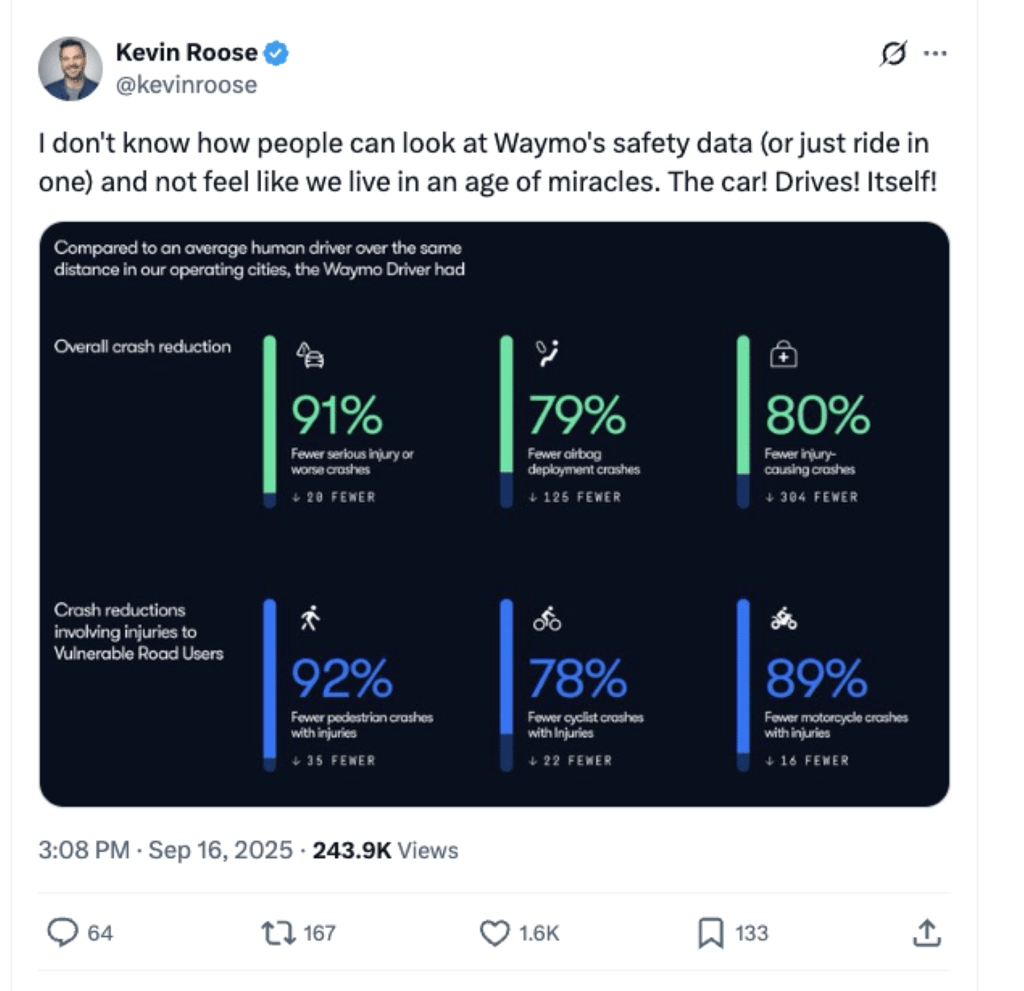
Waymo is rapidly changing the landscape of transportation,and the latest data reveals a compelling truth: their robotaxis are demonstrably safer than human drivers. This isn’t just incremental improvement; it’s a potential paradigm shift with massive implications for road safety and the future of mobility.
A Safety Record That Demands Attention
Recent figures showcase Waymo’s notable performance. Their fully autonomous vehicles have logged millions of real-world miles, consistently demonstrating a substantially lower rate of accidents and injuries compared to traditional vehicles. Specifically, data suggests an 85% reduction in serious injuries is achievable with widespread adoption. This is a statistic that should be dominating headlines, yet often gets lost in the noise.
You might be wondering what this means for you. It means a future where roads are dramatically safer for everyone – drivers, passengers, pedestrians, and cyclists alike. It also hints at exciting possibilities, like the potential to own a Waymo vehicle that generates income while you’re not using it, as hinted by Alphabet CEO Sundar Pichai.
Expanding Reach and Growing Momentum
Waymo isn’t standing still. They’re actively expanding their operations and securing approvals in key cities.
* New York City recently granted Waymo permission to begin autonomous vehicle testing.
* Singapore is fast-tracking approvals for driverless shuttle services, including those operated by Waymo partners.
* A new launch in Nashville is underway, in collaboration with Lyft, extending Waymo’s reach to a new market.
These developments signal a clear trend: cities are recognizing the potential benefits of autonomous vehicle technology and are actively working to integrate it into their transportation ecosystems.
The urgent Need for policy and Regulation
Despite the compelling safety data,a meaningful policy gap exists. Currently, regulations haven’t fully caught up with the rapid advancements in self-driving technology. This isn’t just a bureaucratic hurdle; it’s a critical issue that could hinder the widespread adoption of a technology proven to save lives.
Consider this: 40,000 people are killed and 2.4 million injured in U.S. accidents every year.Shouldn’t a technology with the potential to drastically reduce these numbers be prioritized? The question isn’t if robotaxis will scale, but when – and whether our regulatory frameworks can keep pace.
What Does This Mean for the Future?
The implications of Waymo’s success extend far beyond simply reducing accidents.
* Increased Accessibility: Autonomous vehicles can provide transportation options for those who are unable to drive themselves, such as the elderly or individuals with disabilities.
* Reduced Congestion: Optimized routing and traffic flow management can alleviate congestion in urban areas.
* Economic Opportunities: The growth and deployment of autonomous vehicle technology will create new jobs and stimulate economic growth.
However, realizing these benefits requires a proactive approach to policy and public acceptance. We need open discussions,informed regulations,and a willingness to embrace a future where technology plays a central role in making our roads safer and more efficient.
The autonomous revolution is here, and waymo is leading the charge. It’s a journey that demands our attention, our engagement, and our commitment to building a future where transportation is safer, more accessible, and more sustainable for all.
Related reading