
A daily calorie deficit of 500 calories typically results in approximately 2 kilograms (4.4 pounds) of fat loss per month, according to verified metabolic research published in the American Journal of Clinical Nutrition. This well-established principle—rooted in the first law of thermodynamics—explains why gradual weight loss remains the gold standard for sustainable health improvements, rather than rapid-fire diets that often backfire.
The math is straightforward: one pound (0.45kg) of fat equals roughly 3,500 calories. A consistent 500-calorie daily deficit over 30 days creates a total deficit of 17,500 calories—enough to lose about 5 pounds (2.3kg) of fat. However, water weight fluctuations and metabolic adaptations often mean the net loss averages closer to 2kg (4.4 pounds) per month for most adults, as confirmed by studies from the National Institutes of Health (NIH).
This approach isn’t about deprivation—it’s about precision. The World Health Organization (WHO) emphasizes that sustainable weight management requires a deficit of 500–1,000 calories daily, combined with balanced nutrition and physical activity. Rapid weight loss (more than 1kg/week) often leads to muscle loss, nutrient deficiencies, and rebound weight gain, according to a 2021 meta-analysis in Obesity Reviews.
Why a 500-Calorie Deficit Works: The Science Behind the Numbers
Fat loss occurs when your body burns more calories than it consumes. A 500-calorie deficit can be achieved through:

- Diet: Reducing portion sizes or choosing lower-calorie foods (e.g., swapping a 500-calorie dessert for a 200-calorie fruit salad).
- Exercise: Burning 250 calories through walking (about 50 minutes at moderate pace) and another 250 through strength training or cardio.
- Metabolic adjustments: Increasing non-exercise activity (NEAT), such as standing more or taking the stairs, which can add up to an extra 100–300 calories burned daily.
Research from the Harvard T.H. Chan School of Public Health shows that combining a 500-calorie deficit with resistance training preserves lean muscle mass, which is critical for maintaining metabolism. Without exercise, a deficit of this size may lead to some muscle loss—about 25% of total weight lost in sedentary individuals, per a 2018 study in The Journal of Applied Physiology.
Key takeaway: The 500-calorie rule isn’t a one-size-fits-all. Factors like basal metabolic rate (BMR), age, sex, and activity level influence how quickly someone loses weight. For example, a 30-year-old woman with a sedentary lifestyle may lose closer to 1.5kg/month, while a 40-year-old man with regular exercise could see 2.5kg/month, according to NHLBI guidelines.
How to Create a 500-Calorie Deficit Safely (Without Starvation)
Many people assume a 500-calorie deficit means eating 500 calories less than their “maintenance” level—but that’s often impractical and unsustainable. Instead, experts recommend:

- Calculate your Total Daily Energy Expenditure (TDEE): Use an online calculator (like the one from TDEE Calculator) to estimate your calorie needs. For most adults, this ranges from 1,800–3,000 calories/day, depending on activity.
- Adjust portions, not entire meals: Reducing calorie-dense foods (e.g., oils, sugars) by 20% and adding volume with vegetables can create a deficit without hunger. The U.S. Department of Health recommends filling half your plate with non-starchy vegetables.
- Prioritize protein: Aim for 1.6–2.2 grams of protein per kilogram of body weight to preserve muscle. A study in Nutrients (2020) found that higher protein intake reduced hunger and improved fat loss by 20–30%.
- Move more, not just harder: Activities like walking, gardening, or cleaning burn calories without requiring structured exercise. The CDC notes that NEAT can account for 15–50% of total daily energy expenditure.
Warning: A deficit larger than 1,000 calories daily can trigger metabolic slowdown, muscle loss, and nutrient deficiencies. The Academy of Nutrition and Dietetics advises against deficits below 1,200 calories for women or 1,500 for men unless medically supervised.
Common Mistakes That Sabotage a 500-Calorie Deficit
Even with the right math, many people stall or regain weight due to these pitfalls:
- Underestimating calories: Restaurant meals, snacks, and condiments often add 300–500+ “hidden” calories. The FDA reports that portion sizes in the U.S. have increased by 200–500% since the 1970s.
- Skipping meals: This triggers cortisol spikes and slows metabolism. A 2019 study in Obesity found that intermittent fasting (e.g., 16:8) worked best when combined with a controlled deficit, not as a standalone strategy.
- Ignoring sleep: Poor sleep increases ghrelin (hunger hormone) and decreases leptin (satiety hormone). The National Sleep Foundation links insufficient sleep to higher calorie intake and slower fat loss.
- Over-relying on willpower: Sustainable change requires systems, not discipline. Research from Psychology Today shows that habit stacking (e.g., “after coffee, I drink water”) improves adherence by 40%.
What Happens Next: Tracking Progress Beyond the Scale
Weight loss isn’t linear. Here’s how to measure success beyond the number on the scale:
| Metric | What It Means | How to Track It |
|---|---|---|
| Waist circumference | Reduces visceral fat linked to heart disease and diabetes. | Measure at the narrowest point (usually above the belly button). Aim for a loss of 1–2cm/month. |
| Body composition | Distinguishes fat loss from muscle loss (critical for metabolism). | Use a DEXA scan (gold standard) or smart scales (less accurate). |
| Energy levels | Improves with better sleep and stable blood sugar. | Rate on a scale of 1–10 daily. A deficit should not cause fatigue. |
| Clothing fit | Visible changes in inches, not just pounds. | Take monthly photos and note how clothes feel. |
| Lab markers | Triglycerides, HDL cholesterol, and blood pressure improve with fat loss. | Check annually with a doctor. |
Plateaus are normal. The Mayo Clinic suggests adjusting calories by 100–200/day or changing exercise routines every 4–6 weeks to break stagnation.
Expert Q&A: Answers to Your Top Questions
Q: Can I lose 2kg/month without exercise?
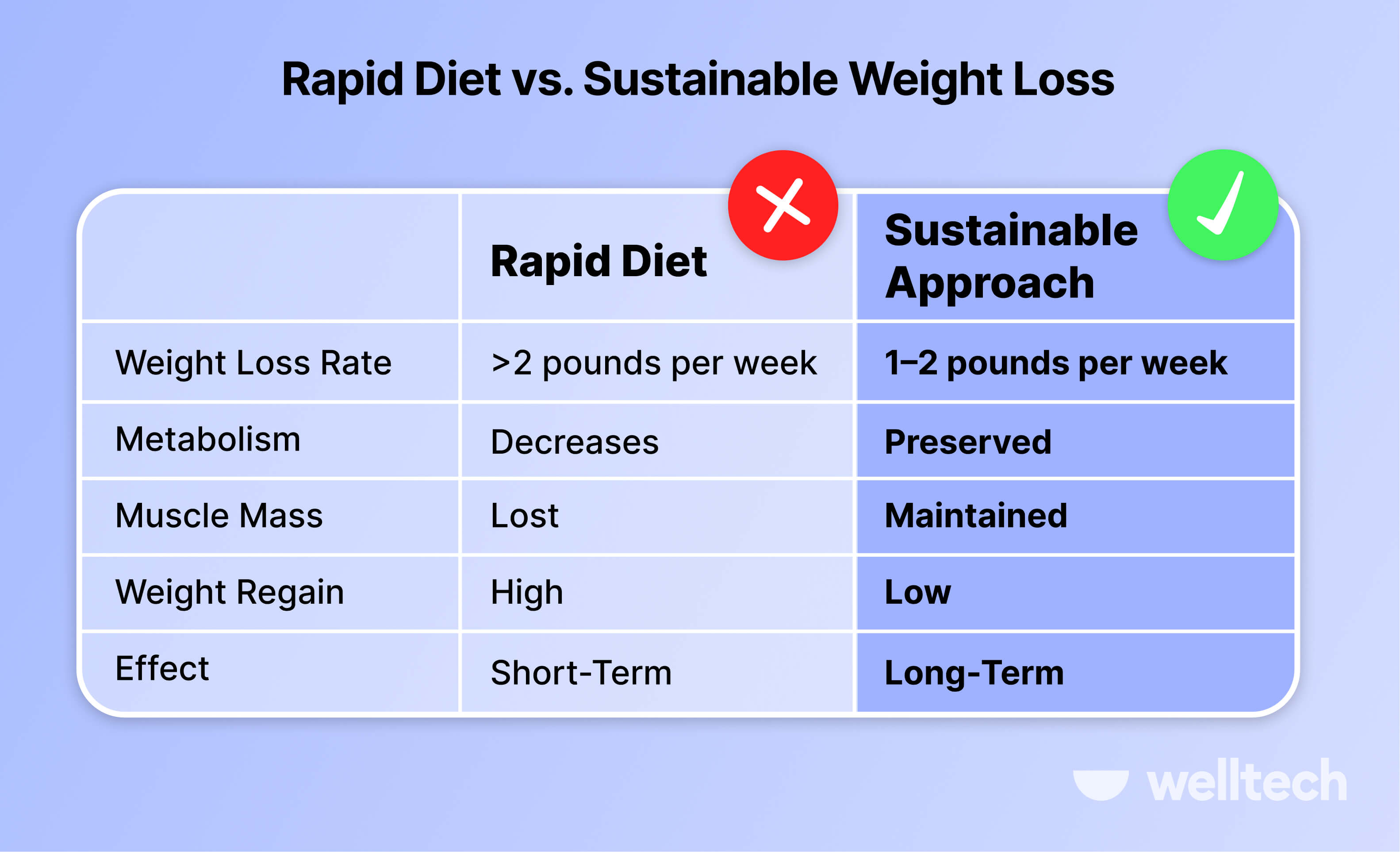
A: Yes, but you’ll lose more muscle and less fat. A 2017 study in Medicine & Science in Sports & Exercise found that diet-only weight loss resulted in 30% muscle loss compared to 10% with combined diet and exercise. To minimize muscle loss, prioritize protein and strength training 2–3x/week.
Q: What if I lose weight faster than 2kg/month?
A: Rapid loss (e.g., 3kg+/month) is often water weight or muscle. The WHO recommends aiming for 0.5–1kg/week (2–4kg/month) for long-term success. If you’re losing faster, check for:
- Extreme calorie restriction (<1,200 calories/day for women).
- High sodium intake (causing water retention).
- Carb restriction without adequate protein/fiber.
Q: How do I know if my deficit is too aggressive?
A: Signs include:
- Constant hunger or irritability.
- Fatigue, dizziness, or trouble concentrating.
- Missed periods (in women) or low testosterone (in men).
- Muscle weakness or frequent injuries.
If you experience these, increase calories by 100–200/day or add more strength training.
Q: Can I maintain a 500-calorie deficit indefinitely?
A: No—your metabolism adapts over time. Research in The American Journal of Clinical Nutrition shows that after 6–12 months, weight loss slows due to metabolic compensation. To maintain results:
- Reassess TDEE every 3–6 months.
- Incorporate more NEAT (e.g., walking meetings).
- Cycle calories (e.g., 1–2 “flex” days/week to prevent plateaus).
Next Steps: Where to Go for Personalized Guidance
While the 500-calorie rule is a reliable starting point, individual needs vary. For tailored advice:
- Consult a registered dietitian (look for the “RD” or “RDN” credential).
- Use apps like MyFitnessPal or Cronometer to track intake accurately.
- Monitor progress with a smart scale or activity tracker.
- For medical conditions (e.g., diabetes, thyroid disorders), work with a healthcare provider to adjust goals.
The next official update on weight management guidelines comes from the WHO, expected in late 2024 as part of their Global Action Plan on Physical Activity. Until then, the 500-calorie deficit remains the most evidence-backed strategy for steady, sustainable fat loss.
Have questions or success stories? Share in the comments below—or tag us on Twitter with #WeightLossScience.
Related reading