
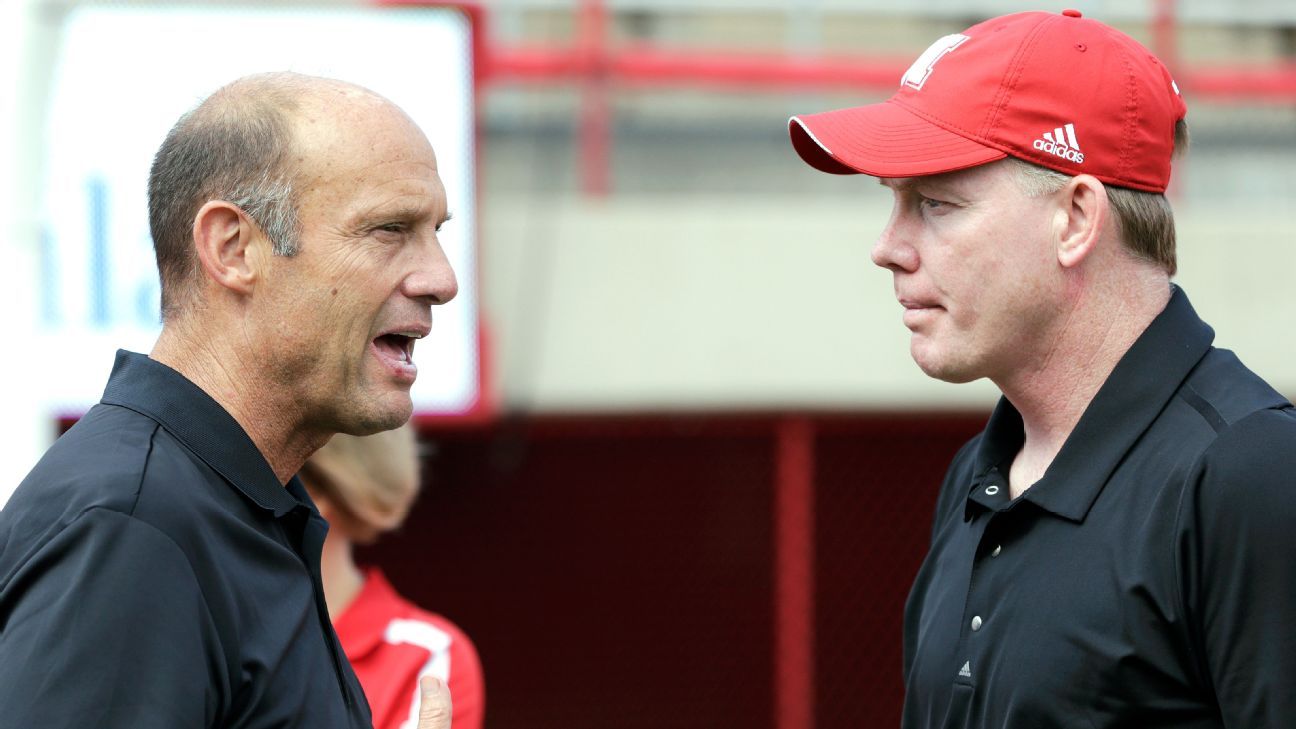
Shawn Eichorst has been appointed to a leadership role within the University of Wisconsin athletic department, marking a return to the Big Ten conference nearly a decade after his tenure as athletic director at the University of Nebraska. This move brings the seasoned administrator back to his home state, where he previously served as a senior associate athletic director from 2004 to 2006. His return to Wisconsin follows a career defined by high-profile administrative positions at several major collegiate institutions.
Eichorst’s transition back to Wisconsin follows a period of significant professional transition. He served as the athletic director at the University of Nebraska-Lincoln from 2012 until his dismissal in September 2017, a decision announced by then-Chancellor Ronnie Green following a series of discussions regarding the direction of the department’s football program, as reported by ESPN. Prior to his time in Lincoln, Eichorst held the athletic director position at Miami (FL) from 2011 to 2012 and served in various administrative capacities at South Carolina and Wisconsin.
Career Trajectory in Collegiate Athletics
The Wisconsin native’s career in sports administration is characterized by extensive experience across multiple conferences. Before his move to Nebraska, Eichorst was instrumental in the operations at the University of Miami, where he oversaw a department navigating significant NCAA compliance investigations. His earlier stint in Madison saw him working closely with long-time athletic director Barry Alvarez, an era often cited for the department’s growth in both infrastructure and revenue generation, according to official university records.

Following his 2017 departure from Nebraska, Eichorst remained active in the broader sports industry. His return to the Wisconsin fold is seen by observers as a move to leverage his institutional knowledge of the Big Ten landscape. Throughout his tenure in the industry, Eichorst has managed multi-million dollar budgets, capital improvement projects, and the shifting dynamics of collegiate media rights, which have fundamentally altered the financial structure of athletic departments across the United States.
Navigating a Changing Big Ten
The environment Eichorst returns to in the Big Ten is markedly different from when he last served in the conference. The league has expanded its footprint significantly, incorporating West Coast institutions such as USC, UCLA, Oregon, and Washington, as confirmed by the Big Ten Conference. For an administrator like Eichorst, the primary challenge involves balancing the traditional values of a flagship state university with the demands of an increasingly nationalized, television-driven athletic model.

His experience at Nebraska provides a case study in the high-pressure environment of college football, where administrative decisions are often scrutinized by massive fan bases and boosters. During his time at Nebraska, Eichorst faced consistent pressure regarding the performance of the football program, eventually leading to the hiring and subsequent firing of head coach Mike Riley. As he resumes duties in Wisconsin, stakeholders will be monitoring how his past experiences inform his approach to coach recruitment, student-athlete welfare, and institutional fundraising in a competitive NIL (Name, Image, and Likeness) environment.
Operational Priorities and Future Oversight
As Eichorst integrates into his new responsibilities, the immediate focus is expected to be on maintaining the competitive stability of the Badgers’ programs. The University of Wisconsin continues to prioritize its Olympic sports success alongside its major revenue-generating programs. According to the University of Wisconsin-Madison, the athletic department operates under a mandate to ensure financial self-sufficiency while maintaining academic standards for student-athletes.
Future updates regarding the specific scope of his duties and his involvement in long-term strategic planning are expected to be released through the official university athletics communication channels. Readers interested in following the progress of the department’s transition can monitor the official Badgers athletics portal for upcoming administrative announcements and policy developments. We invite our readers to share their perspectives on this appointment in the comments section below.