Escalating Crisis in the West Bank and Gaza: A Deep Dive into the Humanitarian Situation (December 6, 2023)
The humanitarian situation in the West Bank and Gaza continues to deteriorate rapidly, marked by escalating violence, widespread displacement, and a looming public health crisis. Recent data paints a grim picture, demanding urgent international attention and a significant increase in aid delivery. This report provides a comprehensive overview of the current conditions, drawing on verified reports from the UN Office for the Coordination of Humanitarian Affairs (OCHA), the world Health Organization (WHO), UNICEF, and on-the-ground observations.
West Bank: A Surge in Violence and displacement
The past eleven days (November 25th – December 5th, 2023) have witnessed a disturbing escalation of violence in the West Bank, resulting in the tragic deaths of four Palestinians, including one child. This brings the total number of Palestinian fatalities in the West bank for 2023 to a staggering 227.This represents a significant increase in casualties compared to previous years, reflecting a deeply concerning trend.
The impact is geographically concentrated, with nearly half of all fatalities occurring in the Jenin and Nablus governorates. These areas have been subjected to large-scale Israeli military operations, impacting the lives of over 95,000 Palestinians in the past week alone. The operations are characterized by extensive raids, prolonged curfews, and the destructive use of bulldozers, causing significant damage to critical infrastructure – homes, roads, and vital water networks. the consequences are devastating,forcing families from their homes and leaving nearly 17,000 people without access to clean water.
Adding to the instability, settler violence remains persistently high. OCHA has documented 1,680 settler attacks across more than 270 communities this year – an average of five attacks per day. The current olive harvest season,a crucial period for Palestinian livelihoods,is being systematically disrupted by assaults on farmers,destruction of trees,and damage to agricultural infrastructure.This purposeful targeting of economic resources exacerbates existing vulnerabilities and fuels further resentment. these attacks are not isolated incidents; they represent a pattern of intimidation and dispossession.
Gaza: A Territory on the Brink
The situation in Gaza remains catastrophic.Despite the recent ceasefire, airstrikes, shelling, and the ongoing demolition of buildings continue to be reported near the “Yellow Line,” a demarcation that bisects more than half of the territory. Shifts in this line have triggered renewed displacement, notably from eastern Gaza City, compounding the already dire living conditions as winter rains set in.
As the ceasefire’s implementation in October, over 774,000 displacement movements have been recorded. The past week alone saw over 20,500 people forced to flee their homes,driven by a combination of flooding and ongoing insecurity. Humanitarian organizations are warning that the convergence of winter conditions,overcrowding,and repeated displacement is dramatically increasing the risks faced by vulnerable populations – children,the elderly,people with disabilities,and female-headed households.
Collapse of Essential Services: Health and Food Security
The health system in Gaza is teetering on the edge of complete collapse. While 42 health facilities have partially reopened since the ceasefire, a staggering 61% of all health service points remain non-functional. This places an unbearable strain on the remaining facilities and leaves hundreds of thousands without access to essential medical care. The WHO reports that over 16,500 patients – including approximately 4,000 children – urgently require medical evacuation for advanced treatment unavailable within Gaza. The lack of access to specialized care is resulting in preventable deaths and long-term health complications.
Food security is equally precarious. UNICEF data reveals that two-thirds of children under five consumed onyl two or fewer food groups in October, placing the entire under-five population at acute risk of malnutrition. While food assistance has been expanded in recent weeks, critical shortages of fuel, cooking gas, and cash continue to limit access to diverse and nutritious diets. The long-term consequences of widespread malnutrition will be devastating, impacting children’s physical and cognitive development.
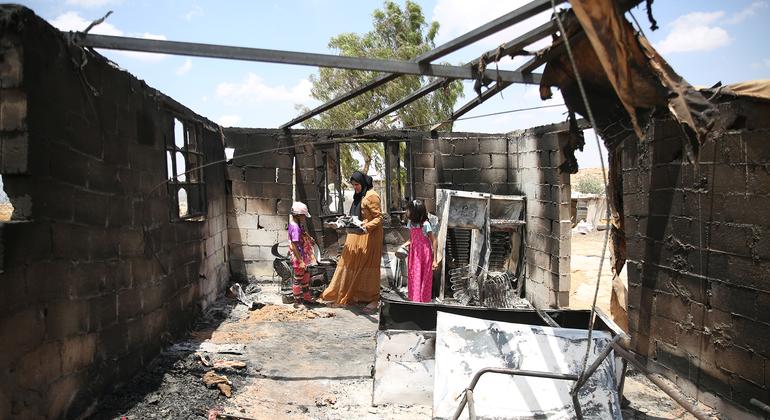
The physical destruction in Gaza is immense. Over 80% of buildings have been damaged or destroyed, leaving a landscape of rubble and despair.UN estimates suggest that debris clearance alone will take at least seven years, even with stable access and sufficient funding – a daunting prospect given the current political climate.
Funding Gap and Humanitarian Access
Despite the overwhelming scale of the humanitarian crisis, funding remains critically constrained.As of December 4
Keep reading