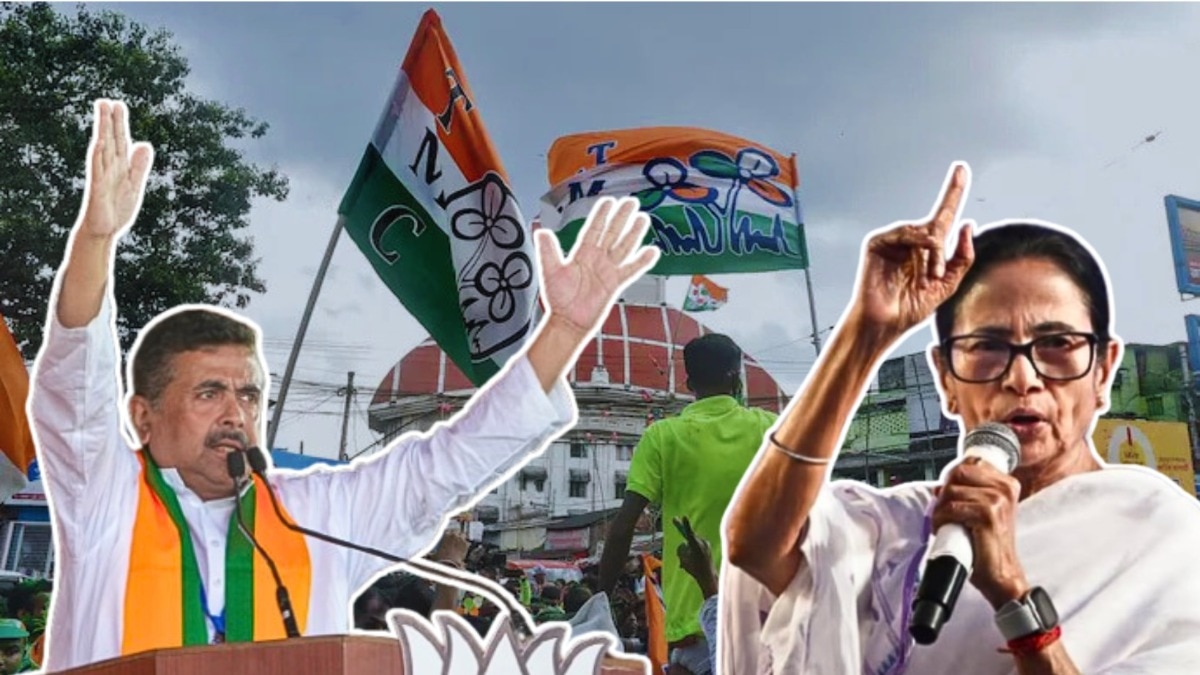
The political landscape of West Bengal is currently held in a state of high tension as the region awaits the final tally of the West Bengal Assembly elections 2026. With polling concluded across two phases on April 23 and April 29, the focus now shifts to the counting day on May 4, a date that will determine whether Chief Minister Mamata Banerjee continues her tenure or if the Bharatiya Janata Party (BJP) can secure a historic breakthrough in the state.
For global observers and investors, the outcome of this election is more than a regional power struggle; it is a litmus test for political stability in one of India’s most economically strategic eastern hubs. The contest pits the incumbent Trinamool Congress (TMC), which has maintained a firm grip on the state, against a BJP that has sought to expand its footprint in the East through a platform of development and central integration.
The stakes are exceptionally high for both parties. While the TMC views this as a mandate to solidify its fourth consecutive term, the BJP sees it as a critical opportunity to dismantle the TMC’s hegemony. As the countdown to May 4 begins, the rhetoric from both camps suggests a deeply polarized electorate and a battle that extends far beyond the borders of West Bengal, influencing the broader national political trajectory toward the central government in Delhi.
The Battle for the 294-Member Assembly
The central question of the West Bengal Assembly elections 2026 is whether the BJP can overcome the TMC’s historical dominance in the 294-member assembly. The TMC entered this cycle from a position of strength, having won 213 seats in the elections held five years ago. In contrast, the BJP secured 77 seats during the 2021 polls.
Confidence within the TMC hierarchy remains resolute. Abhishek Banerjee, the party’s national general secretary, has asserted that the Trinamool Congress will return to power by winning approximately 225 seats. He has gone further to predict that the BJP will struggle to reach even the 50-seat mark, suggesting a significant decline for the saffron party compared to its 2021 performance.
This confidence is mirrored by Chief Minister Mamata Banerjee, who has stated that the Trinamool Congress will secure its fourth consecutive term. During a poll rally in the Purba Medinipur district’s Haldia, Banerjee claimed that “no one wants BJP to form the government” in the state, framing the election as a choice between regional autonomy and central imposition.
Predictions vs. Historical Data
The discrepancy between the TMC’s predictions and the BJP’s ambitions highlights the volatility of the current political climate. To understand the potential shift, it is helpful to look at the seat distributions from the previous cycle:
| Party | 2021 Actual Seats | 2026 TMC Prediction |
|---|---|---|
| Trinamool Congress (TMC) | 213 | ~225 |
| Bharatiya Janata Party (BJP) | 77 | Under 50 |
Campaign Strategies: Religion vs. Development
The 2026 campaign has seen a distinct divergence in messaging. According to reports, the Trinamool Congress has adjusted its strategy to incorporate a more pronounced focus on religion to consolidate its base. This shift suggests a tactical move to counter the BJP’s own ideological strengths by appealing to the state’s diverse demographic fabric.

Conversely, the BJP has leaned heavily into a “development” message, attempting to frame the TMC’s tenure as one of stagnation and promising a new era of economic growth and infrastructure investment under their leadership. This “development” narrative is intended to appeal to voters who may be dissatisfied with the current state of regional governance and employment opportunities.
The clash of these two narratives—identity and religion versus economic progress—has created a highly charged atmosphere. For the business community, the “development” promise of the BJP is an attractive prospect, but the stability provided by a dominant incumbent like the TMC often offers a more predictable, albeit different, regulatory environment.
Allegations of Manipulation and Electoral Integrity
The road to the May 4 counting day has been marred by serious allegations regarding the integrity of the electoral process. Chief Minister Mamata Banerjee has been vocal about perceived irregularities, specifically referencing the 2021 assembly polls in Nandigram, where she was defeated by Suvendu Adhikari. Banerjee has alleged that manipulation occurred during that election, citing the “looting” of votes and the manipulation of Electronic Voting Machines (EVMs).
Abhishek Banerjee has raised concerns regarding the “Special Intensive Revision (SIR)” of electoral rolls. He claimed that Bengali voters faced “harassment” during this process and asserted that the public’s response to these actions would be revealed in the final results. These claims point to a deeper distrust between the state administration and the mechanisms of the Election Commission of India.
The tension is further exacerbated by personal political rivalries. Banerjee has referred to Suvendu Adhikari as a “gaddar” (betrayer) following his departure from the TMC, alleging that lists were created to target individuals in Nandigram and Purba Midnapore to facilitate a BJP victory.
The National Dimension: A Gateway to Delhi
While the fight is for the West Bengal Assembly, the implications are national. Mamata Banerjee has explicitly linked the state’s election to the broader goal of ousting the BJP-led NDA government from the Centre. During her rallies, she has urged all opposition parties to unite to remove the BJP from power in Delhi by 2026.
This strategy positions West Bengal as a vanguard for the national opposition. By securing a strong mandate in her home state, Banerjee seeks to bolster her standing as a primary challenger to Prime Minister Narendra Modi. This was evident in her criticism of the Prime Minister’s claim that he was the BJP candidate for all 294 seats in West Bengal, to which she responded that he would need to quit the post of prime minister first for such a scenario to be possible.
Abhishek Banerjee echoed this sentiment, vowing to “uproot the BJP from Delhi” within the next two to three years. This framing transforms the West Bengal election from a local administrative contest into a strategic campaign for national leadership.
Key Takeaways for the May 4 Results
- The Magic Number: The TMC is aiming for 225+ seats to secure a commanding fourth term.
- The BJP Threshold: The BJP is fighting to avoid falling below the 50-seat mark, which would signal a loss of momentum in the East.
- The Nandigram Factor: Allegations of past manipulation and current electoral roll revisions (SIR) remain central to the TMC’s grievance narrative.
- The National Link: A strong TMC victory will likely be used as a catalyst for opposition unity against the central government.
What Happens Next?
With the polling phases complete, the state enters a period of uneasy silence. The critical checkpoint is May 4, 2026, when the Election Commission will commence the official counting of votes. The results will not only determine the Chief Minister of West Bengal but will also send a powerful signal to the central government regarding the viability of the BJP’s expansionist strategy in Eastern India.
Following the announcement of the results, the next official action will be the formal notification of winning candidates and the subsequent swearing-in ceremony for the new government. Until then, the state remains on edge, awaiting the verdict of the 294 constituencies.
Do you believe the BJP’s development narrative can overcome the TMC’s regional stronghold? Share your thoughts in the comments below or share this analysis with your network.
Keep reading