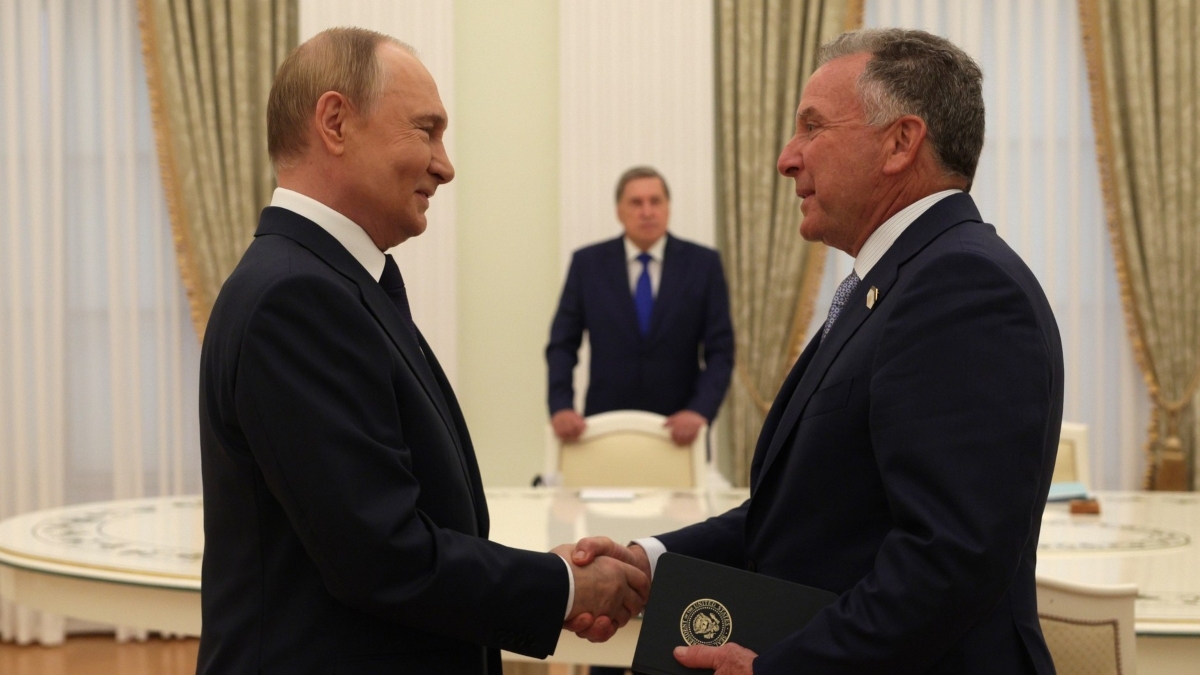
As the conflict in Ukraine continues to reshape the geopolitical landscape, policymakers and international observers are increasingly focused on a daunting question: what will the long-term architecture of relations with post-war Russia look like? This inquiry is not merely theoretical; it touches upon the future of European security, the stability of global nuclear non-proliferation regimes, and the potential for any future diplomatic engagement between Moscow and the West.
The challenge of defining these future relations with post-war Russia remains one of the most complex tasks facing current international leadership. With the Kremlin maintaining a posture of strategic confrontation, the path toward a new equilibrium is obstructed by significant legal, military, and diplomatic barriers. Addressing this requires a nuanced understanding of history, particularly the mechanisms of cooperation that once existed during the Cold War, and how those frameworks might—or might not—be adapted for a modern, fractured era.
The Legacy of Nuclear Diplomacy and Strategic Stability
To understand the potential for future engagement, one must look at the foundation of past arms control efforts. Rose Gottemoeller, a former Deputy Secretary General of NATO and a veteran of the U.S. State Department, has long argued that security is built through cooperation, specifically regarding nuclear weapons and space policy. Her recent work, Security Through Cooperation: Space, Nuclear Weapons, and US-Russia Relations after the Cold War, emphasizes that even during periods of intense competition, channels for dialogue were essential to prevent catastrophic miscalculations.
The current state of nuclear diplomacy is, by almost all accounts, at its lowest point in decades. The suspension of the New START treaty by Russia in 2023 effectively ended the last major bilateral arms control agreement between the world’s two largest nuclear powers, as reported by the Reuters news agency. Without the inspection regimes and data exchanges that characterized the post-Cold War era, the risk of misinterpretation increases, making the task of establishing any “post-war” relationship significantly more challenging.
Experts at the Freeman Spogli Institute for International Studies at Stanford University have noted that any future framework for stability must account for the integration of new technologies, including cyber capabilities and artificial intelligence, which were not prominent during the initial arms control era. Rebuilding trust will require not only political will but also a return to the technical, expert-level communication that once served as a “safety valve” for international tensions.
Geopolitical Realignment and European Security
The security architecture of Europe has been fundamentally altered by the ongoing war. NATO, which Gottemoeller helped lead, has undergone a significant transformation, expanding its membership with the inclusion of Finland and Sweden, a move that solidified the alliance’s northern flank in response to the changing security environment, according to official NATO documentation.
For relations with Russia to stabilize, there must be a consensus on what “security” looks like for all parties involved. However, the divergence between Western democratic values and the current trajectory of Russian domestic and foreign policy creates a profound rift. The international community, including bodies like the United Nations, continues to monitor the situation, with the Office of the United Nations High Commissioner for Human Rights providing regular updates on the human rights implications of the conflict, which remain a primary obstacle to normalized diplomatic ties.
The “post-war” period, whenever it arrives, will likely be defined by a long-term period of “containment-plus”—a strategy that combines military deterrence with the maintenance of limited, functional diplomatic channels. This approach acknowledges that while the relationship may not return to the cooperative spirit of the 1990s, the necessity of managing shared global risks—such as nuclear proliferation and climate change—will force a degree of pragmatic interaction.
Key Takeaways for the International Community
- The End of Formal Arms Control: The suspension of major treaties has left a vacuum in strategic stability that will require years of negotiation to refill, assuming political conditions allow.
- NATO’s New Role: The alliance has shifted focus toward collective defense and deterrence, a posture that is likely to remain in place for the foreseeable future.
- The Human Rights Dimension: Future relations are inextricably linked to the resolution of ongoing international legal investigations into the conduct of the war, which remain a priority for the international judicial community.
- Strategic Patience: Experts suggest that a rapid return to “normal” is unlikely; instead, the focus will be on crisis management and the prevention of further escalation.
Looking Ahead: The Path Toward Stability
Predicting the exact shape of international relations in the coming years is an exercise in caution. As of the latest updates, the international focus remains on the immediate humanitarian and security crises in Ukraine. The next major checkpoint for the international community will be the ongoing proceedings at the International Court of Justice, where various aspects of the conflict are being adjudicated, as noted by the official case records of the ICJ.

the question of what post-war relations with Russia will look like is one that will be answered not just by diplomats in Washington or Moscow, but by the collective actions of the global community. Maintaining transparency, adhering to international law, and preserving the few remaining lines of communication will be the building blocks of whatever future stability can be salvaged. We invite our readers to share their perspectives on this complex issue in the comments section below, as we continue to track these developments with the rigor and impartiality they demand.
Worth a look