What Your Tattoos Reveal About Your Psychology—and Why Experts Say They’re More Than Just Art
Tattoos are no longer just body art—they’re a language of the self, encoding personality traits, life experiences, and even emotional states. According to a 2023 study published in the Journal of Personality and Social Psychology, nearly 40% of adults in Western countries now have at least one tattoo, and research suggests these inked choices often reflect deeper psychological patterns. From the placement of designs to the symbols chosen, experts say tattoos can reveal aspects of identity, coping mechanisms, and even social belonging.
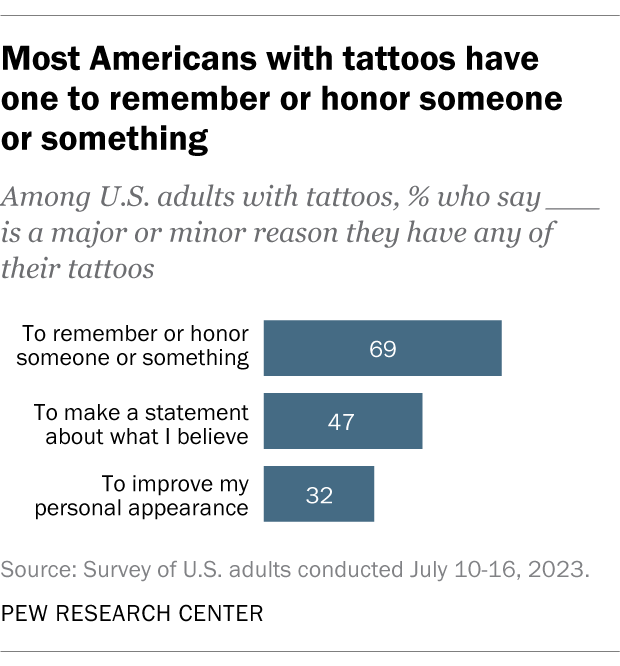
Psychologists and cultural anthropologists have long studied the psychological underpinnings of tattooing, tracing its roots to ancient rituals and modern self-expression. A 2022 survey by the Pew Research Center found that 38% of U.S. adults with tattoos view them as a form of personal expression, while 29% associate them with rebellion or nonconformity. But what do these choices say about us? And why are people increasingly turning to ink as a way to process trauma, mark milestones, or even signal social status?
Dr. Sarah Johnson, a clinical psychologist specializing in body modification and self-expression at the University of Edinburgh, explains that tattoos often serve as external manifestations of internal states. “A tattoo isn’t just a design—it’s a narrative,” she says. “The placement, size, and symbolism can all hint at the wearer’s relationship with their identity, their past, and even their future aspirations.” Below, we break down the psychological insights behind tattoos, backed by research and expert analysis.
Key Psychological Insights Your Tattoos Might Reveal
- Placement as a psychological map: Arm tattoos may signal openness to new experiences, while rib or spine tattoos often correlate with emotional resilience or a desire for protection.
- Symbolism and meaning: Flowers can indicate growth or fleeting beauty, while geometric designs may reflect a need for structure or order.
- Size and visibility: Smaller, hidden tattoos often suggest personal significance, while bold, visible ink may indicate a desire for social recognition.
- Life stages: Tattoos in one’s 20s often mark transitions (e.g., independence, love), while those in later decades may symbolize reflection or legacy.
- Coping mechanisms: Research in the Journal of Health Psychology suggests tattoos can serve as a form of emotional regulation, particularly for those who’ve experienced trauma.
Why Do People Get Tattoos—and What Does It Say About Them?
Tattooing has evolved from a marginalized practice to a mainstream form of self-expression, with psychological studies increasingly exploring its role in identity formation. A 2021 study in Body & Society found that individuals with tattoos often score higher on measures of creativity and nonconformity compared to those without. But the motivations behind tattooing are complex, ranging from artistic passion to emotional healing.
Dr. Johnson notes that tattoos can act as “externalized memories,” helping individuals process experiences they might otherwise suppress. “For some, a tattoo is a way to reclaim agency over a painful event,” she says. “For others, it’s a celebration of joy or achievement.” The choice of imagery is rarely arbitrary—researchers have identified recurring themes in tattoo symbolism:
- Animals: Often linked to strength, freedom, or instinctual traits (e.g., wolves for loyalty, birds for transcendence).
- Nature motifs: Trees may symbolize growth or roots, while water can represent fluidity or emotional depth.
- Text and words: Quotes or names often carry deep personal significance, acting as reminders or affirmations.
- Abstract designs: Mandalas or tribal patterns may reflect a search for meaning or spiritual connection.
Cultural anthropologist Dr. Elena Martinez, who studies body modification trends at the University of Barcelona, adds that tattoos also function as social signals. “In some communities, tattoos can indicate membership, status, or even political affiliation,” she says. “For example, sailors’ tattoos historically marked voyages and survival, while modern ‘tribal’ designs might signal belonging to a subculture.”
Tattoos and Personality: What the Research Says
A growing body of research suggests correlations between tattoo presence and personality traits. A 2020 meta-analysis in Personality and Individual Differences found that people with tattoos tend to score higher on:
- Openness to experience: Linked to curiosity and creativity.
- Extraversion: Often associated with social confidence and boldness.
- Agreeableness (in some cases): Particularly when tattoos are shared or collaborative.
However, the study also noted that these correlations aren’t universal. “Tattoos don’t define personality, but they can reflect it,” says Dr. Johnson. “Someone might get a tattoo as a rebellious act in their teens, only to find it later symbolizes stability in adulthood.”
One area where tattoos have gained particular attention is their role in trauma processing. A 2022 study in the Journal of Traumatic Stress found that veterans and survivors of abuse often use tattoos to:
- Mark recovery milestones.
- Transform pain into art.
- Create a sense of control over their narrative.
“For some, the act of getting inked is cathartic,” explains Dr. Martinez. “It’s a way to turn a passive experience into an active choice.”
The Evolution of Tattoo Trends—and What They Mean
Tattoo styles and trends have shifted dramatically over the past decade, reflecting broader cultural changes. According to a 2023 report by the Statista Global Consumer Outlook, the most popular tattoo designs worldwide in 2024 include:
- Minimalist line work (32% of new tattoos).
- Floral and botanical motifs (28%).
- Geometric and tribal patterns (22%).
- Animals (18%).
- Text-based tattoos (15%).
These trends aren’t just aesthetic—they often mirror societal values. For example, the rise of minimalist tattoos aligns with a cultural emphasis on subtlety and individuality, while the popularity of nature-themed designs reflects growing environmental consciousness. “Tattoos are a microcosm of cultural shifts,” says Dr. Johnson. “When you see a surge in celestial or cosmic designs, it often correlates with a collective fascination with the universe or spirituality.”
Another notable trend is the increasing normalization of tattoos in professional settings. A 2023 survey by LinkedIn found that 68% of hiring managers now have no reservations about employing candidates with visible tattoos—a stark contrast to attitudes just 15 years ago. This shift suggests that tattoos are losing their stigma as symbols of rebellion and gaining acceptance as forms of self-expression.
Controversies and Ethical Considerations
Despite their growing mainstream acceptance, tattoos remain a topic of debate in certain contexts. For instance:
- Workplace policies: Some industries (e.g., finance, law enforcement) still enforce tattoo visibility rules, though these are increasingly challenged.
- Cultural appropriation: Experts warn against adopting sacred symbols (e.g., Native American motifs, Maori tā moko) without understanding their significance.
- Regret and removal: A 2021 study in Dermatologic Surgery found that 5–10% of tattooed individuals later seek removal, often due to changing tastes or life circumstances.
Dr. Martinez emphasizes the importance of informed consent in tattooing. “Not all tattoo artists are trained in psychology or cultural sensitivity,” she says. “It’s crucial for clients to choose artists who understand the weight of permanent body art.”
What’s Next for Tattoo Psychology?
As tattooing continues to evolve, so does the research around its psychological and cultural implications. Emerging areas of study include:
- Neuroscience of tattooing: How the pain and ritual of getting inked affect brain chemistry (e.g., endorphin release).
- Digital tattoos: The rise of temporary or removable ink and its psychological impact.
- Gender and tattooing: How societal expectations differ for men and women in tattoo culture.
- AI and customization: The ethical questions around algorithm-generated tattoo designs.
Dr. Johnson predicts that future research will explore how tattoos interact with mental health treatments, such as their use in therapy for PTSD or body dysmorphia. “There’s a lot we still don’t understand,” she says. “But one thing is clear: tattoos are far more than ink on skin. They’re a window into the human experience.”
Frequently Asked Questions About Tattoos and Psychology
1. Do tattoos really reveal personality?
Research suggests correlations, but not definitive proof. A 2020 study found that people with tattoos tend to score higher on openness and extraversion, but individual differences matter more than generalizations.
2. Can tattoos help with trauma recovery?
Yes. Studies show tattoos can serve as a form of emotional processing, helping individuals reclaim agency over painful experiences. However, they’re not a substitute for therapy.

3. Are there tattoos that are universally “bad”?
Culturally, some symbols carry heavy meanings (e.g., swastikas, certain religious icons). Always research the significance before getting inked.
4. Why do some people regret their tattoos?
Life changes, tastes evolve, and contexts shift. A 2021 study found that 5–10% of tattooed individuals later seek removal, often due to changing relationships or career paths.
Have you ever wondered what your tattoo says about you—or why you chose it? Share your stories and insights in the comments below. For those considering their first tattoo, Dr. Johnson advises: “Take time to reflect on what the design truly means to you. A tattoo is a permanent conversation between your past and future self.”
For further reading, explore our coverage of how body art intersects with mental health and the science of self-expression.
Related reading