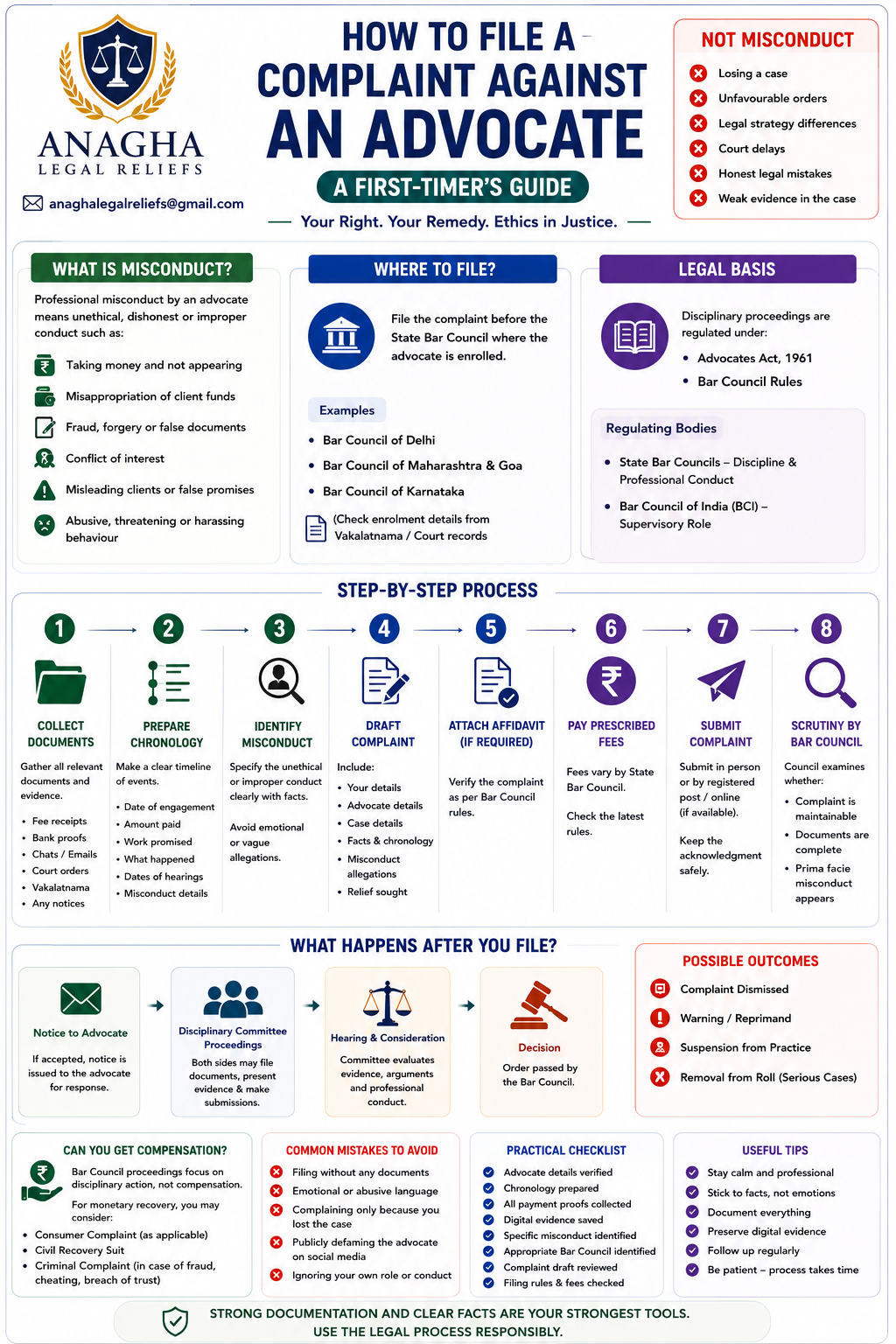
Clients seeking to file a formal complaint against an advocate must navigate specific regulatory channels governed by national or regional Bar Councils, which serve as the primary oversight bodies for legal professional conduct. While legislative landscapes are evolving, including discussions regarding potential procedural updates for 2026, the current process requires submitting a signed, written complaint to the Disciplinary Committee of the Bar Council where the advocate is enrolled. This formal grievance must detail specific instances of professional misconduct, supported by relevant documentation, to initiate an official inquiry.
Understanding the Disciplinary Process for Legal Professionals
The relationship between a client and an advocate is governed by strict codes of professional ethics. When a client believes their representative has engaged in misconduct—such as misappropriation of funds, negligence, or breach of fiduciary duty—they have a right to seek redress. According to the Bar Standards Board, which regulates barristers in England and Wales, complaints must be handled through established internal procedures before escalating to external legal or consumer bodies. In many jurisdictions, the Bar Council acts as the quasi-judicial authority empowered to investigate allegations and impose sanctions ranging from reprimands to the suspension or permanent removal of a lawyer’s license to practice.


The process generally requires the complainant to provide evidence that the advocate failed to meet the standards expected of a legal professional. This is distinct from a mere disagreement over legal strategy or the outcome of a case. As noted by the American Bar Association, disciplinary agencies focus on violations of rules of professional conduct. Complainants should prepare a comprehensive file including copies of the retainer agreement, correspondence, billing statements, and any evidence of the alleged misconduct. Keeping this documentation organized is essential for the committee to determine if a case has sufficient merit to proceed to a formal hearing.
Legal Guidance and Procedural Requirements
For those considering a complaint, the first step is to consult the official website of the local Bar Association or Law Society. Most jurisdictions provide a standardized complaint form that ensures all necessary information is captured for the initial review. It is a common misconception that Consumer Courts are the first point of contact for professional negligence. While some jurisdictions allow for consumer-based claims regarding service deficiencies, allegations of ethical misconduct or professional malpractice typically fall under the exclusive jurisdiction of the legal regulator.
If you are exploring your options, consider these critical steps:
- Review the Retainer Agreement: Check the terms of your contract, as it may outline internal dispute resolution processes that must be exhausted first.
- Document the Grievance: Create a chronological summary of events, clearly highlighting the specific actions that constitute the alleged misconduct.
- Verify Regulatory Jurisdiction: Ensure you are filing your complaint with the specific Bar Council where the advocate is registered and licensed.
- Seek Independent Advice: If the matter involves significant financial loss or complex malpractice, consulting with an independent legal professional who specializes in professional liability can provide clarity on whether to pursue disciplinary action or a civil lawsuit.
Navigating the 2026 Regulatory Landscape
Regulatory bodies globally are currently reviewing their frameworks to better protect consumer interests. As of early 2024, various law commissions are evaluating proposals that may lead to updated disciplinary rules by 2026. These potential changes are expected to focus on increasing transparency in the complaint-handling process and reducing the time required to reach a resolution. According to recent reports from the Law Society, the objective is to modernize the oversight of legal services to align with digital-first interaction models and enhanced client protection standards.
Clients should monitor official government or Bar Council bulletins for updates on how these upcoming rules might affect the filing requirements in their specific region. Staying informed about these changes ensures that any complaint filed is compliant with the most current procedural standards. Because legal regulations are subject to local legislative amendments, it is vital to rely only on information published by official regulatory portals rather than third-party legal forums or social media commentary.
Frequently Asked Questions About Filing Complaints
Can I file a complaint in a Consumer Court?
In many jurisdictions, Consumer Courts handle disputes regarding the quality of service or billing errors, but they generally do not adjudicate on professional misconduct or ethical breaches. Always verify the scope of your local consumer protection laws.

What happens after I file a complaint with the Bar Council?
The Disciplinary Committee will conduct a preliminary review. If the complaint is found to have merit, it proceeds to a formal investigation or hearing, where both the client and the advocate are given the opportunity to present their case.
Do I need a lawyer to file a complaint against another lawyer?
While it is not strictly required, having legal representation can be beneficial if the complaint involves complex evidence or if the advocate being complained against is mounting a significant defense. Check your local Bar Council guidelines for assistance programs that support complainants.
How long does the process take?
Timelines vary significantly by jurisdiction and the complexity of the case. Complainants should prepare for a process that can take several months, or in some instances, over a year depending on the backlog of the disciplinary body.
The next confirmed checkpoint for many regional Bar Councils involves the release of annual reports in late 2024 and 2025, which will likely outline the implementation roadmap for the anticipated 2026 rule changes. Clients are encouraged to visit their local Bar Association’s official portal regularly for updates on filing procedures and to share this information with others seeking to understand their rights when working with legal counsel.