
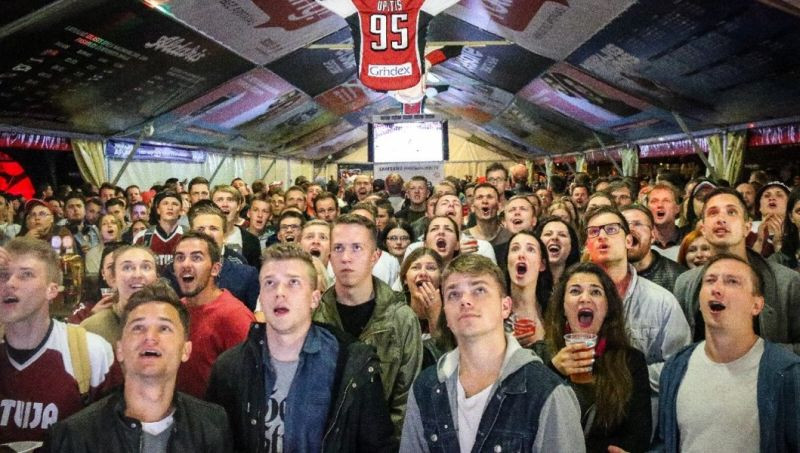
In the heart of the Baltic spring, there is a specific kind of electricity that takes over Latvia. It is not the warmth of the sun, but the collective heat of thousands of fans draped in red, white and red, their voices rising in unison as a puck slides across the ice. For the Latvian people, ice hockey is more than a sport; it is a national pulse, a shared language of resilience and passion that transcends generations.
Central to this cultural phenomenon is the concept of the “Fanotava”—the fan tent. These massive, open-air hubs transform city squares into temporary cathedrals of sport, where the tension of a World Championship game is amplified by the presence of hundreds of fellow supporters. This year, the tradition reaches a significant milestone as Fanutelts hockey fan zones celebrate a 20-year legacy of uniting the nation through the beautiful, bruising game of ice hockey.
As the 2026 IIHF World Championship unfolds, these fan zones are once again deploying across the country, offering a communal sanctuary for those who cannot make the trip to the tournament host city. From the coastal breezes of Liepāja to the industrious spirit of Valmiera, the 20th-anniversary celebrations are blending nostalgia for two decades of sporting triumphs with the urgent hope of current victory.
For a sports journalist who has spent over a decade analyzing the intersection of athlete performance and fan psychology, the Fanutelts model is a masterclass in community building. It recognizes that while watching a game on a private screen is convenient, the true essence of sports lies in the shared gasp of a missed goal or the explosive roar of a game-winning save. By creating these physical spaces, Fanutelts has effectively institutionalized the “12th man” effect, ensuring that the national team feels the support of the entire country, regardless of the geographic distance.
Two Decades of Community and Competition
The journey of Fanutelts began twenty years ago, born from a simple desire to move the viewing experience from the confines of sports bars and living rooms into the public square. Over the last two decades, the organization has evolved from basic screen setups into sophisticated event hubs. What started as a logistical challenge—managing power, weather, and crowds—has become a seamless part of the Latvian sporting calendar.
This 20th anniversary is not merely a celebration of longevity, but a reflection of the growth of Latvian hockey. Over the past twenty years, the national team has transitioned from an underdog fighting for survival in the top division to a respected competitor capable of upsetting the global giants of the sport. The fan tents have mirrored this trajectory, growing in size, frequency, and intensity as the team’s success climbed.
The impact of these zones extends beyond the games themselves. They serve as social leveling grounds where CEOs and students, grandparents and toddlers, stand shoulder-to-shoulder. In an era of increasing digital isolation, the Fanutelts experience provides a rare, tangible connection to a larger community, rooted in a shared identity and a common goal: the success of the national jersey.
Mapping the Fan Zones: From Riga to Liepāja and Valmiera
The 2026 spring season sees a strategic expansion of the fan zone network, ensuring that the passion for hockey is accessible across various regions of Latvia. While the capital city of Riga remains the epicenter, the regional “Fanotavas” are where the most intimate and fervent atmospheres often emerge.
In Liepāja, the fan zone has been designed with a specific focus on family inclusivity. Recognizing that hockey is a multi-generational passion, the Liepāja setup incorporates activities for children and families, ensuring that the next generation of fans is introduced to the sport in a celebratory, low-pressure environment. This approach transforms a high-stakes sporting event into a community festival, blending the intensity of the match with the joy of a family outing.
Further inland, Valmiera continues its tradition of hosting dual-sport fan zones. In a city that prides itself on a diverse athletic culture, the infrastructure here often supports both hockey and basketball fans, reflecting the broader sporting appetite of the region. The Valmiera zone serves as a critical hub for the northern part of the country, providing a high-quality viewing experience that rivals the setups found in the larger metropolitan areas.
Across these locations, the technical requirements are rigorous. Large-scale HD screens are deployed to ensure that every detail of the game—from the subtle movement of the puck to the expressions of the players—is visible to everyone in the tent. This commitment to visual quality is essential for maintaining the immersive experience that draws thousands of people away from their homes and into the public square.
The Cultural Impact of Public Sports Viewing
To understand why Fanutelts is so vital, one must understand the role of the International Ice Hockey Federation (IIHF) World Championships in the Latvian psyche. For many, the tournament is the defining event of the spring. The public viewing experience acts as a psychological amplifier; the collective energy of a crowd can turn a stressful game into a triumphant celebration.
There is a documented phenomenon in sports sociology where communal viewing increases the perceived emotional stakes of an event. When a fan cheers alone, the emotion is internal. When a fan cheers in a “Fanotava,” the emotion is reflected and returned by hundreds of others, creating a feedback loop of intensity. This represents why the atmosphere in a Fanutelts zone is often described as being nearly as electric as being inside the actual arena.
these zones provide a safe and structured environment for the expression of national pride. By organizing these events through a dedicated entity like Fanutelts, the passion of the crowd is channeled into a celebratory event. The presence of organized activities, food vendors, and designated viewing areas ensures that the focus remains on the sport and the community, rather than the chaos that can sometimes accompany unplanned mass gatherings.
Key Elements of the Fanotava Experience
- High-Definition Visuals: Massive screens that ensure clarity and engagement for large crowds.
- Regional Accessibility: Strategically placed zones in cities like Liepāja and Valmiera to prevent the centralization of the experience in Riga.
- Family Integration: Dedicated activities and spaces that make the event accessible to children and seniors.
- Social Cohesion: A shared physical space that fosters community bonds and national identity.
What So for the Future of Latvian Sports
As Fanutelts looks toward the next twenty years, the challenge will be to integrate new technologies without losing the raw, human element that makes the fan tents special. We are already seeing the introduction of more interactive elements, from real-time statistics displayed alongside the game to integrated social media walls that allow fans to share their reactions instantly.

However, the core value proposition remains unchanged: the need for human connection. In a world where we can stream any game from any device, the act of physically going to a tent in a city square is a deliberate choice. It is a choice to be part of something larger than oneself. For the Latvian hockey community, this tradition is a safeguard against the sterilization of the sports experience.
The success of the Fanutelts model also provides a blueprint for other sports in the region. By creating “event-ized” viewing experiences, other national teams—whether in basketball or football—can cultivate a similar level of grassroots engagement. The “Fanotava” is not just a tent; it is a tool for cultural mobilization.
As the 2026 tournament progresses, the focus returns to the ice. Every game is a new opportunity for the national team to write its history and for the fans in the tents to witness it together. Whether the team secures a podium finish or fights a hard-fought battle for position, the victory for Fanutelts lies in the fact that the people are gathered, the screens are glowing, and the roar of the crowd is heard across the cities of Latvia.
The next critical checkpoint for fans will be the upcoming group stage matches, where the national team’s placement in the knockout rounds will be decided. Official schedules and viewing locations are typically updated in real-time via local community boards and sports portals as the tournament advances.
Do you have a favorite memory from a Latvian hockey fan zone? Share your stories in the comments below or share this article with a fellow fan to keep the spirit of the “Fanotava” alive.