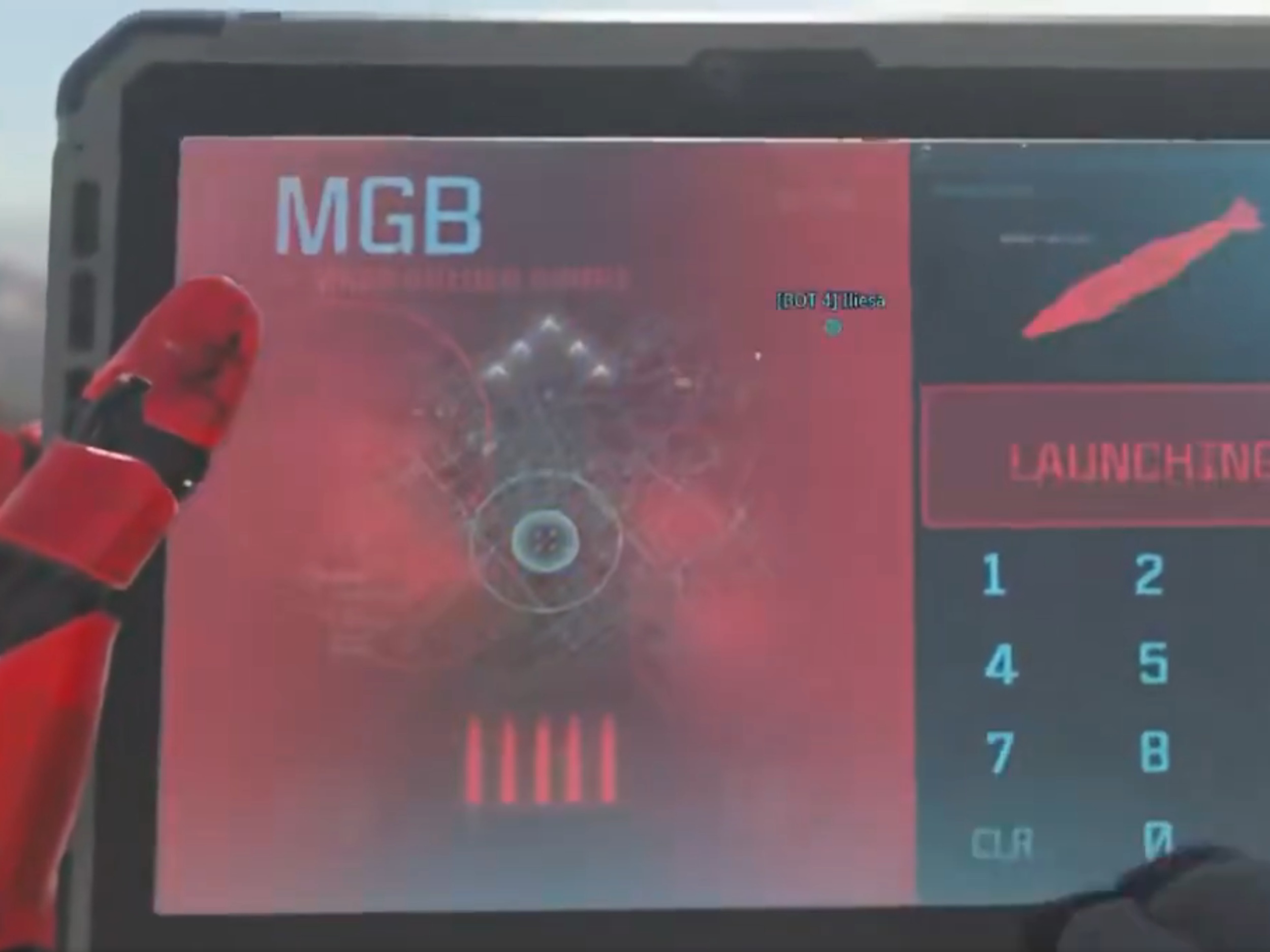
The White House faced swift criticism this week after posting a video on its official X (formerly Twitter) account that spliced together gameplay footage from Call of Duty: Modern Warfare III with actual footage of U.S. Airstrikes in Iran. The move, widely perceived as an attempt to appeal to younger voters, sparked outrage and accusations of trivializing real-world conflict. The incident raises questions about the appropriateness of using video game imagery to promote military actions and the potential desensitization to violence it may engender.
The video, which quickly circulated online, begins with a scene from the popular first-person shooter depicting a player initiating a “Mass Guided Bombs” (MGB) strike. This is immediately followed by genuine footage of U.S. Airstrikes. A “100” graphic, mirroring the kill counter in Call of Duty, appears over each instance of destruction. The video is overlaid with the patriotic slogan “Courtesy of Red, White & Blue,” a clear reference to the American flag. The post has ignited a firestorm of debate, with many users expressing shock and condemnation.
Controversial Tactics and a History of Gamified Messaging
According to a report by Insider Gaming, the White House’s social media team appears to be deliberately targeting younger audiences with this approach. Insider Gaming suggests that leveraging the familiarity of a widely-recognized gaming franchise like Call of Duty could be a strategy to present U.S. Military actions in a manner that resonates with gamers and younger voters. This isn’t an isolated incident; in October 2025, the Trump administration’s White House account shared AI-generated images depicting then-President Donald Trump as a character from the Halo series. The X post from October 2025 demonstrates a precedent for using popular gaming imagery in official White House communications.
The leverage of video game aesthetics to portray real-world military operations is particularly sensitive given the ongoing geopolitical tensions in the Middle East. Iran has been a focal point of U.S. Foreign policy for decades, and the region remains volatile. The decision to juxtapose fictional gameplay with actual combat footage is seen by many as deeply insensitive and potentially inflammatory. The timing of the post, amidst heightened international scrutiny of U.S. Involvement in the region, further amplifies the controversy.
“Gamification” of Violence: Ethical Concerns and Public Reaction
A central criticism leveled against the White House’s video is the concept of “gamification” – the application of game-design elements and game principles in non-game contexts. In this case, critics argue that the video trivializes the gravity of war and violence by framing it within the context of a video game. The use of a kill counter and the celebratory slogan contribute to this perception, suggesting a detachment from the human cost of conflict.
The reaction on X has been overwhelmingly negative. Many users expressed disbelief that an official government account would post such content, with numerous comments condemning the “gamification” of real violence. Others responded with satirical memes, treating the clip as a typical Call of Duty montage, highlighting the absurdity of the comparison. The incident has sparked a broader conversation about the ethical implications of using entertainment media to promote political agendas, particularly when it comes to sensitive topics like military intervention.
The History of Call of Duty and its Depiction of Modern Warfare
The Call of Duty franchise, developed by Activision, has turn into a cultural phenomenon, renowned for its realistic depictions of modern warfare. The series, which began in 2003, has sold over 400 million copies worldwide, making it one of the best-selling video game franchises of all time. Activision reported surpassing 400 million units sold in 2023. The games often feature intense combat scenarios, realistic weaponry, and storylines inspired by real-world conflicts.
However, the franchise has also faced criticism for its graphic violence and its potential to desensitize players to the realities of war. Some critics argue that the games glorify violence and promote a militaristic worldview. The use of Call of Duty footage in the White House video, adds another layer of complexity to the controversy, raising questions about the responsible use of popular culture in political messaging.
Broader Implications for Political Communication
This incident is not unique in the realm of political communication. Politicians and government agencies have increasingly turned to social media and digital platforms to reach voters, often employing tactics borrowed from the world of marketing and entertainment. The use of memes, viral videos, and influencer marketing has become commonplace in political campaigns. However, the White House’s use of Call of Duty footage represents a particularly striking example of this trend, blurring the lines between entertainment and political propaganda.
Experts in political communication warn that such tactics can erode public trust and contribute to the polarization of society. When political messages are presented in a sensationalized or manipulative manner, it can be challenging for voters to discern fact from fiction. The incident also raises concerns about the potential for misinformation and the spread of propaganda, particularly in an era of increasing online disinformation. The long-term consequences of this trend remain to be seen, but the way political messages are crafted and disseminated is undergoing a significant transformation.
The White House has not yet issued a formal statement addressing the widespread criticism of the video. However, several White House officials have reportedly expressed concerns about the backlash, acknowledging that the post was “poorly received” and “did not align with the administration’s messaging goals.” It remains to be seen whether the administration will take steps to address the concerns raised by critics or whether this incident will serve as a cautionary tale for future social media campaigns.
As of March 6, 2026, the video remains available on the White House’s X account, although it has been met with continued criticism and debate. The incident underscores the challenges of navigating the complex landscape of social media and the importance of responsible political communication in the digital age. The ongoing discussion highlights the need for greater transparency and accountability in the use of digital platforms by government officials and political campaigns.
The next step in this unfolding story will likely be a response from the White House, either through a formal statement or a change in social media strategy. We will continue to monitor the situation and provide updates as they become available. What are your thoughts on the White House’s use of Call of Duty footage? Share your opinions in the comments below.