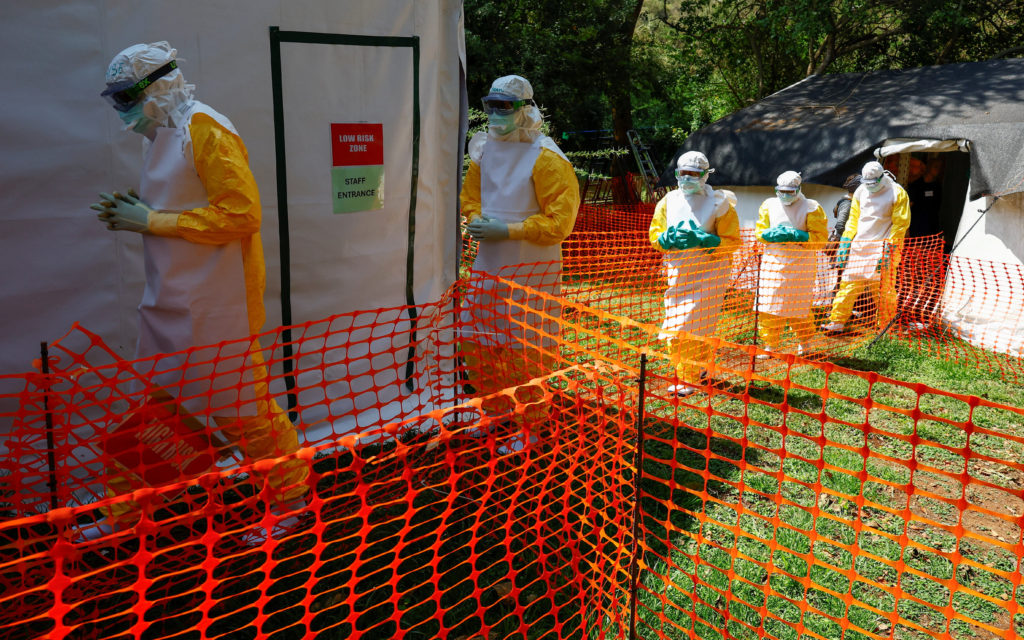
The fastest-growing Ebola outbreak on record began circulating in eastern Congo in February, months prior to its official mid-May declaration, according to announcements made by the World Health Organization. Global health responders are working to catch up to the pathogen as confirmed cases across the region surpass 4,200, accompanied by more than 1,900 deaths under current government figures reported by the Associated Press.
Dr. Mohamed Yakub Janabi, WHO regional director for Africa, explained during a news conference that viral genetic sequencing pinpointed the true origin of the epidemic. Early patient symptoms were frequently misattributed to other prevalent illnesses like malaria and typhoid, allowing the pathogen to outpace containment efforts. “So we are chasing the virus, the virus is ahead of us,” Janabi stated.
Genetic sequencing utilized to establish the timeline was directed by Dr. Steve Ahuka, head of the virology department at Congo’s National Institute for Biomedical Research, according to Dr. Thierno Balde, WHO’s incident manager for the Ebola response. The outbreak was officially declared on May 15. Unlike prior epidemics, this event is driven by the rare Bundibugyo virus strain, which currently lacks approved vaccines or specific therapeutic treatments. Initial clinical testing focused on more common Ebola variants, contributing to initial diagnostic delays.
Operational Challenges and Regional Conflict
Response teams face severe logistical hurdles in eastern Congo, operating amid unpaved roads, community mistrust, misinformation campaigns denying the virus’s existence, and strikes by unpaid health workers. Displaced populations in the region also face persistent challenges securing reliable water sources for hygiene. Furthermore, armed conflict involving groups such as the M23 rebel movement and the Islamic State-linked Allied Democratic Force has complicated healthcare access, leading some vulnerable residents to avoid health centers entirely.

In a separate regional development, the Africa Centers for Disease Control and Prevention reported an independent cluster of 246 suspected Ebola cases and 65 deaths in Congo’s remote Ituri province, concentrated primarily within the Mongwalu and Rwampara health zones. That distinct outbreak surfaced just five months after a prior three-month epidemic was declared over in the country.
Transmission Risks and Global Assessments
Despite the high local fatality rate—which has outpaced the velocity of the 2014-2016 West African epidemic—the WHO assesses the global risk of international spread as low. Because Ebola does not transmit via airborne pathways, it spreads with significantly lower efficiency than respiratory viruses, and isolated cases detected outside the zone have been quickly contained.

WHO Director-General Tedros Adhanom Ghebreyesu noted on social media platform X that the virus is spreading faster than active intervention measures, with new infections doubling in certain hot spots. Public health data indicates that between 60% and 70% of emerging cases occur outside of established contact-tracing monitoring networks.
Health authorities continue to monitor containment zones and distribute guidance regarding symptoms, which typically manifest between two and 21 days following exposure and include sudden high fever, severe fatigue, gastrointestinal distress, and hemorrhaging.
Worth a look