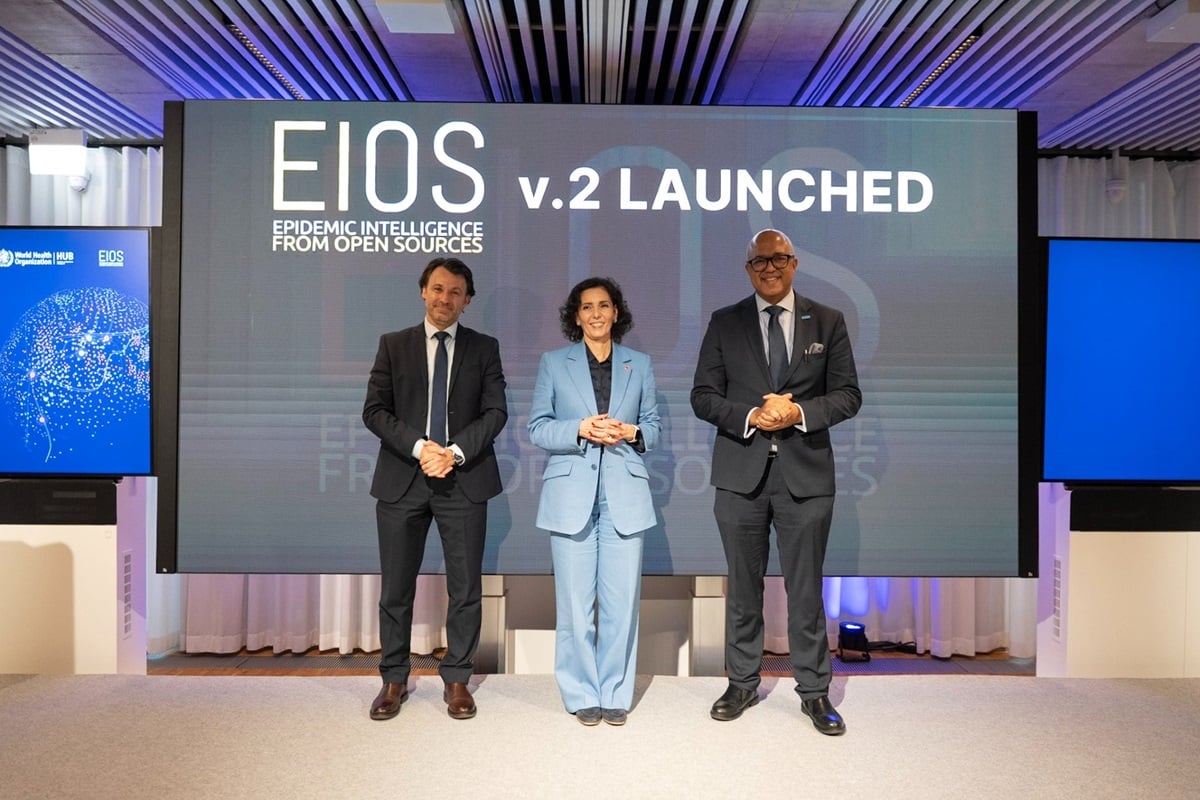
WHO Launches EIOS 2.0: A Revolution in Global Public Health Intelligence Powered by AI
(Berlin, germany) – the World Health Organization (WHO) today announced the launch of version 2.0 of its Epidemic Intelligence Open Source system (EIOS), marking a meaningful leap forward in the global capacity to detect, analyze, and respond to emerging health threats. Hosted at the WHO Hub for Pandemic and Epidemic Intelligence in Berlin, EIOS is rapidly becoming the world’s leading open-source intelligence platform for public health, offering a critical advantage in a world increasingly vulnerable to outbreaks and health emergencies.
Recent global events – from the devastating COVID-19 pandemic to outbreaks of mpox and avian influenza – have underscored the paramount importance of early warning systems. EIOS 2.0 directly addresses this need, empowering public health experts worldwide with the tools to proactively identify and monitor potential crises linked to factors like conflict, climate change, and the emergence of novel and re-emerging pathogens.
A Proactive Approach to Global Health Security
For years, public health agencies have relied on conventional reporting channels – laboratories, hospitals, and official government communications.While vital, these sources often represent a reactive approach. EIOS complements these established systems by harnessing the power of publicly available data, analyzing vast datasets from websites, social media, and now, crucially, radio broadcasts, in near real-time. This proactive approach allows for the identification of potential health events before they escalate into widespread crises.
“Today, we are not just celebrating the launch of a new version of a system, we are entering a new phase in how the world collaborates, innovates and responds to health threats,” stated Dr. Chikwe Ihekweazu, Executive Director of the WHO Health Emergencies Program. “EIOS system version 2.0 is our bridge to the future: more open, more agile and more inclusive.”
Key enhancements in EIOS 2.0: A Deep dive
This isn’t simply an incremental update; EIOS 2.0 represents a fundamental rebuild of the platform, designed for scalability, enhanced functionality, and broader accessibility. Here’s a detailed look at the key improvements:
* Scalable Architecture: The system has been entirely re-engineered to handle exponentially larger volumes of data, accommodate a growing user base, and facilitate the rapid integration of new features and data sources.This future-proofs the platform against evolving threats and technological advancements.
* Artificial Intelligence Integration: A core component of EIOS 2.0 is the implementation of cutting-edge AI-powered tools. These tools automate complex analysis, considerably improving signal detection – the ability to identify subtle indicators of potential outbreaks within the noise of everyday information. This allows analysts to focus on verification and response, rather than manual data sifting.
* Expanded Data Sources: EIOS 2.0 now incorporates a wider range of publicly available data, including automatically transcribed and translated radio broadcasts. This is especially crucial for regions where traditional media and internet access are limited, providing a more comprehensive global picture.
* User-Centric Interface & Multilingual Support: Recognizing the need for global accessibility, the platform boasts a redesigned, intuitive interface available in multiple languages. A new dashboard view streamlines information access and facilitates efficient report sharing among users.
* Enhanced Collaboration: EIOS 2.0 fosters seamless collaboration between public health professionals across countries and organizations. Joint event tracking and monitoring capabilities enable a unified, coordinated response to emerging threats.
A Public Good for Global Health
The WHO offers EIOS as a public good, free of charge, to its Member States and eligible organizations. Comprehensive training programs, including multilingual webinars, help clinics, and an online course developed in collaboration with the WHO Academy, are available to ensure effective utilization of the platform.
“Better data – better analytics – better decisions, we are excited to launch EIOS 2.0 at the WHO Hub Berlin. This will mark a milestone to accelerate the detection, analysis and response to health threats,” emphasized Nina Warken, Germany’s Federal Minister of Health. “Since reliable data and transparent political decision processes are key to build public trust in emergency situations,we are pleased to strengthen the EIOS Initiative and the capacities of the WHO Hub in Berlin.”
Hadja Lahbib, European Commissioner for Preparedness, Crisis Management and Equality, echoed this sentiment, stating, “In today’s health security landscape, collaboration is key for effective preparedness and response. Detecting public health threats early is essential to prevent new and emerging diseases from becoming endemic, or escalating into a pandemic. The EU is proud to work closely with WHO to strengthen its public health intelligence system, improve resilience and enhance readiness. Together, we are building a safer, more connected and better prepared global health community.”
Looking Ahead
EIOS 2.0 represents a pivotal moment in global health security. By leveraging the power of
Related reading