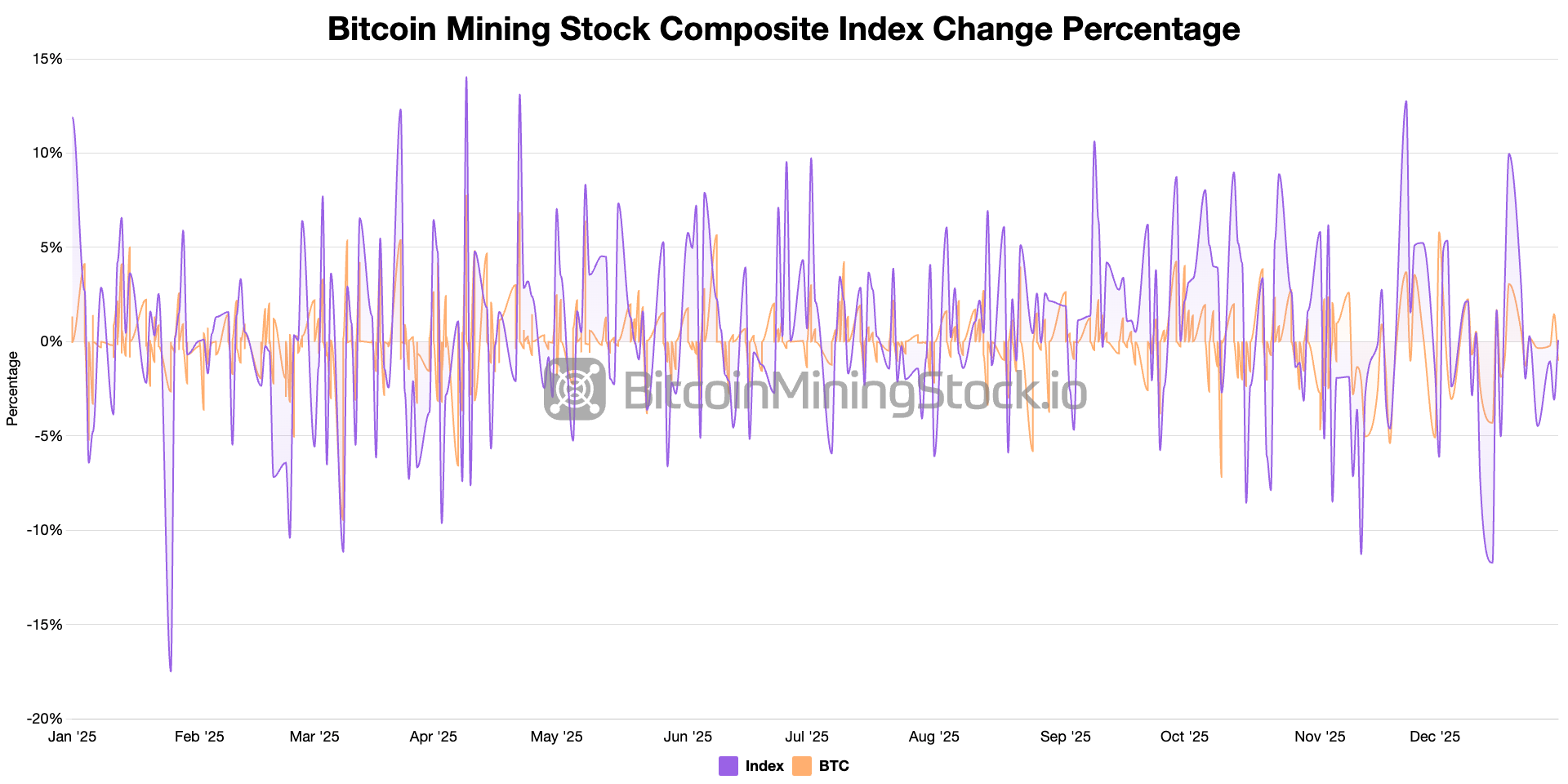
As the digital asset market navigates periods of increased volatility, investors are increasingly scrutinizing the divergence between the performance of Bitcoin and the equities of companies involved in its production. When Bitcoin korrigiert—or undergoes a market correction—the immediate reaction is often a broad sell-off across the sector. However, astute market observers have recently noted a decoupling, where many Bitcoin mining stocks experience upward momentum even as the underlying asset faces downward pressure. Understanding whether Bitcoin mining stocks are the better investment now requires a deep dive into the structural differences between holding the cryptocurrency and investing in the infrastructure that powers the network.
For investors evaluating their portfolios in the current economic climate, the question of whether mining equities offer a superior risk-adjusted return compared to direct Bitcoin exposure is central to modern asset allocation. While Bitcoin serves as a digital store of value, mining companies operate as high-beta, operationally intensive businesses. These entities are subject to unique pressures, including electricity costs, hardware depreciation, and the periodic “halving” events that reduce the issuance of new coins, as detailed by Investopedia’s guide on cryptocurrency mining infrastructure.
The Mechanics of Market Decoupling
The recent trend of mining stocks rising during Bitcoin price corrections is often driven by institutional anticipation of operational efficiency. Unlike direct holders of Bitcoin, mining companies represent a leveraged play on the network’s health. When the price of Bitcoin drops, inefficient miners—those with higher energy costs or older equipment—are often forced to capitulate, exiting the market. This consolidation reduces the global hash rate, which in turn can lower the difficulty of mining the next block. For the remaining, more efficient mining firms, this creates a environment where they can capture a larger share of the daily block rewards, even if the price per coin is lower.

the divergence can be attributed to the “proxy” nature of these stocks. For institutional investors who face regulatory or technical hurdles in holding spot Bitcoin directly, mining stocks listed on major exchanges provide a regulated vehicle for gaining exposure to the crypto-economy. According to filings with the U.S. Securities and Exchange Commission (SEC) regarding crypto assets, investors are reminded that mining stocks are equity securities that carry company-specific risks, such as management quality and debt levels, which are distinct from the risks inherent in the digital currency itself.
Key Factors Influencing Mining Equities
When assessing whether to include these equities in your strategy, it is essential to look beyond the spot price of Bitcoin. Several fundamental factors dictate the long-term viability of these companies:
- Energy Costs: As a primary operational expense, the ability of a miner to secure low-cost, reliable power is the single most important indicator of sustainability.
- Capital Expenditure (CapEx): The constant need to upgrade to the latest generation of Application-Specific Integrated Circuit (ASIC) miners creates a heavy financial burden that can erode profit margins.
- Debt Structure: High-interest debt taken on during bull markets can lead to liquidity crises during price corrections.
- Regulatory Environment: Jurisdictional shifts regarding environmental impact and energy grid usage remain significant variables for firms operating in regions like the United States and Canada.
According to the International Energy Agency’s latest analysis on energy consumption and data centers, the intersection of industrial power usage and digital asset production continues to be a focal point for global policy, which may impact the operational costs of major mining players in the coming fiscal years.
Risk Assessment: Direct Bitcoin vs. Mining Stocks
Investors must recognize that mining stocks do not track Bitcoin 1:1. During periods of extreme market stress, mining stocks often exhibit higher volatility than Bitcoin itself. They are essentially a “leveraged derivative” of the asset. When Bitcoin rises, mining stocks may outperform due to operating leverage; however, when Bitcoin falls, the stocks can plummet further as investors price in the risk of insolvency for heavily leveraged firms.
For those considering a move into this space, it is prudent to review the quarterly earnings reports and 10-K filings of major publicly traded miners. These documents provide the only verified look at a company’s cash reserves, fleet efficiency, and debt-to-equity ratios. Relying on social media sentiment or unverified trading signals can lead to significant capital loss, particularly in a sector prone to speculative bubbles and, as reported by financial watchdogs, an increase in sophisticated investment fraud schemes targeting retail participants.
Looking Ahead
As we move toward the next calendar quarter, market participants are waiting for the next round of audited financial disclosures from major mining conglomerates. These reports, expected throughout the coming months, will offer the first concrete evidence of how firms have adjusted their operations following the most recent price fluctuations. Investors are encouraged to monitor updates from the investor relations portals of individual companies and regulatory databases for official filings.
Deciding whether Bitcoin mining stocks are the better investment depends entirely on your risk tolerance and your belief in the long-term scalability of the Bitcoin network. While they offer a unique way to gain exposure, they require a level of analytical rigor that goes far beyond simply tracking the price of the asset they produce. We welcome your thoughts on how you balance these risks in your own portfolio; please join the conversation in the comments section below.