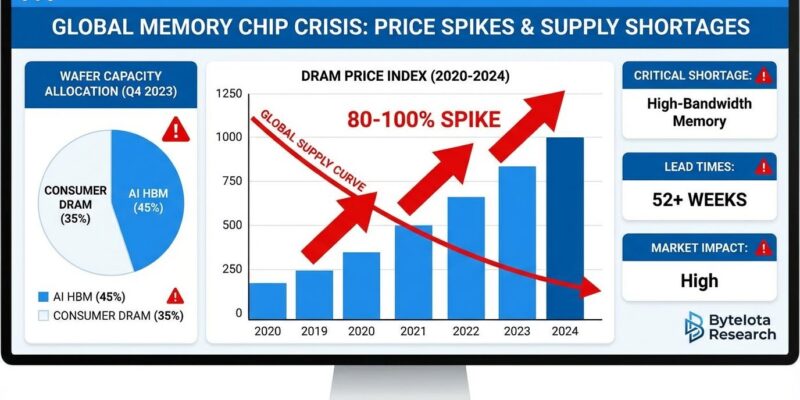
Global electronics supply chains are currently navigating a significant period of volatility as the surging demand for artificial intelligence infrastructure forces a reallocation of critical memory chip production. This shift is driving up costs for standard consumer electronics, including laptops and smartphones, as manufacturers prioritize the high-bandwidth memory (HBM) required for AI data centers over traditional DRAM and flash components.
For consumers and industry analysts alike, the current market environment reflects a distinct evolution from the supply chain disruptions observed between 2020 and 2022. While previous shortages were largely defined by factory closures and logistical bottlenecks, the current strain is driven by an intense race among cloud-computing giants and AI developers to scale their hardware capabilities. According to industry analysis, this competition for semiconductor capacity has caused inventory levels for conventional memory chips to drop significantly compared to the healthy stockpiles reported in late 2024.
The resulting scarcity of standard components has led to rising prices and longer lead times for electronics manufacturers worldwide. As production lines pivot to meet the appetite of the AI sector, the ripple effects are becoming increasingly visible at the retail level.
The Shift in Semiconductor Production Priorities
The core of the issue lies in the physical limitations of semiconductor fabrication. Because the manufacturing processes for high-performance AI memory and standard consumer memory share common resources, producers are increasingly favoring the more lucrative AI-ready chips. This prioritization has effectively squeezed the supply of DRAM and flash memory that powers everyday devices.
In Japan, the impact has reached the consumer front, with electronics retailers implementing purchase limits on memory-intensive devices to manage dwindling stock. Similarly, smartphone manufacturers in China have begun adjusting consumer expectations, preparing the market for potential price increases and reduced availability of certain models. These developments underscore how the push for AI infrastructure is no longer confined to data centers but is actively reshaping the consumer electronics landscape.
Broader Economic Implications for Tech Manufacturing
The ripple effect of these shortages extends far beyond the initial semiconductor fabs. Electronics makers are currently forced to navigate an environment characterized by outright rationing in some segments and increased costs in others. The transition from a surplus of memory components in 2024 to a state of sustained scarcity throughout 2025 has created a challenging planning cycle for global hardware brands.
For those monitoring the sector, the situation highlights the sensitivity of global supply chains to sudden shifts in technological investment. As companies continue to invest heavily in AI, the traditional memory market remains under pressure. Market observers note that the cyclical nature of memory chips is currently being heavily influenced by these non-traditional demand drivers, making it difficult for downstream manufacturers to secure routine components at historical price points.
What Lies Ahead for the Electronics Market
Looking toward the remainder of 2026, the primary question for the industry remains how quickly memory producers can expand capacity to satisfy both the AI sector and the broader consumer electronics market. The current bottleneck is not a result of transport failure or facility shutdowns, but rather a fundamental realignment of manufacturing output.
Market participants are closely watching for updates from major memory producers regarding their production capacity and long-term supply agreements. As this situation develops, consumers can likely expect continued price sensitivity in the laptop and mobile device segments. We will continue to monitor official company filings and industry reports for updates on supply stabilization efforts.
Have you noticed changes in the availability or pricing of electronics in your region? Share your insights in the comments below.
Keep reading