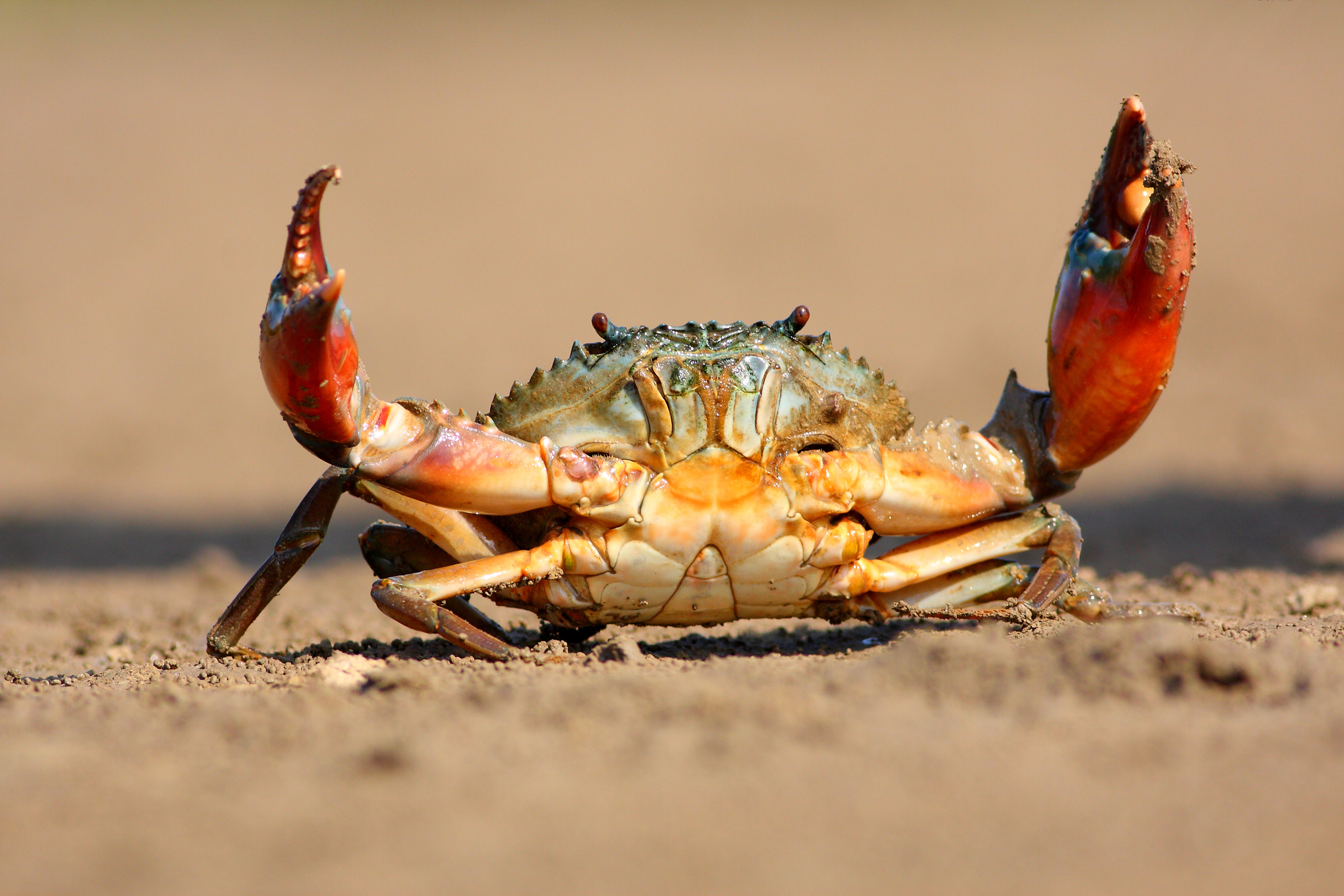
For anyone who has spent a day at the beach or visited an aquarium, the sideways shuffle of a crab is one of nature’s most recognizable quirks. It is a movement so distinctive that it has grow a linguistic shorthand for avoiding a direct approach. Yet, for decades, this biological eccentricity remained a mystery to the scientific community. While the anatomy of the crab—with its laterally oriented legs—made the movement physically possible, the “why” and “when” of this evolutionary choice were poorly understood.
As a physician and health journalist, I have always been fascinated by the intersection of anatomy, and function. In human medicine, we study how the structure of a joint determines its range of motion; in evolutionary biology, the same principle applies on a grander scale. The way an organism moves is rarely accidental; it is a calculated response to environmental pressures, a legacy of survival etched into the skeletal structure over millions of years.
New research has finally shed light on this crustacean conundrum. A comprehensive study published in the journal eLife reveals that the signature sideways gait of true crabs was not a series of random adaptations across different species, but rather a single, pivotal evolutionary event. This discovery reshapes our understanding of how brachyuran crabs—the group containing “true crabs”—diverged from their ancestors and colonized the world’s oceans and coastlines.
The study, led by researchers at Nagasaki University, suggests that this unique locomotor behavior originated in a common ancestor approximately 200 million years ago. By analyzing the movement patterns of dozens of species, the team has provided the first large-scale evidence that sideways walking is a defining trait of the brachyuran lineage, though not without its exceptions.
The Mystery of the Sideways Shuffle
To understand why this research is significant, one must first understand the biological constraints of the decapod crustacean. Most crustaceans, such as lobsters and shrimp, move forward. Their bodies are elongated, and their legs are positioned to propel them in a linear fashion. True crabs (Brachyura), though, underwent a dramatic morphological shift. Their abdomens became greatly reduced and tucked under the thorax, and their legs shifted to a lateral orientation.
Biologists had long suspected that this anatomy necessitated sideways movement, but they lacked the data to determine if this trait evolved multiple times independently (convergent evolution) or once in a single ancestor. The latter possibility implies a much more streamlined evolutionary path and suggests that the sideways gait provided a massive survival advantage that was passed down through nearly every subsequent species of true crab.
The challenge in proving this lay in the lack of standardized data. While anecdotal observations of crab movement were plentiful, rigorous, comparative measurements across a wide variety of species were scarce. Most previous studies focused on a handful of common species, leaving a gap in the phylogenetic record that made it impossible to pinpoint the exact origin of the behavior.
Decoding the Movement: The Nagasaki University Study
To bridge this gap, the research team led by Associate Professor Yuuki Kawabata implemented a rigorous experimental design. The team collected 50 different species of crabs, sourcing them from diverse environments including tidal zones, specialized aquariums, and fish markets. This variety was crucial to ensure that the findings were not skewed by the specific needs of a single habitat, such as the sandy bottoms of the deep ocean or the rocky crevices of a shoreline.
The methodology was designed to strip away environmental variables. Each crab was placed in a controlled, circular arena that mimicked its natural substrate—whether that be sand, freshwater, or seawater. After a brief period of acclimation to reduce stress, the researchers removed a barrier and recorded the crab’s movement for ten minutes.
By converting these video recordings into precise data points, the researchers could quantify the directionality of the movement. They weren’t just looking for “sideways” or “forward,” but were measuring the angle of locomotion relative to the crab’s midline. This allowed the team to create a behavioral map that could be overlaid onto the known evolutionary tree of brachyuran crabs.
A Single Evolutionary Event
The results were striking. The vast majority of the 50 species exhibited a strong preference for sideways locomotion. When the team mapped these behaviors against the phylogenetic relationships of the species, the data pointed toward a single origin. The evidence suggests that sideways walking evolved once in the common ancestor of all brachyuran crabs roughly 200 million years ago.

This “single event” theory is a significant finding in evolutionary biology. It indicates that the transition to sideways movement was a key innovation that likely contributed to the success and diversification of true crabs. In the competitive environment of the Triassic and Jurassic periods, the ability to move laterally may have offered distinct advantages in navigating complex terrains, such as narrow rocky fissures, or in defending against predators that were optimized for forward-facing attacks.
From a biomechanical perspective, the sideways gait is an efficient use of the crab’s modified anatomy. Since their legs are jointed to move primarily in a lateral plane, walking sideways minimizes the energy required for propulsion and reduces the mechanical stress on the joints. It is a perfect marriage of form and function: the body changed, and the behavior followed to maximize efficiency.
The Outliers: Crabs That Defy the Norm
One of the most intriguing aspects of the study is the identification of crabs that do not walk sideways. While the general rule for brachyurans is lateral movement, the researchers found specific groups that move forward. These outliers provide a critical counterpoint to the general trend, suggesting that evolution is rarely a one-way street.
The study posits that these forward-walking crabs did not “miss” the evolutionary memo 200 million years ago. Instead, these species evolved from sideways-walking ancestors but later “reverted” to forward locomotion. This secondary shift likely occurred due to specific environmental pressures—perhaps a transition to a habitat where forward movement provided a superior advantage for hunting or escaping predators.
This phenomenon, known as evolutionary reversal, highlights the plasticity of biological traits. It demonstrates that while a trait may be dominant for millions of years, the pressures of a changing environment can drive a species back toward an ancestral form of behavior if it increases the likelihood of survival.
Why It Matters for Evolutionary Biology
While the question “Why do crabs walk sideways?” may seem like a curiosity, the answer provides deep insights into the mechanics of evolution. This study serves as a case study in how a single morphological change can trigger a cascade of behavioral adaptations that define an entire class of animals.
For scientists, this research underscores the importance of “behavioral phylogenetics”—using the way an animal acts to understand its ancestral history. By quantifying movement, the Nagasaki University team was able to confirm a lineage that fossil records alone could not fully explain. Fossils can tell us what a creature looked like, but they rarely tell us how it moved. By combining modern behavioral data with evolutionary mapping, researchers can essentially “animate” the fossil record.
this research has implications for our understanding of biodiversity. Understanding the “innovation” of sideways walking helps biologists understand why true crabs are so successful across so many different marine and terrestrial environments. The ability to pivot and move laterally allows them to occupy niches that forward-moving crustaceans cannot easily exploit.
Key Takeaways from the Research
- Common Origin: Sideways walking in true crabs (brachyurans) likely evolved from a single common ancestor rather than appearing independently in different species.
- Timeline: This evolutionary shift occurred approximately 200 million years ago.
- Methodology: The study utilized a sample of 50 species in controlled circular arenas to quantify movement angles.
- Evolutionary Reversal: Some crab species that walk forward are believed to have reverted from a sideways-walking ancestor to suit specific environmental needs.
- Anatomic Link: The behavior is intrinsically linked to the reduction of the abdomen and the lateral orientation of the legs.
As we continue to explore the depths of our oceans and the intricacies of the natural world, it becomes clear that no detail is too modest to be meaningful. The sideways walk of a crab is more than just a quirk; it is a 200-million-year-old survival strategy that has allowed one of the world’s most successful crustacean groups to thrive.

The scientific community now looks toward further studies to determine exactly which environmental triggers caused the initial shift to lateral movement and which specific pressures led the “revertant” species to return to forward walking. As more data is collected, we move closer to a complete map of the decapod evolutionary journey.
We invite you to share your thoughts on this fascinating biological discovery in the comments below. Do you think other “quirky” animal behaviors have similar single-origin stories? Share this article to spread the word about the hidden complexities of the natural world.