
The Hidden Data Discovery Crisis in Healthcare: Why Trustworthy Metadata Is the Missing Link
Healthcare organizations are drowning in data—but starving for trustworthy information. Despite investing billions in cloud warehouses, AI platforms, and advanced analytics tools, the biggest obstacle to data-driven initiatives isn’t a lack of technology. It’s a hidden bottleneck: the inability to quickly find, understand, and trust the data they already own.
Across Fortune 500 healthcare enterprises, data teams routinely spend one to two weeks simply identifying and validating datasets before meaningful work can begin. Whether the goal is AI model development, compliance reporting, or system integration, the process of answering basic questions—What data exists? How reliable is it? Where did it come from?—often consumes more time than the project itself. The root cause? A stale, disconnected metadata layer that fails to keep pace with evolving data environments.
This crisis isn’t just an operational nuisance. It’s a strategic liability that delays critical initiatives, frustrates leadership, and accumulates backlogs of stalled projects. Worse, most organizations assume their metadata systems are working as intended—when in reality, they’re creating a hidden bottleneck that undermines the entire data ecosystem.
According to a recent analysis of enterprise data challenges, the problem stems from a fundamental mismatch between how data catalogs are designed and how they’re actually used. Organizations invest heavily in governance platforms—expecting them to provide real-time visibility into datasets—but in practice, these systems often contain outdated descriptions, incomplete lineage diagrams, and buried quality metrics. The result? Teams must manually verify information that should already be available, turning simple discovery into a time-consuming investigative process.
For example, at a large healthcare enterprise where data engineering was led by a senior executive with 14+ years of experience in Fortune 500 environments, latest initiatives frequently stalled during the data discovery phase. Engineers would spend days cross-referencing catalog entries, querying stewards, and tracing pipelines manually—work that should have taken minutes. The consequence? Projects that could have launched in weeks were delayed for 90 days or more, while leadership grew frustrated with the perceived slow pace of data teams.
The Stale Catalog Problem: Why Metadata Decays Faster Than Data Itself
Here’s the uncomfortable truth: Most enterprise data catalogs are outdated the moment they’re published. When catalogs are first implemented, teams document datasets meticulously—writing column definitions, categorizing tables, and assigning ownership. At that moment, the catalog may accurately reflect the environment. But within months, the gap widens.
Data environments evolve constantly: new pipelines are created, schemas change, transformations are modified, and additional sources are integrated. Yet documentation rarely keeps pace. Over time, catalogs become filled with descriptions that are technically correct but functionally obsolete. Some tables retain definitions that are incomplete or refer to logic removed years earlier. Others exist undocumented entirely. Despite these inconsistencies, teams still rely on catalog entries to guide their work—creating a false sense of confidence in data they don’t fully understand.
This disconnect has ripple effects. Without accurate metadata, teams can’t:
- Quickly identify trustworthy datasets for new initiatives.
- Understand upstream dependencies or the impact of changes.
- Evaluate data quality in the context of their specific leverage case.
- Move at the speed expected by leadership or patients.
As one data strategist with experience across healthcare, financial services, and energy sectors noted, “The deeper issue isn’t a lack of tools—it’s a lack of reliable metadata. Teams can’t move quickly when the data they depend on is difficult to understand, difficult to trust, and difficult to monitor.”
Breaking the Bottleneck: How AI Is Redefining Data Discovery
Recognizing the problem, organizations are turning to AI-driven metadata enrichment to bridge the gap between documentation and reality. Instead of relying solely on static descriptions written during migrations, emerging approaches use machine learning to analyze data itself and generate contextual metadata automatically.
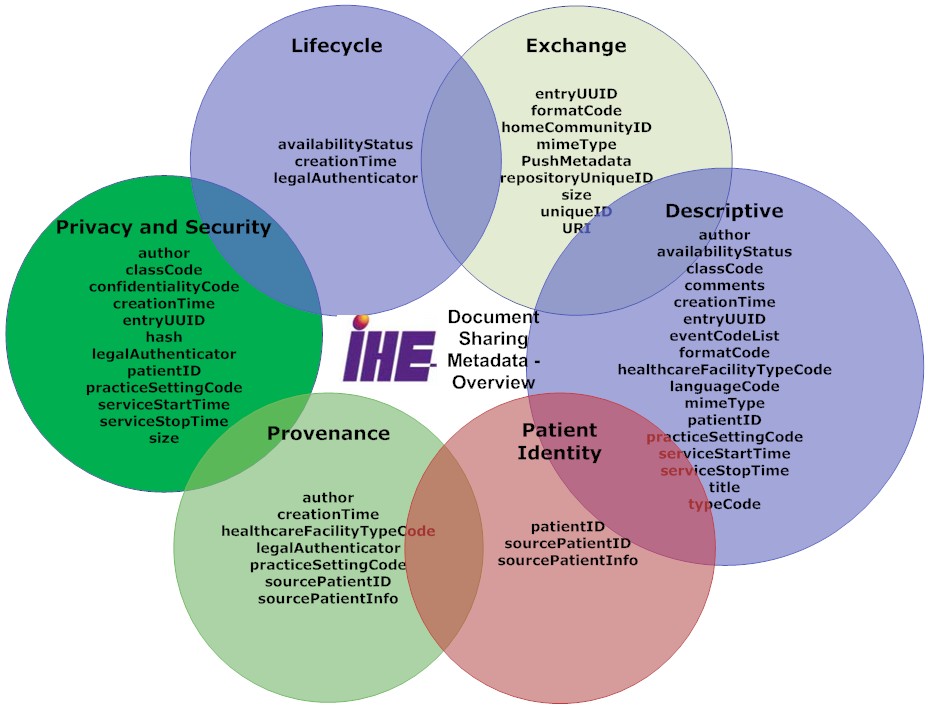
These systems operate at multiple levels:
- Granular analysis: Models examine individual columns, identifying patterns in values, formats, and relationships to generate accurate descriptions.
- Dataset-level inference: They evaluate how columns interact to infer the table’s overall structure and purpose.
- Cross-dataset mapping: AI identifies dependencies, joins, and structural connections that may not be explicitly documented.
The result? Metadata that evolves alongside the data, reducing the gap between documentation and reality. Early implementations have shown that automated metadata generation can improve description accuracy by up to 40%, providing teams with a more reliable starting point for discovery.
Beyond accuracy, AI is also enabling assisted discovery. Instead of manually searching catalogs or contacting data owners, users can ask plain-language questions—such as, “Which datasets contain patient admission records from the past year?”—and receive instant, context-aware results. This capability is particularly valuable in large environments with thousands of tables and pipelines, where traditional search methods are inefficient.
Beyond Metadata: Evaluating Data Quality in Context
Improving metadata accuracy is just one piece of the puzzle. Teams also necessitate visibility into data quality, upstream dependencies, and real-time changes. Traditional data quality tools often focus on identifying anomalies or missing values—but without explaining whether those issues matter for a specific initiative.
A more effective approach evaluates data quality in the context of its intended use. For example:
- A dataset might be sufficient for exploratory analysis but lack the precision needed for regulatory reporting.
- Another could contain anomalies that are irrelevant for predictive modeling but critical for clinical decision-making.
By tying quality assessments to use cases, teams can develop faster, more informed decisions about which datasets are appropriate. This shift reduces the time required to begin new initiatives—cutting dataset identification from weeks to minutes—and gives teams confidence that they understand the data they’re building on.
Why This Crisis Matters for Healthcare—and Beyond
The stakes of this metadata gap are particularly high in healthcare, where data drives everything from patient outcomes to operational efficiency. Delays in data discovery can indicate:
- Slower responses to public health crises.
- Missed opportunities for AI-driven diagnostics.
- Increased costs from redundant or stalled initiatives.
- Regulatory risks from using unverified datasets.
Yet the problem isn’t unique to healthcare. Financial services, energy, and travel sectors face similar challenges as their data environments grow more complex. The solution? Improving the connective layer that allows people to find and interpret data with confidence—without replacing entire technology stacks.
As one industry analyst observed, “Solving the metadata problem doesn’t require a new stack. It requires fixing the layer that connects people to their data—so the rest of the ecosystem can finally move at the speed organizations expected all along.”
Key Takeaways: What Healthcare Leaders Need to Know
- The bottleneck isn’t technology—it’s metadata. Outdated catalogs force teams to manually verify data that should already be trustworthy.
- AI-driven metadata enrichment is transforming discovery. Automated systems generate accurate, context-aware descriptions that evolve with the data.
- Data quality must be evaluated in context. A dataset’s suitability depends on its intended use—exploratory analysis vs. Regulatory reporting.
- Assisted discovery reduces delays. Plain-language queries and AI-powered recommendations cut dataset identification from weeks to minutes.
- The fix is scalable. Improving metadata doesn’t require replacing infrastructure—just better connectivity between people and data.
For organizations ready to address this crisis, the next steps include:

- Audit current metadata accuracy. Identify gaps between documentation and reality.
- Adopt AI-driven enrichment tools. Automate metadata generation to reflect real-time data states.
- Implement context-aware quality evaluations. Tie assessments to specific use cases.
- Train teams on assisted discovery tools. Reduce reliance on manual catalog searches.
With these changes, healthcare enterprises can finally unlock the full potential of their data—turning hidden bottlenecks into strategic advantages.
What’s your organization’s biggest data discovery challenge? Share your experiences in the comments below—or connect with us on Twitter to discuss solutions.
Related reading