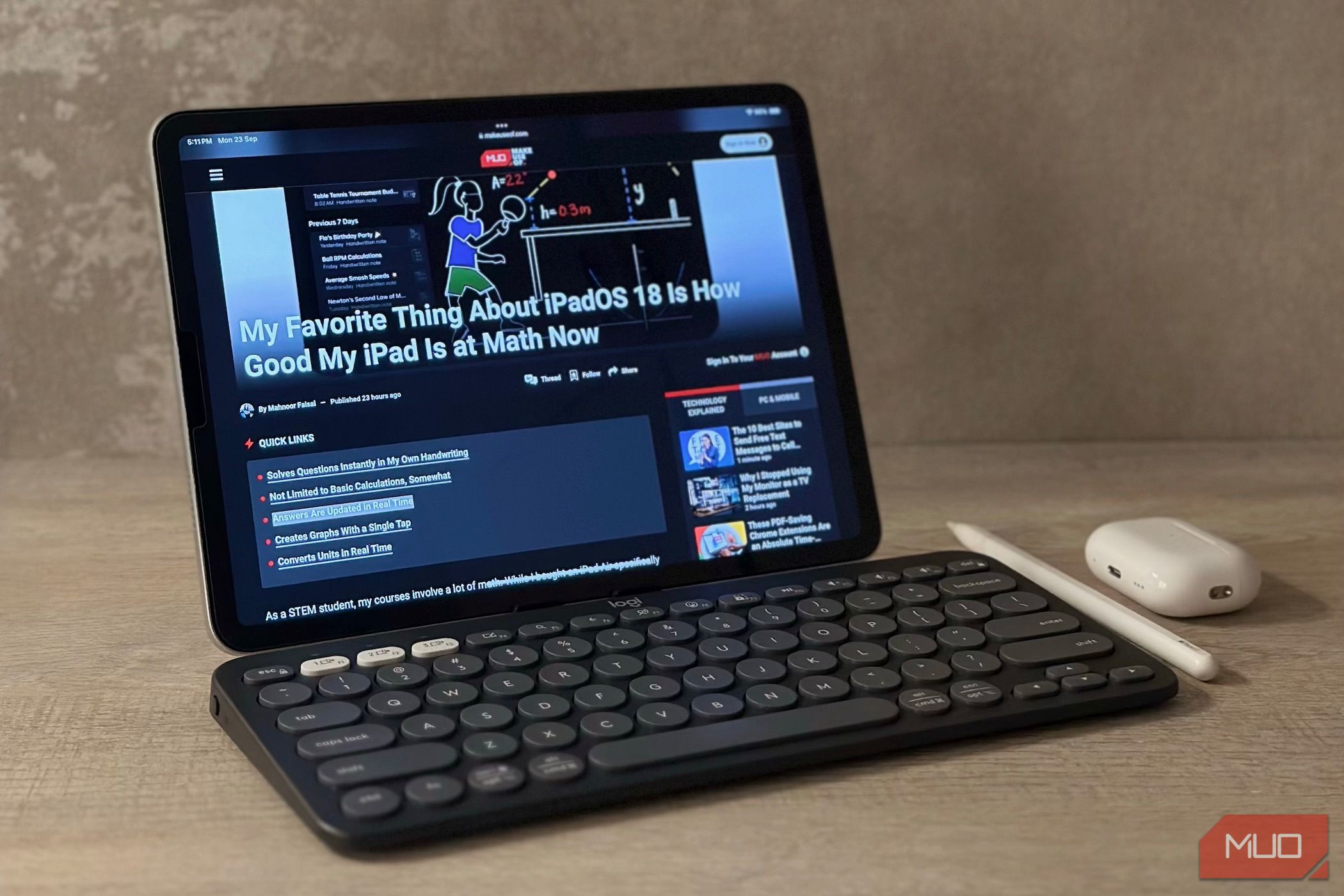
In the rapidly evolving landscape of consumer electronics, the decision to upgrade hardware often feels like a balancing act between genuine necessity and the allure of the latest silicon. For many users, the question of whether there is a compelling reason to move beyond an iPad equipped with the A16 Bionic chip—such as the 10th-generation iPad—is a common point of contention. If your daily digital routine is primarily tethered to media consumption, such as streaming via YouTube or Netflix, and you do not require specialized peripherals like the Apple Pencil or a physical keyboard, the hardware landscape looks quite different than it does for a digital artist or a mobile office worker.
As a technology editor, I frequently evaluate the intersection of raw performance and user utility. When we look at the 10th-generation iPad, which features the A14 Bionic chip (often confused in casual discourse with the A16 found in the iPhone 14 Pro series), the reality is that for a significant portion of the global user base, current hardware is already operating well beyond the requirements of standard multimedia applications. Understanding whether you truly need more power requires a deep dive into what that silicon is actually doing under the hood.
The Reality of Modern Mobile Silicon
The A16 Bionic chip, which debuted in the iPhone 14 Pro and 14 Pro Max in September 2022, was designed to handle intensive computational photography, high-frame-rate gaming, and complex multitasking, according to official Apple specifications. When you use a device for streaming services like Netflix or YouTube, you are primarily relying on the hardware’s video decoding engines rather than its raw neural processing or multi-core CPU performance. Modern streaming platforms utilize highly efficient codecs—such as HEVC or AV1—which are optimized to run on hardware that is several years old.

If your primary use case is media consumption, the bottleneck is rarely the processor. Instead, it is typically the display technology, the speaker configuration, or the battery health. If you are currently satisfied with your device’s screen resolution and audio output, upgrading to a device with a newer chip will likely result in a negligible difference in your daily experience. The “need” for an upgrade is often conflated with the desire for a better display, such as the Liquid Retina XDR found on higher-end iPad Pro models, rather than a need for more processing power.
When Does an Upgrade Actually Matter?
While the A16 Bionic (or even the A14) is more than capable for general consumption, there are specific scenarios where hardware limitations become apparent. For users who engage in video editing, 3D rendering, or high-fidelity gaming that pushes the GPU to its thermal limits, the jump to the M-series chips—found in the iPad Air and iPad Pro lines—is significant. As noted in Apple’s official device comparison documentation, the transition from A-series mobile chips to M-series desktop-class architecture marks a pivot from mobile-first efficiency to high-performance computing.

For the average consumer, however, the “diminishing returns” curve is incredibly real. If you are not utilizing the iPad for productivity suites like Adobe Creative Cloud or heavy multitasking with Stage Manager, the performance delta between a three-year-old device and a brand-new release is often imperceptible during casual tasks. The primary drivers for an upgrade in 2024 should be:
- Software Support: Apple typically provides major iPadOS updates for five to seven years. If your device is approaching the end of its security update cycle, that is a functional reason to consider a newer model.
- Battery Degradation: Lithium-ion batteries have a finite number of charge cycles. If you find yourself tethered to a wall charger because your battery health has dropped below 80%, a battery replacement or a new device may be more practical than sticking with an aging unit.
- Display Technology: If you are moving from a standard LED display to an OLED or Mini-LED panel, the visual upgrade for movies and shows is immediate and tangible, whereas a faster processor will go unnoticed.
Evaluating Your Digital Workflow
It is important to strip away the marketing jargon that surrounds annual hardware releases. Technology companies are incentivized to frame every incremental speed boost as a “must-have” feature. However, the current iteration of iPadOS is highly efficient, designed to run smoothly on a wide array of hardware. If you do not use an Apple Pencil or a keyboard, you are essentially using your iPad as a high-end consumption tablet. The most important “spec” is the one that directly affects your eyes and ears.

Consider the following before deciding to upgrade:
| Feature | Impact on Streaming | Upgrade Necessity |
|---|---|---|
| Processor (A16 vs. M-series) | Low | Low |
| Display (OLED/Mini-LED) | High | High |
| Speaker Quality | Medium | Medium |
| Battery Capacity | High | High |
If your current device handles YouTube and Netflix without stuttering, overheating, or crashing, you are likely in the “sweet spot” of technology ownership. Keeping your current device until it no longer receives security patches is not only the most cost-effective approach but also the most sustainable one from an environmental perspective.
Looking Ahead
As we look toward the next cycle of product announcements, the focus is shifting away from raw CPU power and toward integrated AI capabilities and display innovations. For the casual user, the “upgrade” is increasingly becoming a choice of luxury rather than a necessity. The next major checkpoint for Apple’s product line will be the upcoming Worldwide Developers Conference (WWDC), where the company is expected to announce the next iteration of iPadOS. This will provide further clarity on which devices will continue to be supported with the latest features.
Are you considering an upgrade, or are you finding that your current hardware still meets your needs perfectly? Share your thoughts in the comments below—I am always interested to hear how different users navigate the balance between hardware performance and real-world utility.