
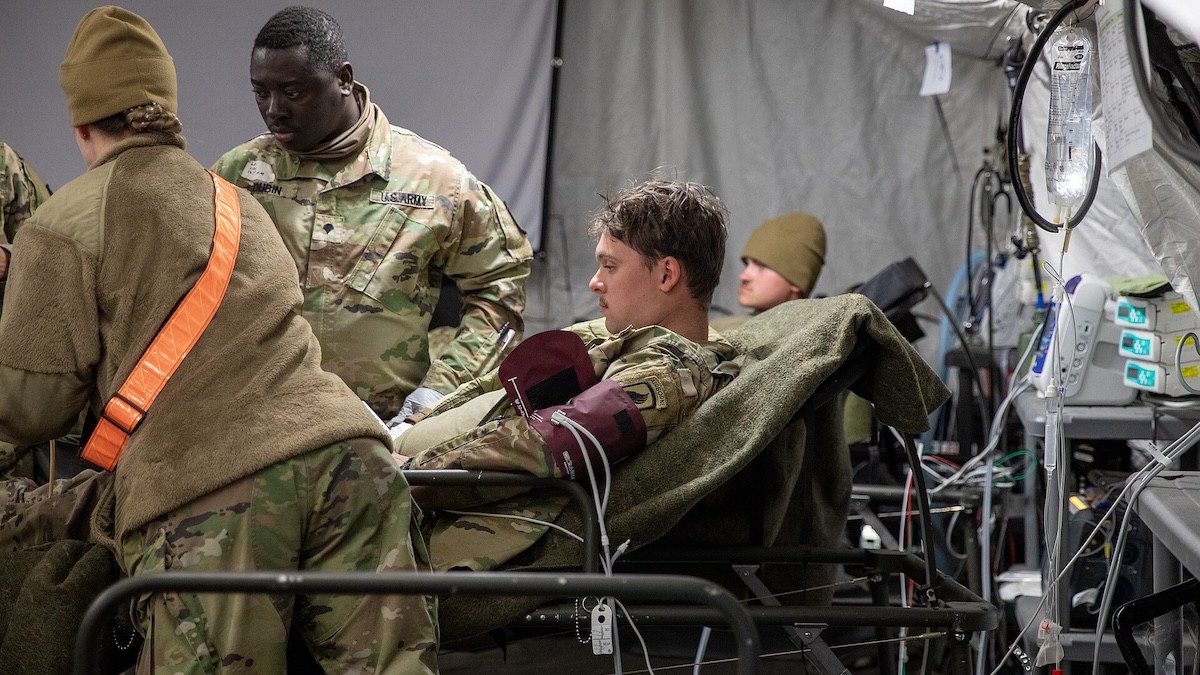
The traditional concept of the “protected” medical unit—a sanctuary of care shielded by the laws of armed conflict—is facing a brutal reality check on the modern battlefield. In the ongoing conflict in Ukraine, the assumption that medical personnel are exempt from targeted attacks has been systematically dismantled, leaving caregivers vulnerable and creating a critical gap in tactical readiness.
Current warfare dynamics suggest that the era of the passive medic is over. To survive and effectively rescue others in a high-intensity peer conflict, medical personnel—from junior enlisted caregivers to senior physicians—now require extensive tactical experience under fire. Without this integration of combat skills, medical teams risk becoming liabilities rather than assets, a shift that is forcing a reconsideration of how military medical personnel are trained and deployed.
Reports from the Ukrainian theater indicate that Russian forces have frequently targeted aid stations, evacuation routes, and trauma teams over the last four years. These actions serve a strategic purpose beyond immediate casualties: by eliminating medics, an adversary removes “force multipliers” who return wounded soldiers to the fight, whereas simultaneously demoralizing both the remaining troops and the civilian population.
The Erosion of Medical Neutrality
Under international humanitarian law, specifically the Geneva Conventions, medical personnel and facilities are granted protected status, provided they are not used to commit acts harmful to the enemy. However, the conflict in Ukraine has seen a recurring pattern of strikes on healthcare infrastructure and personnel, challenging the historic norm of medical neutrality.
The danger is compounded by the rise of drone warfare and precision-guided munitions, which allow adversaries to identify and target medical evacuation (MEDEVAC) points with lethal accuracy. When medical units are treated as high-value targets rather than neutral entities, the lack of tactical proficiency among medical staff becomes a fatal flaw. A physician who can perform a complex trauma surgery but cannot navigate a contested environment or employ tactical cover is at high risk of becoming a casualty themselves.
This environment creates a “grim triple advantage” for the attacker: the loss of the medic, the loss of the wounded patient, and the psychological blow to the unit’s morale. The demand for a latest paradigm in combat medicine has emerged—one that prioritizes the “warrior-medic” over the traditional non-combatant healer.
The Machaon Model: Blending Command and Care
To address these vulnerabilities, some strategic thinkers are looking back to the earliest recorded examples of combat medicine. In Homer’s Iliad, the figures of Machaon and Podalirius—sons of Asclepius—served as both battlefield surgeons and commanders of their own ships and men. Machaon did not merely follow the army to provide care. he led soldiers into battle and intervened medically as the situation demanded.
The “Machaon model” posits that the most effective modern combat medic is one who is fully integrated into the tactical operations of their unit. This means medical leaders should not only be experts in clinical care but similarly proficient in small-unit tactics, fire and maneuver, and the operational realities of the front line. By embodying both the role of the warrior and the healer, the medic provides a stabilizing presence that reassures troops and ensures that life-saving interventions can be delivered even under intense fire.
This approach transforms the medic from a support element into a tactical leader. When a medic is capable of commanding their own security detail or navigating a complex tactical withdrawal, they are no longer a security risk to the unit they are meant to protect. Instead, they become a force multiplier whose ability to keep soldiers in the fight is matched by their ability to survive the environment.
Systemic Gaps in Western Military Medicine
Despite the lessons emerging from Ukraine, critics argue that current military health systems, particularly within the United States, are not yet designed to produce combat-savvy medical teams at the scale required for a large-scale peer conflict. The traditional divide between “clinical training” and “tactical training” often leaves a gap where medical officers are highly skilled in a hospital setting but lack the instinctive tactical reflexes needed in a “hot” zone.
Bridging this gap requires a fundamental redesign of training pipelines. This includes:
- Integrated Tactical Training: Moving beyond basic “Combat Lifesaver” courses to immersive, high-stress simulations where medical decisions must be made while simultaneously managing tactical threats.
- Revised Promotion Criteria: Valuing tactical proficiency and operational leadership alongside clinical certifications when promoting medical officers.
- Decentralized Care Delivery: Training medical teams to operate independently in fragmented environments where traditional evacuation chains may be severed by enemy action.
The goal is to ensure that the delivery of combat casualty care is not hindered by the provider’s own vulnerability. If the caregiver cannot survive the approach to the casualty, the clinical skill of the provider becomes irrelevant.
Comparative Tactical Needs for Modern Medics
| Feature | Traditional Model (Insurgency/COIN) | Modern Peer Model (Warrior-Medic) |
|---|---|---|
| Protection Status | Relied on Red Cross/Crescent markings | Assumes target status; relies on tactical cover |
| Training Focus | Clinical skill + basic first aid | Clinical skill + small-unit tactics |
| Evacuation | Rapid air-evac (Golden Hour) | Prolonged casualty care in contested zones |
| Role | Supportive healthcare provider | Tactical leader and clinical expert |
The Strategic Impact of the Warrior-Medic
The shift toward the warrior-medic model is not merely about individual survival; it is a strategic necessity. In a peer-to-peer conflict, the ability to sustain a fighting force depends heavily on the “return-to-duty” rate. Medics who can operate effectively under fire ensure that more wounded soldiers receive immediate, life-saving interventions, which directly impacts the combat power of the unit.
the psychological impact of a capable, tactical medic cannot be overstated. Soldiers are more likely to seize necessary risks and maintain aggression when they grasp their medical support is not a liability, but a competent part of the combat team. This creates a symbiotic relationship where the warrior-medic protects the soldier, and the soldier’s tactical proficiency provides the window for the medic to work.
As the nature of warfare continues to evolve—characterized by transparent battlefields, ubiquitous drones, and the disregard for traditional medical protections—the integration of tactical and medical expertise will likely become the standard for survival. The lesson from the fields of Ukraine is clear: in modern combat, the only way to protect the healer is to make them a warrior.
The international community continues to monitor the adherence to the Geneva Conventions in Ukraine, with various human rights organizations documenting attacks on healthcare. Future updates on the legal classification of these incidents and potential war crimes tribunals will provide further clarity on the erosion of medical neutrality in the 21st century.
World Today Journal encourages readers to share this analysis and join the conversation on the evolving nature of military ethics and tactical medicine in the comments below.