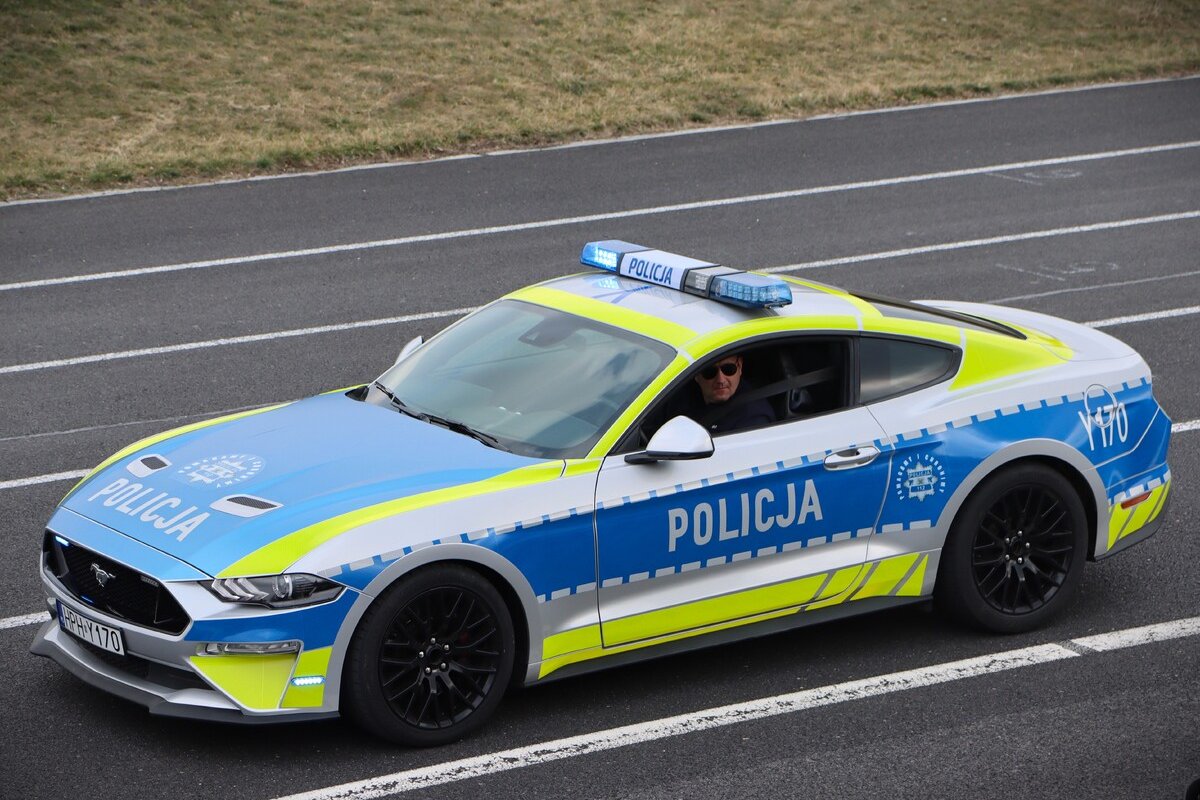
The roar of a high-performance engine and the flashing lights of law enforcement collided in a high-stakes pursuit that has captured the attention of motorists across Central Europe. In a recent incident in Poland, local authorities were forced into a dangerous high-speed chase after a driver, operating a Ford Mustang, allegedly attempted to evade police while under the influence of alcohol.
The pursuit, which unfolded across major thoroughfares, highlighted not only the growing concern over reckless driving involving high-performance vehicles but also the technical challenges posed to law enforcement when intercepting modern muscle cars. The incident, characterized by extreme speeds and a blatant disregard for public safety, has prompted renewed discussions regarding the regulation of high-powered vehicles and the enforcement of strict DUI (Driving Under the Influence) laws in the region.
While the specifics of the driver’s identity remain subject to ongoing legal proceedings, the focus has shifted toward the vehicle itself. The Ford Mustang, a staple of automotive culture, became the center of a high-intensity confrontation between a driver seeking to escape accountability and the Polish Policja, who utilized specialized tactics to bring the dangerous situation to a conclusion.
The Anatomy of a High-Stakes Pursuit
The chase began when officers first observed the Ford Mustang exhibiting erratic driving patterns, a common red flag for impaired driving. As officers attempted to initiate a standard traffic stop, the driver accelerated, initiating a pursuit that spanned several kilometers. Witnesses reported seeing the vehicle weaving through traffic at speeds that significantly exceeded legal limits, creating a high risk of multi-vehicle collisions.
For law enforcement, chasing a high-performance vehicle like a Mustang presents unique tactical hurdles. Unlike standard commuter vehicles, modern Mustangs are engineered for rapid acceleration and high-speed stability. This capability allows a driver to quickly close gaps or execute sudden maneuvers that can outpace standard patrol units. To counter this, Polish police often rely on coordinated maneuvers, including the use of spike strips and, in extreme cases, the PIT (Precision Immobilization Technique) maneuver to safely force a vehicle off the road.
The pursuit eventually reached a critical juncture where the risk to bystanders became untenable. Following a series of tactical interventions, the driver was successfully intercepted. Upon the vehicle’s immobilization, officers discovered that the driver was indeed intoxicated, confirming the initial suspicions that led to the pursuit. The driver was subsequently taken into custody and the vehicle was impounded for further investigation.
Why the Mustang is a “Special” Factor in Law Enforcement Challenges
The question of why this specific vehicle makes such a pursuit “special” or notable lies in the intersection of automotive engineering and criminal behavior. In the context of high-speed chases, the Ford Mustang is not merely a car; it is a high-performance machine that changes the physics of the pursuit.
The Mustang, particularly in its GT or Shelby configurations, offers a power-to-weight ratio that allows for explosive launches from a standstill. During a pursuit, So that even a slight lead given to the driver can result in a gap that is tricky for standard police cruisers to close. The aerodynamic design of these vehicles is intended to maintain stability at high velocities, making them more resistant to the erratic handling that typically slows down less powerful vehicles during high-speed maneuvers.
Beyond the mechanical advantages, there is a psychological component to the use of such vehicles in crime. High-performance cars are often associated with a specific subculture of automotive enthusiasts, but they are also frequently sought after by those looking to maximize the “thrill” of evading authority. The use of a Mustang in a crime of this nature underscores a growing trend where high-end automotive technology is misused to facilitate dangerous and illegal activities.
Legal Consequences and the Regulatory Landscape in Poland
The driver involved in this incident faces a gauntlet of legal challenges under the Polish Penal Code. In Poland, driving under the influence of alcohol is treated with significant severity, particularly when coupled with “dangerous driving” or fleeing from law enforcement. The legal framework is designed to act as both a punishment and a deterrent.
Under Polish law, individuals found to be driving with a blood alcohol concentration (BAC) above the legal limit can face immediate loss of their driver’s license, heavy fines, and potential imprisonment. When a driver engages in a high-speed chase, the charge of “endangering life or health” is often added, which significantly elevates the potential prison sentence. The seizure of the vehicle is a common outcome in cases involving extreme recklessness, as the car itself is viewed as an instrument used to commit a crime.
The incident has also reignited debates regarding the “zero-tolerance” approach to road safety in the European Union. As countries strive to reduce road fatalities, the intersection of high-speed vehicle availability and impaired driving remains a primary concern for policymakers. Law enforcement agencies are increasingly looking toward advanced surveillance technologies, such as automated number plate recognition (ANPR) and enhanced helicopter support, to manage the risks posed by high-performance vehicle pursuits.
- Immediate Sanctions: Suspension or permanent revocation of driving privileges.
- Criminal Charges: Potential felony charges for endangering public safety and fleeing police.
- Financial Penalties: Substantial fines and the cost of vehicle impoundment and legal fees.
- Vehicle Forfeiture: The possibility of the state seizing the vehicle used in the commission of the crime.
Road Safety and the Impact of High-Performance Vehicle Misuse
While the automotive community celebrates the engineering marvels that vehicles like the Ford Mustang represent, the misuse of such power on public roads has profound societal implications. Every high-speed pursuit carries an inherent risk of “collateral damage”—the injury or death of innocent motorists, pedestrians, or even the officers involved in the chase.
The psychological impact on communities where such chases occur is also significant. High-speed incidents contribute to a sense of lawlessness and insecurity on public highways. For urban planners and safety advocates, these incidents highlight the need for better infrastructure to manage high-speed traffic and more robust enforcement mechanisms to deter the misuse of high-performance vehicles.
Experts in road safety suggest that the solution is multifaceted, involving a combination of stricter licensing requirements for high-performance vehicles, increased technological oversight, and public awareness campaigns that emphasize the lethal reality of high-speed, impaired driving. The Mustang chase in Poland serves as a stark reminder that the line between automotive passion and criminal negligence is often measured in seconds and meters.
Key Takeaways: The High-Speed Pursuit Incident
- The Incident: A high-speed chase in Poland involving a Ford Mustang and a suspected drunk driver.
- The Vehicle: The Mustang’s high performance and acceleration presented unique tactical challenges for the Policja.
- Legal Status: The driver faces serious criminal charges, including DUI and endangering public safety.
- Law Enforcement: Tactical interventions were required to stop the vehicle and minimize risk to the public.
- Broader Context: The event highlights the ongoing struggle to regulate high-performance vehicle misuse and ensure road safety.
Frequently Asked Questions
What makes a Ford Mustang difficult to chase?
The Mustang is engineered for high acceleration and high-speed stability. This allows a driver to quickly gain distance from standard police vehicles and maintain control during high-speed maneuvers that might cause other cars to lose traction.
What are the penalties for fleeing the police in Poland?
Fleeing the police, especially while driving under the influence, can lead to the immediate loss of a driver’s license, heavy financial penalties, and significant prison time under the Polish Penal Code.
How do police stop high-speed vehicles safely?
Police use various tactics, including the PIT maneuver (striking the side of the vehicle to spin it out), deploying spike strips to deflate tires, or using coordinated pursuit teams involving helicopters and multiple interceptor vehicles.
Is the vehicle usually kept by the driver after such a chase?
In many jurisdictions, including Poland, vehicles involved in serious crimes or high-speed chases are impounded by the state and may eventually be subject to permanent forfeiture.
The legal proceedings against the driver are expected to commence in the coming weeks as forensic evidence from the vehicle and toxicology reports are finalized. We will continue to monitor official updates from the Polish authorities regarding the court dates and any subsequent rulings.
What are your thoughts on the regulation of high-performance vehicles to prevent such incidents? Share your views in the comments below and share this article to spread awareness about road safety.
Related reading