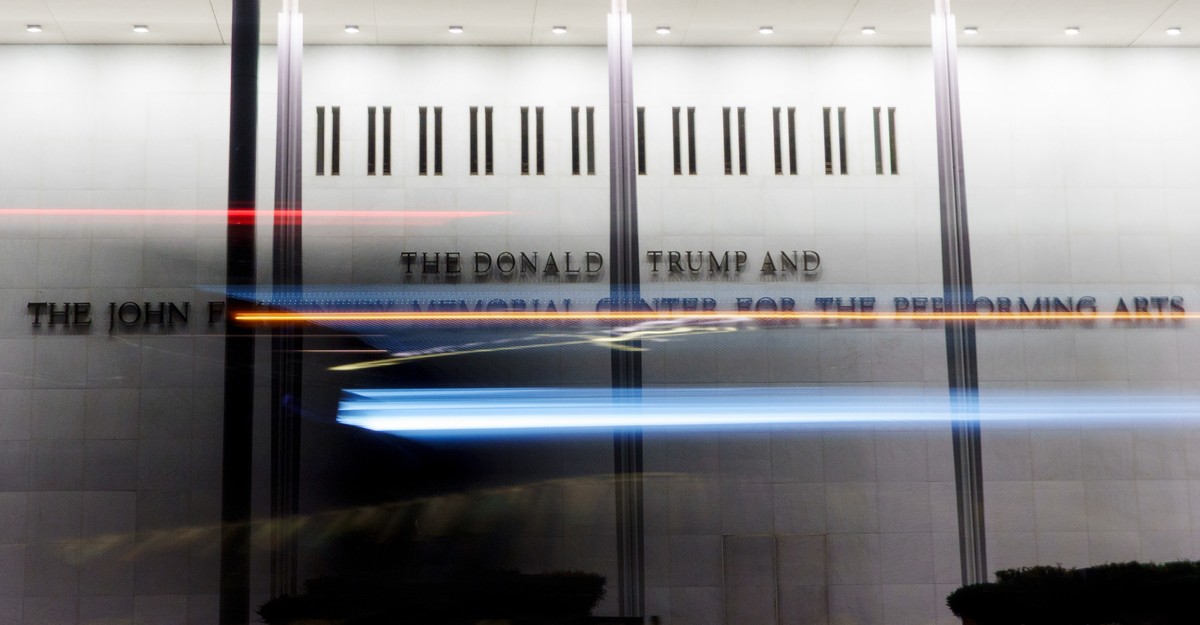
The Kennedy Center for the Performing Arts is currently undergoing a formal process to revert to its statutory name, a move that follows a judicial mandate requiring the removal of President Donald Trump’s name from the institution’s facade and official documentation. This transition serves as a high-profile example of the broader, complex process of reversing executive-led institutional changes within the federal government, as the center works to comply with a court order that dictates the restoration of its original legal designation.
The removal of the name marks a significant shift for the facility, which had been rebranded in December to include the president’s name in a move that drew widespread attention and legal scrutiny. According to reports, the center has already scrubbed the name from its digital footprint, including its official website, email signatures, letterhead, and various contractual agreements. This compliance follows a ruling by Judge Christopher Cooper, who ordered the center to return to its original, congressionally mandated title. The legal challenge highlighted the tension between executive authority and institutional governance, particularly regarding the board’s capacity to manage long-term operational decisions such as the two-year closure initially proposed in March.
The Legal Context of Institutional Reversion
The ongoing efforts at the Kennedy Center reflect a growing debate over the limits of executive power in managing federal institutions. Judge Cooper’s ruling emphasized that the board had not been provided with sufficient information to justify the proposed two-year closure. While the court declined to substitute its own judgment for the board’s regarding the feasibility of the closure, the ruling effectively checked the unilateral actions taken by leadership appointed during the recent administration. This judicial intervention is a primary example of how federal oversight bodies are currently addressing the “de-Trumpification” of various government agencies and entities.

The organizational impact of these changes extends far beyond signage. The center has faced significant internal disruption, with reports indicating that half of the board was replaced with new appointees, leading to the departure of numerous staff members and a notable decline in programmed events. For observers of Washington policy, the Kennedy Center serves as a microcosm for the broader challenges facing federal departments, such as the Department of Justice and the Department of Education, where personnel changes and policy shifts have created long-term administrative hurdles that are not easily reversed by simple administrative orders.
Challenges in Reconstituting Federal Agencies
Restoring institutional norms requires more than just removing names from buildings or reversing specific executive orders. Experts note that the erosion of internal expertise—often caused by the departure of experienced civil servants—poses a significant challenge to the continuity of government operations. At agencies like the Department of Education and the Department of Justice, the loss of nonpartisan, career professionals has created a vacuum of institutional knowledge. Even with a change in leadership, replacing this expertise is a multi-year process that cannot be achieved through immediate policy directives.
Furthermore, the independence of regulatory bodies such as the Federal Communications Commission (FCC) and the Federal Trade Commission (FTC) remains a point of contention. Efforts to consolidate control over these agencies have weakened their traditional function as independent watchdogs. While a future administration may possess the authority to replace political appointees, the structural damage to the interagency process and the presumption of impartiality within these departments may persist for years. The legal battle at the Kennedy Center is, in this light, an incremental step in a much larger, more arduous process of administrative restoration.
What Happens Next
The timeline for the physical removal of the lettering from the Kennedy Center facade remains unconfirmed, though local authorities and observers are monitoring the site for upcoming maintenance activity. The board continues to operate under the constraints of the recent court ruling, which mandates transparency and adherence to statutory requirements for any future operational changes. Meanwhile, the broader effort to address executive-led changes across the federal government continues through ongoing litigation and legislative oversight.
For those tracking these developments, official updates regarding the center’s programming and board actions can be monitored through the official Kennedy Center website. As the institution prepares for its next phase, the focus will likely remain on whether it can successfully rebuild its staff, attract artists, and restore its reputation as a national symbol for the arts. The situation underscores the reality that while legal mandates can force a name change, the restoration of institutional integrity is a far more delicate and time-consuming endeavor.
We welcome your thoughts on the challenges of restoring institutional stability in the current political climate. Please share your perspective in the comments section below.
- HK Tour Groups in Kyushu Safe After Powerful 7.1-Magnitude Japan Earthquake
- Micron and SanDisk Stocks Plummet as Chip Sector Sell-Off Continues
- Trump Unveils $22.5 Billion Plan to Overhaul Dulles Airport Facilities (time.news)
- The Senate Blue Slip, Explained: The Custom Trump Wants Gone (daybreakwire.com)