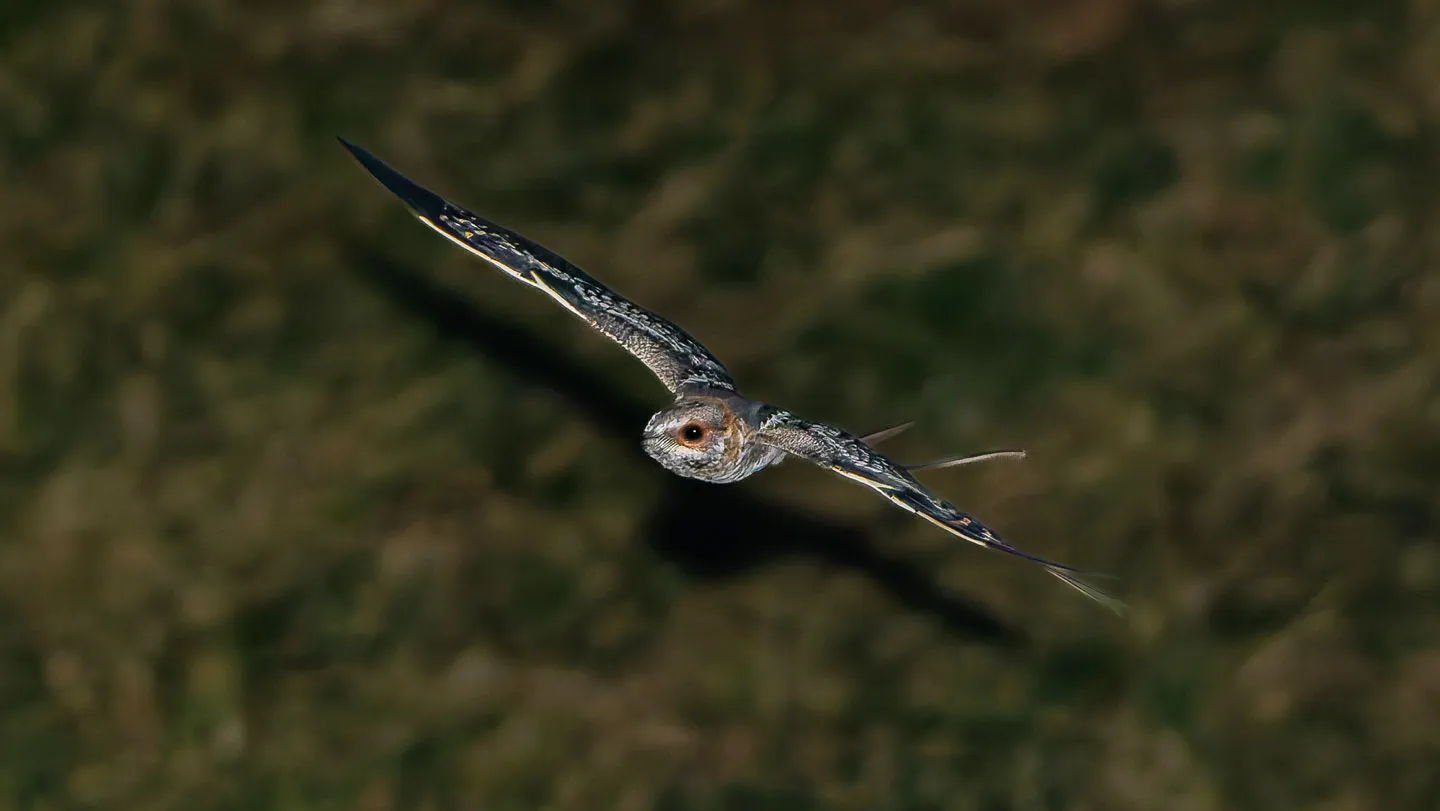
Male scissor-tailed nightjars (Hydropsalis torquata) produce a distinctive, sharp snapping sound during nocturnal courtship rituals by physically colliding their wing bones together. This acoustic display, which occurs primarily under the cover of darkness, serves as a primary mechanism for attracting mates within the species’ native habitats across South America. Research into avian biomechanics indicates that these birds have evolved specialized skeletal structures to withstand the high-impact forces required to generate such audible signals.
The scissor-tailed nightjar, a member of the Caprimulgidae family, is known for its elongated outer tail feathers and nocturnal lifestyle. While many bird species utilize vocalizations for mating, the scissor-tailed nightjar relies on this mechanical “wing-clacking” to communicate in low-light environments. Ornithologists studying the behavior have observed that the sound is not produced by feathers hitting one another, as is common in other avian species, but rather through the direct contact of the humeri—the upper arm bones—during flight maneuvers.
The Biomechanics of Avian Wing-Snapping
The mechanism behind the nightjar’s signature snap involves a high-velocity wing stroke. According to a study published in the Journal of Experimental Biology, the anatomical adaptations required for this display are significant. The humerus in these birds possesses structural traits that allow for rapid acceleration and sudden deceleration without causing bone fractures or soft tissue damage. This specialized skeletal morphology is a rare example of “mechanical sound production” in the order Caprimulgiformes, which typically relies on vocal calls for territorial defense and mate attraction.
Researchers have utilized high-speed videography to confirm that the sound coincides precisely with the moment the wings are drawn together above the bird’s back. By analyzing the frequency and amplitude of the snaps, biologists have determined that the sound is sharp enough to be heard over significant distances, likely cutting through the ambient noise of the nocturnal forest or grassland. This allows females to locate potential mates in environments where visual signaling would be ineffective due to the lack of light.
Courtship Rituals and Reproductive Success
Courtship in the scissor-tailed nightjar is a highly choreographed event. The male performs a series of aerial displays, culminating in the bone-snapping maneuver. Data from the Cornell Lab of Ornithology notes that these displays are most frequent during the peak of the breeding season, suggesting a direct correlation between the frequency and quality of the mechanical snap and the male’s attractiveness to potential mates.

This behavior is considered a form of honest signaling. Because producing such a sound requires high levels of energy and precise physical coordination, it serves as an indicator of the male’s health and genetic fitness. Females, by selecting males that can produce the loudest or most consistent snaps, may be effectively gauging the physical robustness of their partners. This evolutionary pressure has likely driven the development of the skeletal modifications observed in the species.
Habitat and Behavioral Distribution
Scissor-tailed nightjars are primarily found in open and semi-open habitats, ranging from central Argentina and Uruguay through Brazil and into parts of Bolivia and Paraguay. Their reliance on mechanical sound is an adaptation to their specific ecological niche. Because they often occupy environments with dense vegetation or fluctuating nocturnal light levels, the ability to produce a clear, non-vocal signal provides a distinct competitive advantage over other nightjar species that rely solely on song.

Conservation efforts for the species focus on preserving the grassland and savanna ecosystems they inhabit. As noted by the International Union for Conservation of Nature (IUCN), while the species is currently classified as Least Concern, the loss of habitat to agricultural expansion poses a long-term risk to their population density and, by extension, their complex courtship behaviors.
Future Research and Monitoring
Current research efforts are directed toward understanding the long-term impact of environmental noise pollution on the efficacy of these mechanical displays. As human activity increases in regions inhabited by the scissor-tailed nightjar, the potential for auditory interference remains a key area of study. Ornithologists are continuing to monitor populations to determine whether the birds are capable of adjusting their display frequency to compensate for increased background noise.
The next phase of field research is expected to focus on the developmental timeline of the humerus in juvenile males to determine at what age the wing-snapping behavior emerges. Those interested in the latest findings on Caprimulgidae behavior can monitor updates from the Neotropical Bird Club, which provides ongoing documentation of species-specific displays and regional population health. We encourage readers to share their observations or comments on avian behavioral adaptations in the section below.
Keep reading