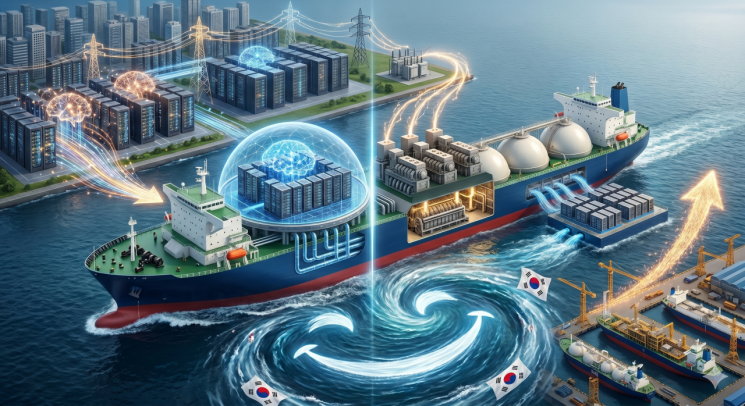
As artificial intelligence continues to reshape global infrastructure demands, an unexpected sector is experiencing renewed investor interest: South Korean shipbuilding. The surge in AI-driven data center construction has created a pressing need for rapid, reliable power generation solutions—opening a new market for marine engine manufacturers traditionally focused on vessels. This shift is transforming how investors view shipbuilding stocks, moving beyond cyclical ship orders toward structural growth in energy infrastructure.
The core of this development lies in the mismatch between soaring data center power needs and the constrained supply of large gas turbines. According to industry analysts, lead times for major gas turbine manufacturers now extend to late 2029 or 2030, creating a bottleneck that marine engine producers are positioned to fill. Companies like HD Hyundai Heavy Industries and STX Engine have emerged as direct beneficiaries, with their ship-derived engines offering significantly shorter delivery timelines—some available as early as the second half of 2028.
This advantage stems from the inherent design and production readiness of marine engines, which are built for durability, rapid deployment, and stable output under variable loads—qualities highly valued in data center backup and primary power systems. Unlike conventional gas turbines that may require years for permitting, fabrication, and installation, marine-based power units can be delivered and commissioned within months, offering a critical speed advantage for tech firms racing to expand AI computing capacity.
The economic scale of this opportunity is becoming evident through recent contract activity. In April 2026, HD Hyundai Heavy Industries secured an engine supply agreement valued at approximately 627.1 billion won for delivery to a U.S.-based data center project. This deal, reported by multiple financial outlets, underscores the commercial viability of adapting naval propulsion technology for stationary power generation. Analysts note that such contracts are helping drive factory utilization rates beyond 100% at key engine plants, reflecting both strong demand and efficient production scaling.
Industry observers emphasize that this trend represents more than a temporary uplift in shipbuilding sentiment. It signals a fundamental redefinition of marine engine manufacturers as providers of decentralized energy solutions. As data centers proliferate—particularly in regions with grid constraints or urgent timelines—the ability to deliver fast-track power infrastructure is becoming a competitive differentiator. This shift allows companies traditionally exposed to the volatility of global shipping cycles to access steadier, long-term revenue streams tied to digital infrastructure growth.
From a technological standpoint, the adaptation involves minimal redesign. Marine engines, already optimized for efficiency and reliability at sea, are being containerized or skid-mounted for land-based deployment. Their proven ability to operate continuously under heavy load, combined with established maintenance networks and fuel flexibility (including diesel and dual-fuel configurations), makes them suitable for mission-critical applications where uptime is paramount.
The broader implications extend beyond individual corporate performance. South Korea’s shipbuilding cluster, long a pillar of its industrial economy, is finding new relevance in the global energy transition. By leveraging existing engineering expertise, supply chains, and production facilities, these firms are contributing to the diversification of power generation options—especially in niche markets where speed and modularity outweigh the peak efficiency of purpose-built turbines.
Market analysts caution that while the opportunity is real, it remains subject to execution risks. Factors such as evolving emissions regulations, competition from alternative power sources like fuel cells or battery storage, and potential shifts in data center location strategies could influence adoption rates. However, the current consensus among equity researchers is that the structural advantage in delivery speed will sustain demand for marine-derived power systems through at least the early 2030s.
As of late April 2026, no major policy shifts or regulatory changes have been announced that would directly impact this emerging market segment. Investors and industry stakeholders are advised to monitor quarterly earnings reports from leading engine manufacturers, particularly updates on order books, utilization rates, and geographic revenue breakdowns, for early signals of sustained demand.
This evolution illustrates how industrial capabilities can find new purpose amid technological change. What began as a solution for powering ships is now helping power the digital economy—one containerized engine at a time.
For ongoing developments, readers can consult the latest filings and announcements from HD Hyundai Heavy Industries, STX Engine, and other major marine engine producers through their official investor relations channels.
If you found this analysis informative, consider sharing it with colleagues or joining the conversation in the comments below.
Worth a look