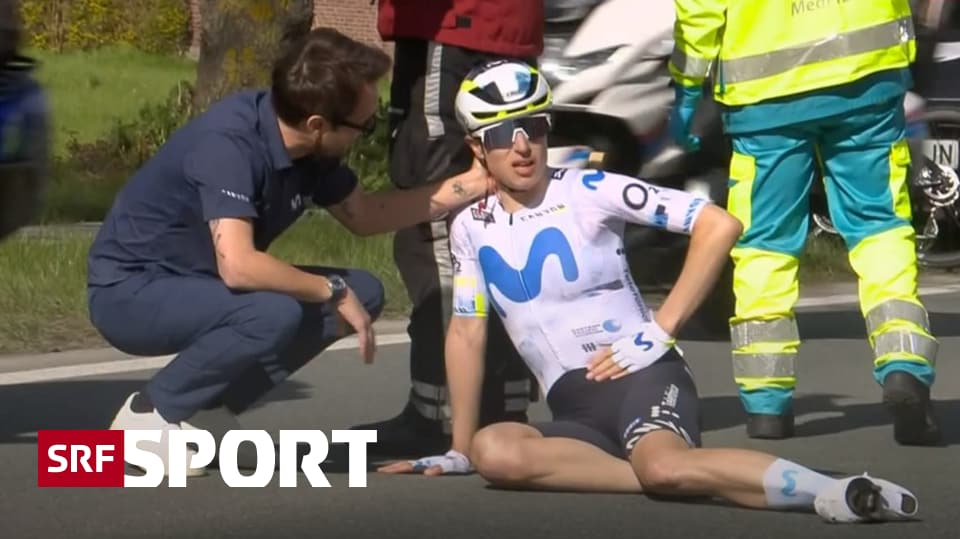
In the high-stakes world of professional cycling, a crash is often dismissed as a momentary lapse in luck or a chaotic byproduct of a crowded peloton. However, for some riders, the frequency of these incidents suggests a pattern rather than a series of random accidents. Understanding why certain professional cyclists crash more often than others is critical for athlete longevity and safety.
The dynamics of the peloton are unforgiving, where a few centimeters of miscalculation at 60 km/h can lead to a catastrophic fall. While the sport’s inherent risks are well-known, expert analysis indicates that the ability to avoid these crashes can be developed and refined, moving the conversation from “bad luck” to a matter of technical skill and positioning.
Michael Schär, a former professional cyclist and the national coach for the Swiss men’s team, has highlighted that protecting oneself from falls is a skill that can be cultivated early in a rider’s career. By focusing on specific preventative measures and situational awareness, athletes can significantly reduce their vulnerability on the road.
The Science of Avoiding Crashes in Professional Cycling
The tendency for certain riders to fall more frequently often stems from a combination of positioning, technical bike handling, and the ability to read the road. In a professional race, the “danger zone” is typically the middle of the pack, where riders are boxed in and have limited escape routes if a crash occurs ahead of them.
According to insights from Michael Schär, the key to reducing the frequency of crashes lies in proactive protection. This involves not only the physical act of riding but also the mental processing of the environment. Riders who are prone to crashes often struggle with “reading” the peloton—failing to anticipate the sudden movements of other riders or the instability of the group during high-stress moments.
Technical proficiency in bike handling is another distinguishing factor. The ability to create micro-adjustments to a bicycle’s trajectory without losing balance is what separates a rider who stays upright from one who goes down during a sudden swerve. Schär emphasizes that these skills are not necessarily innate but can be trained and reinforced throughout a cyclist’s development.
Swiss Cycling: Analyzing Performance and Risks
The challenge of maintaining consistency and avoiding setbacks is a recurring theme for Swiss professional cyclists. The impact of crashes and missed opportunities has been evident in recent seasonal reviews. For instance, the 2023 season was characterized by a lack of major breakthroughs for Swiss men, with a notable absence of stage wins in Grand Tours or podium finishes in one-day classics.
Patrick Müller, the head of high-performance sports at the cycling federation, has acknowledged that while the performances were solid, the “big outliers” moving upward were missing. Marc Hirschi’s 19th-place finish at the Lombardia round, while respectable, mirrored a broader trend of the Swiss squad being competitive but failing to secure top-tier victories SRF.
When riders suffer frequent crashes, it creates a ripple effect that impacts these performance metrics. Recovery time from injuries prevents athletes from hitting peak form for major events, such as the World Championships or the Olympic Games. This intersection of safety and performance is why national coaches prioritize crash prevention as a core part of athlete preparation.
Adapting to New Formats and Safety Challenges
The evolution of the sport has also seen the introduction of digital and alternative racing formats to mitigate some of the physical risks associated with traditional road racing, particularly during global crises. During the COVID-19 pandemic, the industry saw the rise of digital pro-cycling races, such as those involving Cycling Unlimited.

These events allowed WorldTour teams and top Swiss professionals to compete in a controlled environment, eliminating the risk of road crashes entirely while maintaining competitive sharpness. While these digital formats cannot replace the visceral nature of a road race, they highlight the sport’s ongoing effort to balance high-intensity competition with athlete safety SRG SSR.
Key Factors in Crash Prevention
- Positional Awareness: Avoiding the “dead center” of the peloton to maintain an exit strategy.
- Predictive Reading: Anticipating the movements of surrounding riders before they happen.
- Technical Drills: Early and consistent training in bike handling and emergency maneuvering.
- Mental Focus: Maintaining high levels of concentration during the “quiet” periods of a race to avoid complacency.
As the cycling world looks toward future major events, including the Olympics and Home World Championships, the focus on reducing avoidable crashes remains a priority for team managers and national coaches. The goal is to ensure that talent is not wasted on the asphalt, but rather translated into podium finishes.
For those following the progression of the Swiss national team and the broader WorldTour, the next major checkpoints will be the upcoming seasonal preparations and the implementation of new safety protocols ahead of the 2026 international calendar.
Do you suppose professional cycling should implement more strict positioning rules to prevent mass crashes, or is the risk an essential part of the sport? Share your thoughts in the comments below.