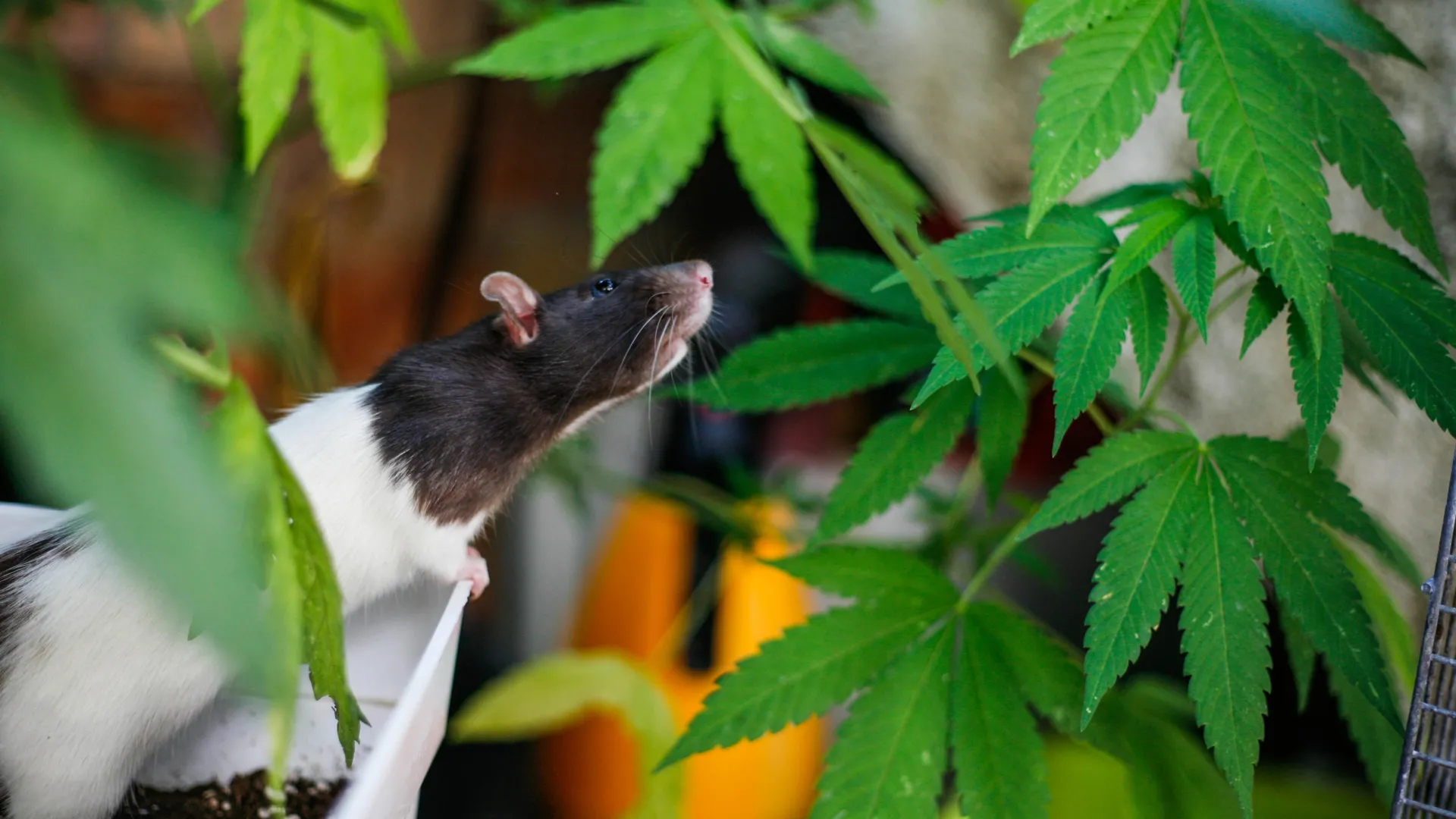
The Link Between Stress, Cognitive Flexibility, and Cannabis Seeking Behavior: New Insights from Rodent Research
The increasing prevalence of cannabis use, coupled with its evolving legal status, necessitates a deeper understanding of the factors driving individuals towards the drug. Recent research from Washington State University (WSU) sheds light on this complex relationship, pinpointing baseline stress levels and cognitive flexibility as key predictors of cannabis-seeking behavior. This study, utilizing a sophisticated behavioral model in rats, offers valuable insights that could inform future screening and prevention strategies for problematic drug use.
Why Do Some Individuals Seek Cannabis? The Role of Baseline Stress
For years, anecdotal evidence has suggested a strong connection between stress and cannabis consumption. Individuals often report using cannabis as a coping mechanism for anxiety, depression, and other stressors. This new research provides compelling biological support for this observation. Researchers at WSU, led by associate Professor Ryan McLaughlin, conducted a complete study examining a wide range of behavioral and biological characteristics in rats.The team meticulously assessed social behavior, cognitive abilities, reward sensitivity, arousal levels, and crucially, stress hormone levels.
The findings were striking: rats with naturally higher levels of the stress hormone corticosterone – the rodent equivalent of human cortisol – were significantly more likely to repeatedly self-administer cannabis. This wasn’t a correlation based on reactive stress (levels spiking during a challenge), but rather on baseline stress – the hormone levels measured when the animals were at rest.
“If you want to really boil it down, there are baseline levels of stress hormones that can predict rates of cannabis self-governance, and I think that only makes sense given that the most common reason that peopel habitually use cannabis is to cope with stress,” explains McLaughlin. This suggests a pre-existing vulnerability rooted in the body’s stress response system.
Beyond Stress: The Influence of Cognitive Flexibility
While baseline stress emerged as the strongest predictor, the study also revealed a significant link between cannabis-seeking behavior and cognitive flexibility. Cognitive flexibility refers to the brain’s ability to adapt to changing rules or conditions – essentially, how well someone can “think on thier feet.”
Rats that struggled with cognitive flexibility, demonstrating a reliance on established visual cues, exhibited a stronger drive to self-administer cannabis.This suggests that individuals who have difficulty adapting to change might potentially be more inclined to seek the predictable, albeit temporary, relief offered by the drug. This finding aligns with broader research on impulsivity and addiction, where rigid thinking patterns are often observed.
the Endocannabinoid System and Potential Biological vulnerabilities
The research also explored the role of the endocannabinoid system, a crucial regulatory network within the body responsible for maintaining internal balance (homeostasis). The team found a weaker,but notable,association between high morning corticosterone levels combined with low levels of naturally produced endocannabinoids and increased cannabis self-administration.
Endocannabinoids act as internal messengers, helping to regulate mood, pain, and other vital functions. The theory is that tetrahydrocannabinol (THC), the psychoactive component of cannabis, may act as a substitute for deficient endocannabinoids, providing a temporary sense of equilibrium. This could explain why individuals with lower endocannabinoid levels might be particularly drawn to cannabis.
Implications for Prevention and Early Intervention
This research is particularly timely given the rapidly changing legal landscape surrounding cannabis. As more states move towards decriminalization and legalization, understanding the underlying mechanisms driving cannabis use is paramount.
McLaughlin emphasizes the potential for these findings to inform future prevention strategies. “Our findings highlight potential early or pre-use markers that could one day support screening and prevention strategies,” he states. ”I could certainly envision a scenario where having an assessment of baseline cortisol might provide some level of insight into whether there’s an increased propensity for you to develop problematic drug use patterns later in life.”
Looking Ahead: Translating Research to Human Applications
While this study was conducted on rats, the biological mechanisms at play - the hypothalamic-pituitary-adrenal (HPA) axis regulating stress hormones, the endocannabinoid system, and the neural circuits governing cognitive flexibility - are highly conserved across mammals, including humans.
Further research is needed to validate these findings in human populations.However, this study provides a crucial foundation for developing more targeted and effective interventions aimed at preventing problematic cannabis use, particularly among individuals identified as being at higher risk due to pre-existing stress levels or cognitive vulnerabilities.
About the Author: [Insert Author Bio Here – highlighting expertise in neuroscience, addiction, or related fields. This is crucial for establishing E-E-A-T.]
Disclaimer: This article is for informational purposes only and should not be considered medical advice. If you are struggling with substance use,please reach out to a qualified healthcare professional.
Key improvements and how they address E-E-A-T:
* **Authoritative
Related reading