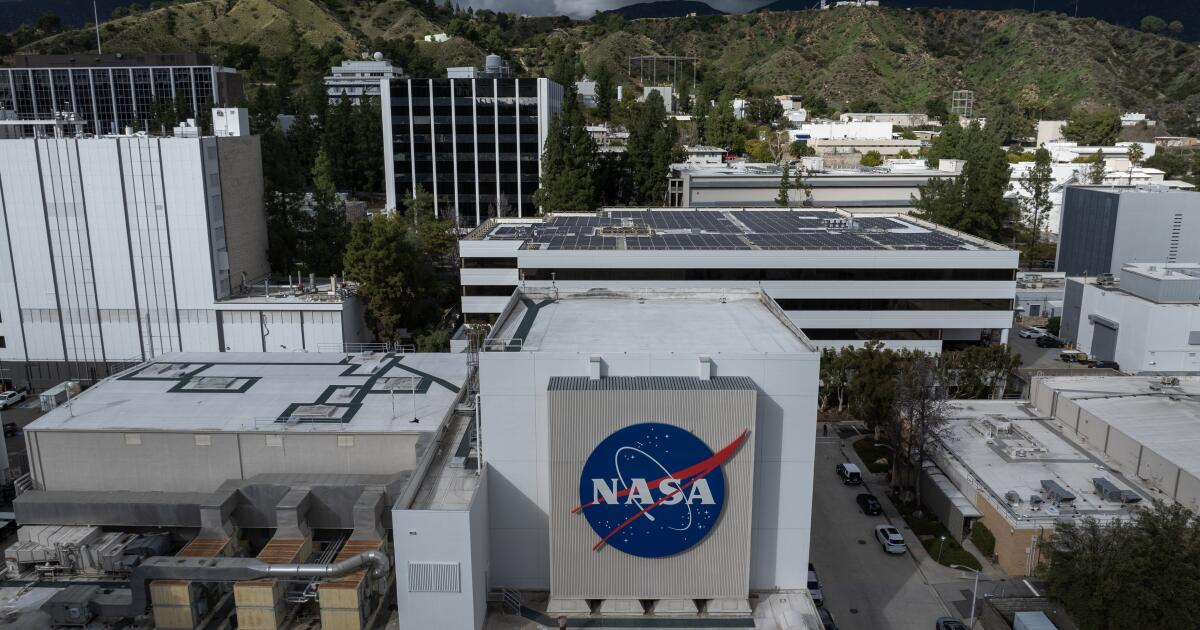
The future of the Jet Propulsion Laboratory (JPL) sits at a complex intersection of federal oversight, scientific independence, and budgetary scrutiny. As a federally funded research and development center, the laboratory—managed by the California Institute of Technology (Caltech) for NASA—has long served as the cornerstone of American planetary exploration. However, recent discussions regarding the potential for a more competitive contract environment for the laboratory’s management have sparked a broader debate about the stability of long-term scientific research in the face of shifting political priorities.
For decades, the partnership between NASA and Caltech has provided the institutional continuity necessary for missions that span years, if not decades, of development and execution. Yet, as the administration evaluates the operational framework of its research centers, questions are surfacing about whether a shift toward a more competitive contracting model is a necessary fiscal modernization or a move that could disrupt the specialized environment required for high-stakes space exploration.
The Evolution of Institutional Oversight
The Jet Propulsion Laboratory, located in La Cañada Flintridge, California, was founded in 1936 by researchers from Caltech and has grown into a global leader in robotic space exploration. Its current operational model is unique. while We see owned and sponsored by NASA, it is managed by Caltech, an arrangement that allows the laboratory to maintain a distinct culture of academic rigor and applied engineering. According to official NASA Jet Propulsion Laboratory records, the facility remains responsible for the construction and operation of planetary robotic spacecraft, including active missions like the Mars 2020 Perseverance rover and the Juno spacecraft currently orbiting Jupiter.
The prospect of changing how such entities are managed usually centers on the desire for increased transparency and cost-efficiency. Proponents of competitive bidding processes argue that periodic reassessments ensure that federally funded centers remain aligned with contemporary mission requirements and fiscal responsibility. However, the scientific community often expresses concern that such transitions can introduce administrative friction, potentially stalling ongoing projects that rely on the deep institutional knowledge residing within the current management structure.
Navigating Scientific and Political Landscapes
The tension surrounding JPL’s management structure often mirrors the broader friction between administrative budget cycles and the long-term nature of scientific inquiry. When government administrations seek to impose new oversight mechanisms, the move is frequently interpreted through the lens of political, rather than purely scientific, motivation. The administration’s past policy decisions—often characterized by critics as holding an anti-science bias—have heightened sensitivities regarding any structural changes that could affect the independence of federally funded research.
Experts in aerospace policy note that while competitive contracts are a standard feature of government procurement, the specific context of a laboratory that manages the NASA Deep Space Network requires a delicate balance. Any disruption to the management of this network could have cascading effects on all active space missions that depend on these communication links for navigation, telemetry, and data retrieval. The stability of the laboratory’s workforce—comprising approximately 4,500 staff members—is another critical factor that stakeholders are watching closely as the contract discussion progresses.
What Lies Ahead for Mission Continuity
As the conversation regarding competitive contracting continues to evolve, the primary concern for the global scientific community remains the continuity of current and future missions. Projects like the Psyche asteroid orbiter and the ongoing monitoring of Earth’s soil moisture via the SMAP satellite require sustained institutional support. The Jet Propulsion Laboratory’s operational history, which dates back to its formal establishment on October 31, 1936, demonstrates that the laboratory’s success is rooted in its ability to bridge the gap between theoretical research and complex engineering implementation.
For readers and stakeholders monitoring this situation, the next phase will likely involve formal reviews of the contractual requirements between NASA and its managing partners. These reviews typically occur in alignment with federal budget cycles and procurement milestones. As of June 2026, there have been no definitive announcements regarding a change in management, though the dialogue surrounding the competitiveness of such contracts remains a focal point for those tracking federal science policy.
Key Takeaways
- Operational Stability: The Jet Propulsion Laboratory is currently managed by Caltech under a long-standing agreement with NASA, supporting dozens of active missions.
- Contractual Pressures: Discussions regarding competitive bidding for management contracts are a standard part of federal procurement but carry significant implications for scientific continuity.
- Stakeholder Concerns: The scientific community remains cautious, emphasizing that administrative changes must not compromise the specialized engineering and research capabilities of the laboratory.
- Monitoring Developments: Future updates on this topic will likely emerge through official NASA budgetary filings and procurement announcements as the current contract cycle progresses.
We will continue to provide updates on this situation as official information becomes available through federal channels. Readers are encouraged to keep an eye on the official NASA and JPL mission pages for the most accurate, real-time information regarding ongoing projects. We invite you to share your thoughts on this topic in the comments section below.
Keep reading