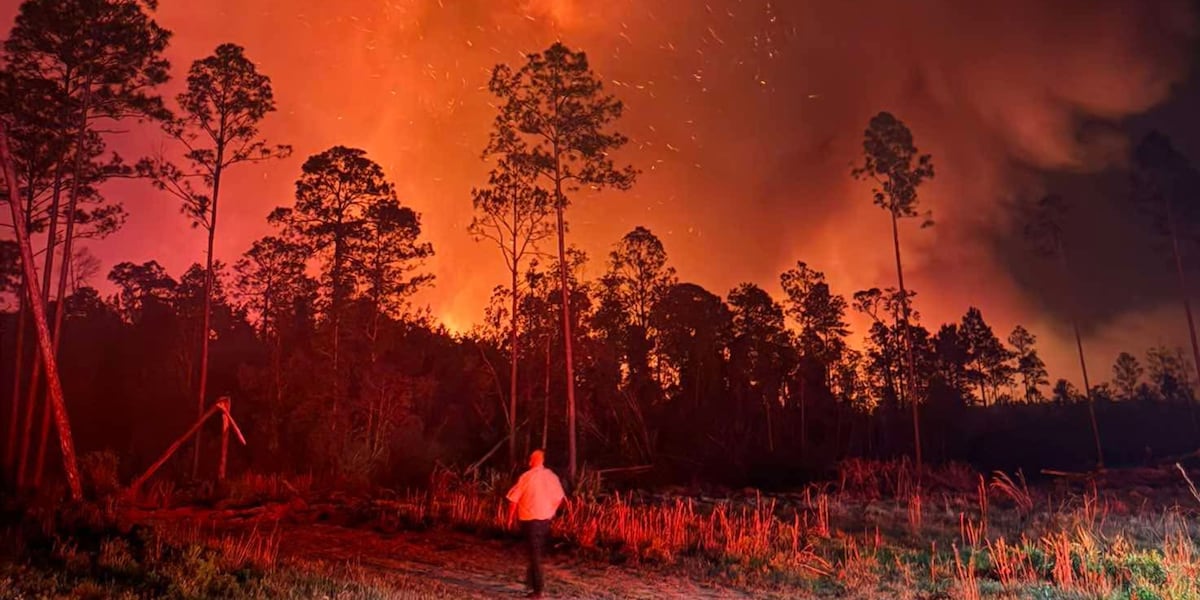
Wildfires continue to rage across southern Georgia, with one blaze in Clinch County expanding to more than 16,000 acres as of Wednesday morning, according to the Georgia Forestry Commission. The Pineland Road fire, which began on April 18, remains only 10 percent contained despite ongoing firefighting efforts. Emergency officials have issued evacuation orders for several communities as smoke spreads across the region, reducing visibility and prompting road closures on major highways.
The fire’s rapid growth has been fueled by persistent drought conditions affecting much of the state, with dry vegetation providing ample fuel for the flames. Local residents described the blaze as overwhelming, with one Homerville fire department official telling responders, “This fire is a beast!” in a social media post shared widely online. As containment efforts continue, authorities urge the public to avoid affected areas and follow official evacuation routes.
In neighboring Brantley County, a separate fire has burned approximately 3,800 acres, according to county emergency management officials. That blaze has led to the closure of several state routes and the opening of multiple emergency shelters for displaced residents. While smaller than the Clinch County fire, it has still caused significant disruption, including mandatory evacuations and property damage reports.
Firefighting Efforts Face Challenges Amid Dry Conditions
Fire crews from multiple counties have been deployed to combat the blazes, working alongside state forestry teams to establish containment lines. However, progress has been gradual due to low humidity and strong winds, which have caused the fires to jump existing barriers. The Georgia Forestry Commission reported that over 50 new fires ignited across the state between April 18 and 19 alone, though most have since been contained or are under control.
Water-dropping aircraft and bulldozers have been used to slow the spread, particularly in remote, wooded areas where ground access is limited. Despite these efforts, the Pineland Road fire’s containment status has remained stagnant for several days, raising concerns about its potential to grow further if weather conditions do not improve. Officials continue to monitor wind patterns and fuel moisture levels to anticipate shifts in fire behavior.
Local governments have implemented burn bans across more than 90 counties in Georgia, ahead of the state’s annual burn ban, which typically begins in May. These restrictions prohibit open burning, campfires, and the use of fireworks in an effort to reduce the risk of new ignitions. Violators may face fines or criminal charges, depending on local ordinances.
Evacuations and Community Impact
Residents in the path of the fires have been forced to flee their homes with little notice, seeking shelter in community centers, schools, and churches opened by emergency management agencies. In Brantley County, officials confirmed that several hundred people have sought temporary refuge since the evacuations began. While exact numbers of displaced individuals were not immediately available, shelters have remained open around the clock to accommodate those unable to return home.

Air quality has deteriorated significantly in nearby cities, including Brunswick and Waycross, where smoke has reduced visibility and prompted health advisories. Sensitive individuals, such as those with asthma or respiratory conditions, have been urged to limit outdoor activity and keep windows closed. Local hospitals have reported an increase in respiratory-related visits, though no critical shortages have been reported.
Property damage assessments are still underway, with early reports indicating that dozens of homes and structures have been damaged or destroyed. In Brantley County, officials previously reported that approximately 47 homes were lost to fire, though updated figures have not been released as of this writing. Authorities caution that final tallies may take days or weeks to compile due to ongoing safety concerns in active burn zones.
Official Response and Public Guidance
The Georgia Emergency Management and Homeland Security Agency (GEMA) has been coordinating state-level support, deploying additional personnel and equipment to the most affected areas. GEMA officials have emphasized the importance of heeding evacuation orders and avoiding restricted zones, noting that re-entering fire-affected areas too soon poses serious risks to both civilians and emergency responders.
Residents seeking real-time updates are directed to official sources, including the Georgia Forestry Commission’s wildfire dashboard, local emergency management agency websites, and the GEMA alert system. The National Weather Service also provides fire weather forecasts that support predict shifts in wind and humidity, which are critical for planning firefighting operations.
As of Wednesday evening, no deaths or serious injuries had been publicly attributed to the fires, though officials continue to monitor the situation closely. The Red Cross and other humanitarian organizations have begun distributing supplies to shelter residents, including food, water, and hygiene kits. Long-term recovery efforts will likely depend on the extent of property loss and the timeline for fire containment.
For the latest developments on the southern Georgia wildfires, members of the public are encouraged to follow verified government channels and avoid sharing unconfirmed information on social media. Accurate, timely updates remain essential for ensuring public safety and supporting an effective emergency response.