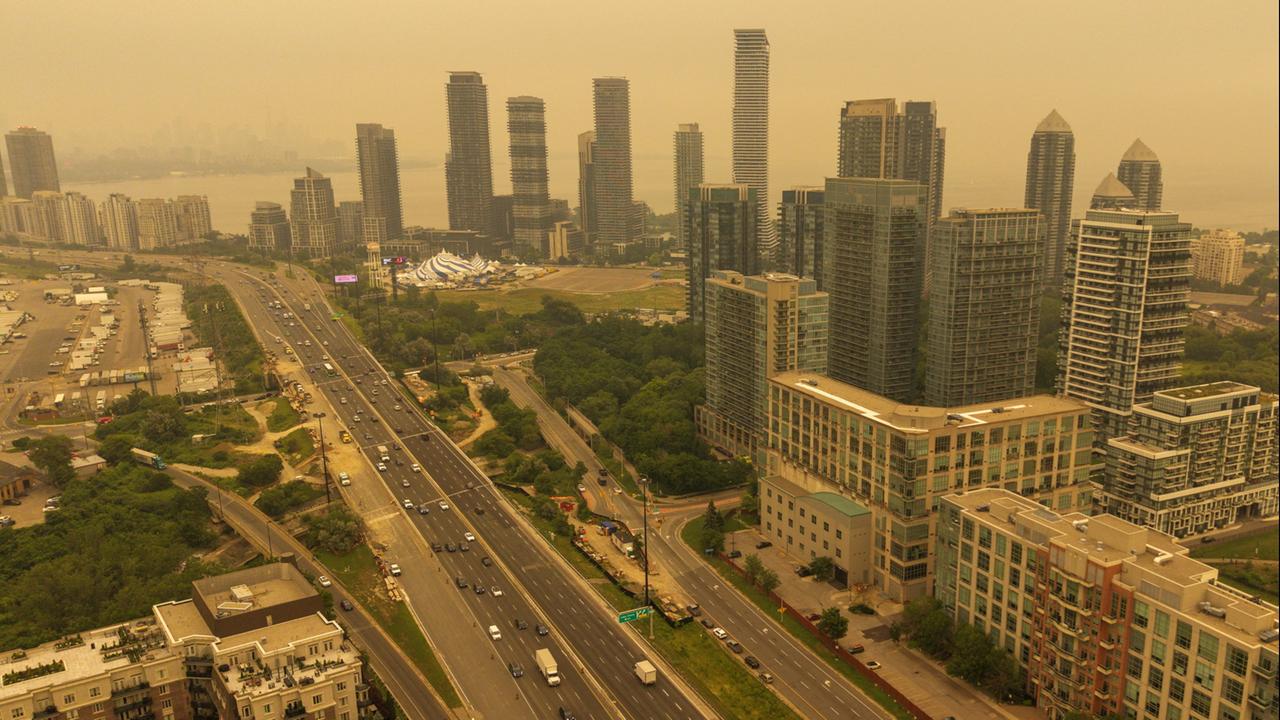
Toronto is currently experiencing some of the worst air quality levels in the world as smoke from ongoing wildfires across Canada drifts into the metropolitan area. According to real-time data from IQAir, the city has frequently topped global rankings for urban air pollution, driven by the transport of particulate matter from forest fires burning in northern regions of Ontario and Quebec. This atmospheric crisis has prompted local health officials to issue urgent air quality advisories, warning residents to minimize outdoor activities.
Understanding the Impact of Wildfire Smoke on Urban Air Quality
The hazardous conditions in Toronto are a direct result of large-scale wildfires that have been exacerbated by an unusually hot and dry season. When forest fires occur, they release significant amounts of fine particulate matter, known as PM2.5, into the atmosphere. These particles are small enough to enter the bloodstream, posing severe risks to individuals with respiratory or cardiovascular issues. The Government of Canada’s Air Quality Health Index (AQHI) provides real-time updates for citizens, categorizing the current risk levels as “high” or “very high” in affected regions, which necessitates caution for vulnerable populations.
Meteorological patterns have played a critical role in directing the smoke toward densely populated corridors. Prevailing winds have carried the plume southward, affecting not only Toronto but also major cities across the northeastern United States, including New York City. The persistent heatwave conditions have further trapped this smoke at lower altitudes, preventing it from dispersing and leading to the hazy, orange-tinted skies observed by residents.
Public Health Guidance and Safety Measures
Health authorities in Ontario, including Toronto Public Health, have urged residents to take proactive measures to protect their well-being. Recommendations include staying indoors with windows and doors closed, using air purifiers with HEPA filters, and avoiding strenuous physical exertion. For those who must venture outside, wearing a well-fitted N95 or KN95 respirator is recommended to filter out fine smoke particles.
The situation remains fluid, as the trajectory of the smoke depends heavily on shifting wind patterns and the containment progress of the fires. While local governments are coordinating with provincial and federal agencies to monitor fire growth, the primary focus remains on public safety and the mitigation of health risks associated with prolonged exposure to poor air quality.
Broader Geopolitical and Environmental Context
The current wildfire season in Canada has been described by environmental experts as record-breaking in terms of the total area burned. The Canadian Interagency Forest Fire Centre (CIFFC) provides the most authoritative data on the national fire situation, tracking active blazes and resource allocation across provinces. The intersection of climate change, extreme heat, and forest management remains a subject of intense debate among policymakers and scientists alike.
As Toronto and other cities deal with the immediate health implications, the long-term impact of these events continues to be evaluated. International observers are also monitoring how these environmental challenges affect large-scale public gatherings and outdoor events. While specific event organizers generally maintain their own contingency plans, the broader concern remains the increasing frequency and intensity of such smoke events in North America.
Monitoring Future Developments
Residents are encouraged to rely on official channels for updates. The Environment and Climate Change Canada website provides the most current weather forecasts and air quality alerts. These resources are updated continuously to reflect changing environmental conditions. As the wildfire season progresses, authorities will continue to issue guidance based on the latest satellite imagery and ground-level sensor data.
We will continue to monitor the air quality situation in Toronto and its impact on urban life as new data becomes available. Please feel free to share your experiences or questions in the comments section below as we track these unfolding environmental developments.
Worth a look
- Building a Global Brand: How Flip Visuals Scaled STAC Marine’s Identity After $20M Abo FPSO Acquisition
- Iran vs. US: Escalating Military Strikes and Threats to Global Trade Routes
- Messi Leads Argentina to World Cup Final with Dramatic Comeback Against England (time.news)
- Messi Leads Golden Boot Race as World Cup Enters Final Stages (news-usa.today)