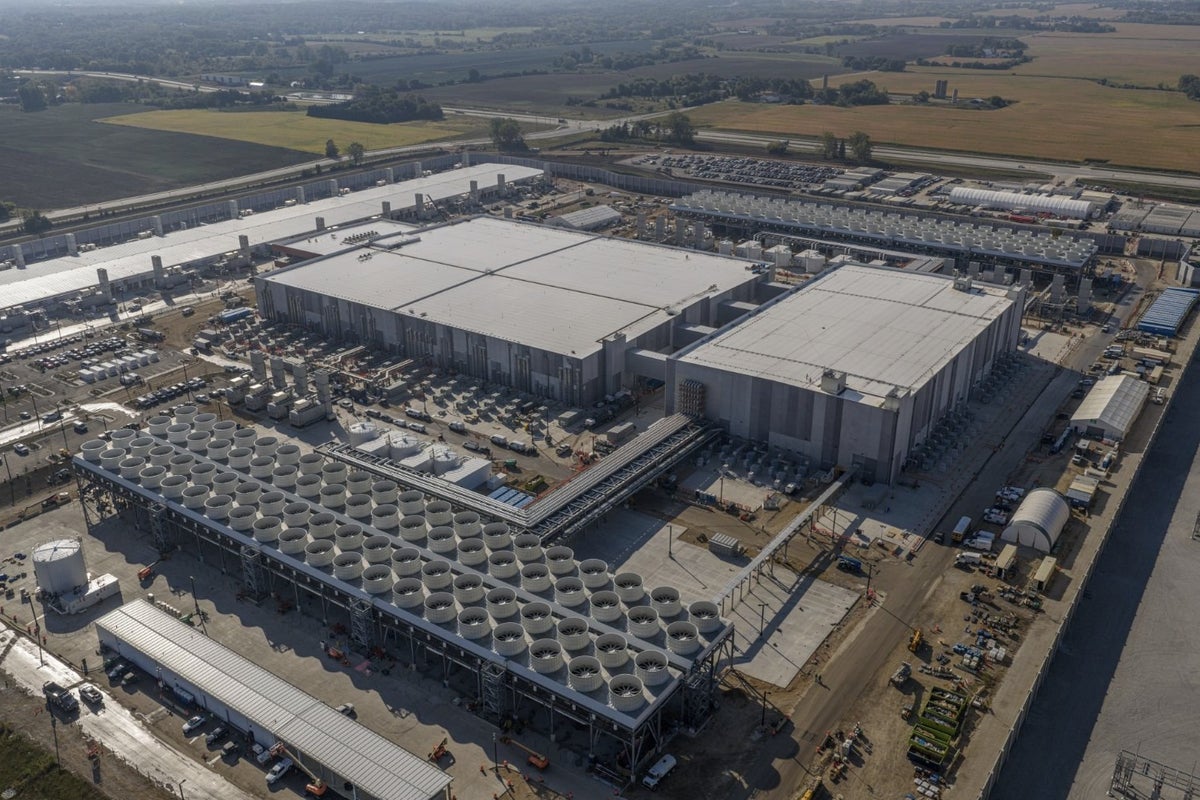
Residents in the Town of Washington, Wisconsin, have initiated legal action against Microsoft, alleging that the company’s newly constructed data center is producing persistent, disruptive noise and creating significant environmental disturbances. The lawsuit, filed in Eau Claire County Circuit Court, claims that the facility’s cooling systems and mechanical operations generate a constant low-frequency hum that has degraded the quality of life for neighboring property owners.
According to court filings, the plaintiffs assert that the noise levels exceed local ordinances and interfere with the quiet enjoyment of their homes. Beyond the acoustic complaints, residents have also reported that ongoing construction and site development have resulted in excessive dust, which they describe as creating a persistent “dust bowl” effect in the immediate vicinity of the project. The company, which is developing the data center on a site spanning hundreds of acres, has faced scrutiny as it expands its infrastructure footprint in the region.
Legal Claims and Community Concerns
The core of the litigation centers on the operational impact of the data center’s cooling infrastructure. Large-scale data centers rely on massive arrays of fans and chillers to prevent server overheating, a process that can generate significant decibel levels. In their complaint, the residents argue that the persistent noise—often characterized as a mechanical drone—persists 24 hours a day, impacting sleep and property values. The Eau Claire County government has previously addressed zoning and land-use permits for the site, but this lawsuit marks a shift toward judicial intervention regarding operational externalities.

In addition to the noise, the “dust bowl” complaints highlight concerns regarding erosion control and site management. Construction projects of this magnitude, which involve large-scale earthmoving and land clearing, are subject to storm water management permits and environmental regulations administered by the Wisconsin Department of Natural Resources (DNR). The residents allege that the mitigation measures currently in place are insufficient to prevent soil and particulate matter from migrating to adjacent residential properties during dry, windy conditions.
Regulatory Oversight and Environmental Compliance
Data center developments in Wisconsin must adhere to strict state-level environmental standards. The Wisconsin DNR oversees compliance with the Clean Water Act and state-specific air and land protection statutes. Under Wisconsin Statute Chapter 281, developers are required to manage construction site runoff and sediment control to protect local water bodies and air quality. The plaintiffs’ claims suggest that the current site conditions may be in violation of these regulatory expectations, though no official enforcement action has been announced by the state at this time.
Microsoft has acknowledged the community’s concerns throughout the development phase. The company’s standard protocol for large infrastructure projects typically involves the use of sound attenuation barriers and dust suppression techniques, such as watering down dirt roads and utilizing silt fences. However, the legal filing suggests that these measures have not been perceived as effective by the residents living directly adjacent to the facility. The company has maintained that it seeks to be a good neighbor, but the court will now determine whether the current operational reality meets the threshold of a private nuisance under Wisconsin law.
What Happens Next
The case is currently in the discovery phase, where both parties will exchange evidence, including environmental impact reports, decibel level measurements, and internal construction logs. The Eau Claire County Circuit Court will likely set a schedule for upcoming hearings and potential mediation sessions in the coming months. For residents and stakeholders, the next significant checkpoint will be the submission of expert testimony regarding the specific noise levels recorded at the property lines compared to local noise ordinances.

The outcome of this litigation could set a precedent for how large-scale technology infrastructure projects are managed in semi-rural areas across the United States. As more data centers are built to support the global demand for cloud computing and artificial intelligence, the tension between industrial-scale operations and residential zoning remains a point of contention. Readers interested in the progress of this litigation can monitor the Wisconsin Circuit Court Access (WCCA) website for official docket updates and future filing deadlines.
Have you been affected by large-scale infrastructure projects in your community? Share your perspective in the comments below.